

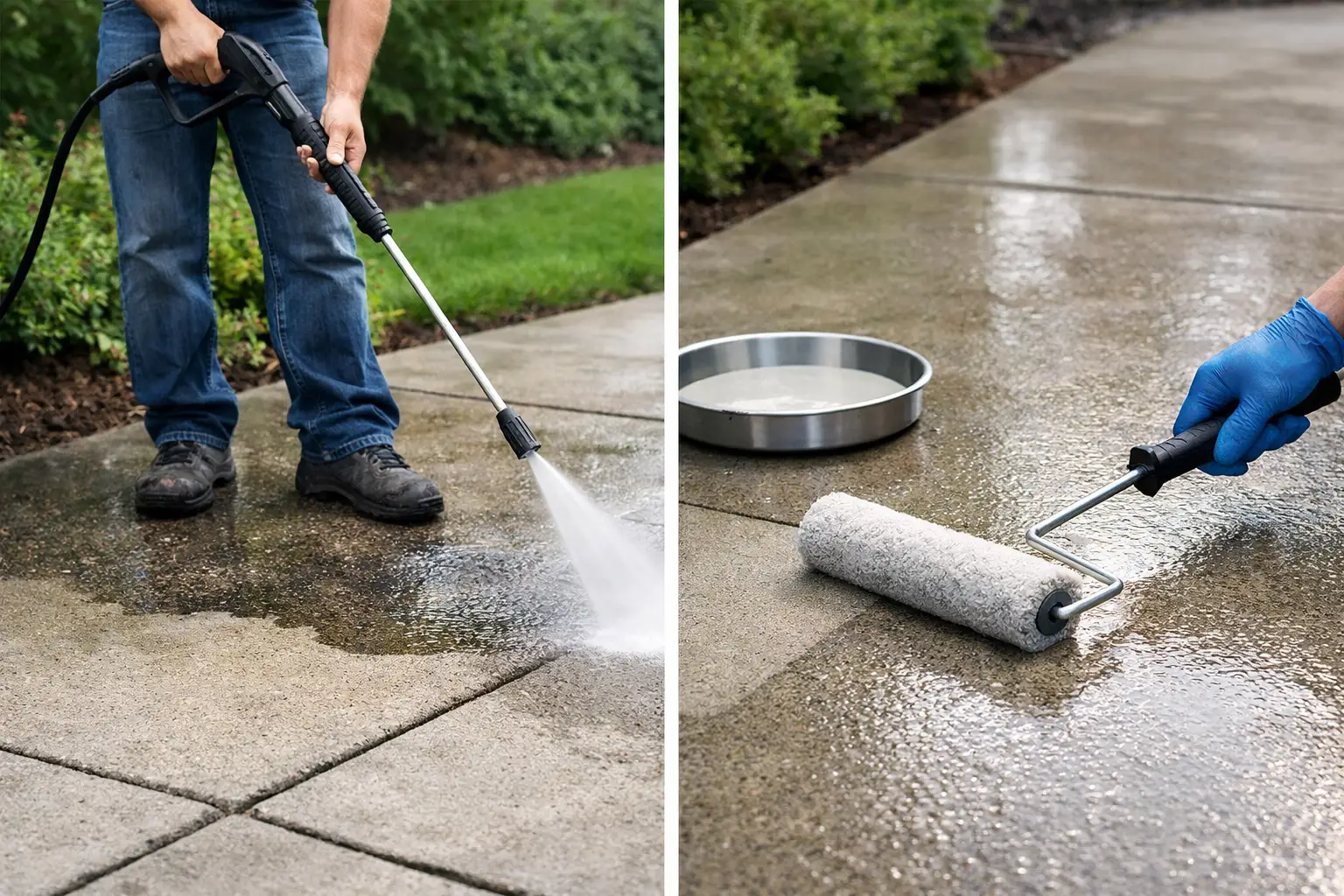
A driveway can look clean after a high-pressure wash, yet still absorb the next oil drip, leaf stain and wet-season grime within weeks. That is the key difference in concrete cleaning vs sealing: cleaning restores the surface you can see, while sealing helps protect the surface from what comes next. For homes, body corporate sites, schools and commercial properties across Southeast Queensland, the best result often comes from using both services in the right order.
Concrete Cleaning vs Sealing: The Core Difference
Concrete cleaning removes built-up contamination from the surface. That may include dirt, mould, algae, tyre marks, oil residue, leaf tannins, pollution, rust staining and general weathering. Professional cleaning uses the right combination of pressure, water flow, surface treatment and technique to lift contamination without unnecessarily damaging the concrete.
Concrete sealing is a protective treatment applied after the surface has been thoroughly cleaned and allowed to dry. Depending on the product and the concrete itself, a sealer can reduce water absorption, help resist stains, limit the effects of UV exposure and make ongoing maintenance easier. Some sealers leave a natural, low-sheen finish, while others deepen the colour or create a more noticeable finish.
They are not interchangeable services. Sealing a dirty driveway can lock in marks and uneven colour. Cleaning alone can deliver an immediate visual improvement, but it does not create a protective barrier against future staining.
When Concrete Cleaning Is Enough
Not every concrete surface needs sealing straight away. If your main concern is slippery algae, dark mould, accumulated grime or a tired-looking driveway before an inspection, professional cleaning may be the most practical solution.
Cleaning is particularly useful for concrete that is structurally sound and regularly maintained. A routine clean can remove the organic growth that thrives in shaded areas, around downpipes, beside gardens and on paths that stay damp after rain. This improves presentation and can also reduce slip risks around entryways, pool surrounds, communal paths and car parks.
For rental turnovers, property sales and commercial presentation, cleaning often provides the visible reset needed without adding the cost of a protective coating. It is also the first step when you are unsure how the concrete will respond. Once years of grime are removed, you can clearly assess whether the surface is still porous, stained or showing signs of wear that would benefit from sealing.
Cleaning alone may be the better choice when concrete is near the end of its useful life, heavily cracked, spalling or affected by drainage problems. A sealer cannot repair failed concrete or stop water entering through major cracks. Those issues should be addressed before any protective treatment is considered.
When Sealing Is Worth the Investment
Sealing makes the most sense when you want to keep a clean surface cleaner for longer. Driveways, patios, entertaining areas, walkways and commercial hardstand areas all face ongoing exposure to rain, sun, vehicle traffic and spills. In Queensland conditions, porous concrete can quickly take on dirt and moisture, especially where there is shade, vegetation or frequent foot traffic.
A suitable sealer can be a smart maintenance decision for a newer driveway or a freshly restored surface. It can reduce how readily water and common contaminants soak into the concrete, making future cleaning more straightforward. On a driveway, that may mean more time to deal with oil or tyre-related marks before they become deep stains. Around a home, it can help preserve a more consistent appearance between professional cleans.
For property managers and facility operators, sealing can also support a planned maintenance approach. Rather than waiting for a heavily stained surface to become an urgent presentation issue, a protected concrete area is generally easier to keep tidy. This can be valuable at retail sites, schools, strata properties and office buildings where first impressions and safe access matter every day.
The value depends on the location and use of the surface. A covered concrete area with little traffic may not need the same level of protection as an exposed driveway beneath trees. Likewise, a busy loading area may need a different solution from a decorative front path.
Why Cleaning Must Come Before Sealing
Preparation determines the finish. Before sealing, concrete needs to be free of surface dirt, organic growth, oils and cleaning residues. If contamination remains, the sealer may not bond or penetrate evenly. The result can be patchiness, reduced performance or stains that remain visible beneath the finish.
A professional clean also reveals problems that were hidden by grime. Oil stains may need targeted treatment. Efflorescence, which appears as a white powdery deposit, may need to be managed before sealing. Existing coatings can be worn unevenly or may need removal if they are peeling, cloudy or incompatible with the new product.
Drying time matters too. Concrete can hold moisture below the surface even when it looks dry. Applying sealer too soon after cleaning, rain or a wet spell can affect adhesion and appearance. The appropriate waiting period depends on weather conditions, surface porosity, drainage and the sealer being used. Rushing this stage can turn a good restoration job into an avoidable rework.
Choosing the Right Sealer for Your Surface
There is no single best concrete sealer for every property. The right option depends on the finish you want, the type of concrete, how much traffic it receives and what it is exposed to.
Penetrating sealers soak into the concrete and are often chosen when a natural-looking finish is preferred. They can help reduce water absorption without creating a visible surface film. These are commonly suited to driveways, paths and practical outdoor areas where low-maintenance protection is the priority.
Film-forming or topical sealers sit closer to the surface and can provide a more noticeable colour enhancement or sheen. They may be appropriate for decorative concrete and selected entertaining areas, but they need careful product selection and application. A glossy finish is not automatically better, particularly on sloped areas, around pools or anywhere that can become wet. Slip resistance, drainage and the intended use of the area must be considered first.
Previously sealed concrete needs extra attention. Applying a new product over an old coating without checking compatibility can lead to peeling, cloudiness or an uneven finish. A site inspection helps determine whether the existing sealer can be cleaned and refreshed, or whether more preparation is required.
Common Mistakes That Shorten Concrete’s Life
The most common mistake is treating every concrete surface with maximum pressure. High pressure has its place, but excessive pressure or poor technique can etch the surface, expose aggregate and leave wand marks. Once concrete has been damaged in this way, it can become rougher and more likely to hold dirt.
Another mistake is sealing over moisture, stains or mould. A sealer is protection, not a cover-up. It will not remove oil, fix drainage, repair cracking or stop mould from returning where moisture and shade are left unmanaged.
Homeowners also sometimes choose a finish based only on appearance. A darker or glossier driveway can look impressive when first applied, but the product must suit the area and be applied correctly. Areas exposed to wet feet, rainwater, pool splash or vehicle traffic need a practical finish that supports safe use as well as visual appeal.
Finally, concrete should not be forgotten once it is sealed. Protective treatments reduce maintenance, but they do not eliminate it. Regular sweeping, prompt spill clean-up, clear drainage and scheduled professional cleaning will help the surface perform better over time.
A Practical Maintenance Plan for Driveways and Paths
For most residential properties, an annual inspection and professional clean is a sensible starting point. Homes surrounded by trees, properties with shaded driveways or areas close to the coast may need more frequent attention due to leaf matter, moisture, salt and airborne contaminants.
Commercial sites and shared properties often benefit from a set maintenance schedule rather than reactive call-outs. High-traffic paths, entry zones, bin areas, parking spaces and loading areas should be monitored for algae, tyre marks, oil and slip hazards. Regular attention is usually more cost-effective than allowing stains and organic growth to build up over several seasons.
Sealer lifespan varies significantly. Surface preparation, the product used, sun exposure, traffic levels, cleaning methods and drainage all affect how long it lasts. Instead of relying on a fixed timeframe, look for practical signs that the concrete is becoming more absorbent, staining more easily or losing its previously even appearance.
A clean driveway makes a property look cared for. A properly cleaned and correctly sealed driveway gives that result a better chance of lasting. If you are weighing up the right approach for your concrete, Boost Exterior Cleaning can assess the surface, identify the cause of the staining and recommend a practical treatment that suits how your property is used.


