

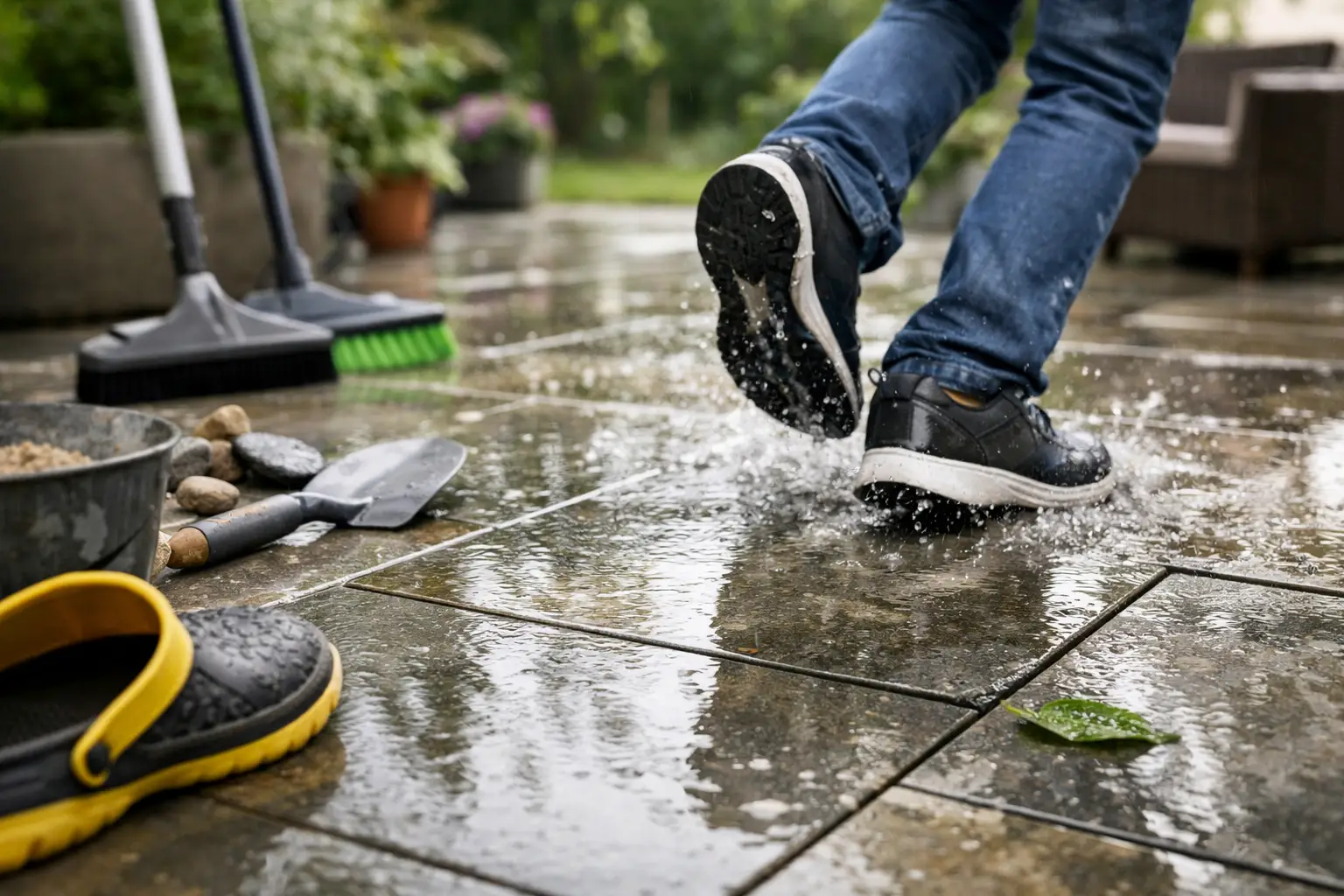
A tiled patio can look perfectly clean from the kitchen window, then feel like an ice rink after a light shower. If you are asking, “why are outdoor tiles slippery?”, the answer is usually not the tile alone. It is the combination of moisture, organic growth, surface wear and the way the area drains.
Across South East Queensland, outdoor tiles are exposed to humid weather, summer storms, leaf litter and long periods of shade. Those conditions allow a fine, slick layer of algae, mould, mildew and grime to build up surprisingly quickly. It may be green or black, but it can also be nearly invisible until a wet shoe finds it.
A slippery tiled area is more than a presentation issue. Around pools, entries, walkways, outdoor dining areas and common property, it can create a genuine slip hazard. Regular, surface-appropriate cleaning helps restore the look of the area while reducing the conditions that make tiles unsafe underfoot.
Why are outdoor tiles slippery after rain?
Rain does not necessarily cause the problem. It reveals it. Water sits on the tile surface and mixes with built-up dirt, oils and biological growth, reducing the grip between footwear and tile. Even naturally textured tiles can become slippery when their surface profile is filled with grime.
The issue is often worse in shaded locations. A side path beside the house, a courtyard under a pergola, or tiles near established gardens may not dry properly between rain events. Persistent dampness gives algae and mould the ideal place to grow.
Pool surrounds need particular attention. Chlorinated or saltwater splash, sunscreen, body oils, wet feet and regular moisture all contribute to a slippery film. The tile may have been selected for outdoor use, but no tile remains slip-resistant when it is coated in residue.
Algae, mould and mildew create a slick film
Algae is one of the most common causes of slippery outdoor tiles in Queensland. It thrives where there is water, shade and organic matter. A green coating is the obvious sign, but a thin, colourless biofilm can be just as slippery.
Mould and mildew can also grow in grout lines, corners and along the edges where water collects. These areas hold moisture longer than the centre of the tile and can spread contamination back across the surface after cleaning if they are not treated properly.
Simply hosing tiles down usually makes the surface look fresher for a day or two, but it does not remove or treat the growth at its source. In some cases, a high-pressure blast may strip visible dirt while leaving spores in pores, grout and low spots. The growth then returns when the next wet spell arrives.
Dirt, oils and airborne pollutants reduce traction
Outdoor surfaces collect more than leaves and mud. Dust, traffic pollution, cooking grease from barbecue areas, sunscreen near pools and oils tracked from driveways can all create a smooth layer over tiles. In commercial settings, foot traffic can spread this residue across entryways and outdoor common areas.
Fine dust is especially deceptive. When dry, it may feel harmless. When wet, it turns into a slippery slurry. This is why a tiled path can be risky after rain even when there is no obvious algae present.
The tile finish matters
Some outdoor tiles are naturally more slippery than others. Polished porcelain, smooth ceramic and glossy finishes generally offer less grip than textured porcelain, rough stone or purpose-made slip-rated tiles. A tile that is suitable for a covered patio may not be the right choice for an exposed path or pool area.
That said, surface type is only one part of the picture. A textured tile still needs cleaning, while a smooth tile may be manageable in a dry, covered area with good drainage. The right approach depends on the tile material, its location and how the space is used.
Poor drainage keeps the problem alive
Puddles, slow-draining areas and water flowing back towards the house can keep tiles damp for hours or days. This not only increases immediate slip risk but also supports more algae and mould growth over time.
Check where water sits after rain or after washing the area. Low points, blocked drains, uneven tiles and overflowing garden beds are all worth addressing. Cleaning will make a major difference, but it cannot permanently overcome a drainage issue that continually feeds moisture back onto the surface.
How to tell whether tiles need more than a quick wash
A close inspection is useful before choosing a cleaning method. Look for a dull or greasy feel underfoot, green or black patches, dark grout lines, slippery spots that return after rain, and water that sits in the same area long after the rest of the tiles have dried.
Also inspect for cracked grout, loose tiles and damaged sealant. These may allow water beneath the surface or create small depressions that hold dirt. If the tile finish has become smooth through wear, cleaning will improve safety but may not fully restore the original level of traction.
For body corporate properties, schools, retail centres and other high-traffic premises, it is sensible to inspect outdoor tiled areas before the wet season and after prolonged rain. A known slippery path should not be left until a fall or complaint forces action.
The right way to clean slippery outdoor tiles
The goal is not to use the most pressure possible. It is to remove the contamination safely without damaging the tile, grout, surrounding paintwork, gardens or nearby fixtures.
A professional clean typically begins with identifying the surface. Porcelain, ceramic, terracotta, natural stone and concrete-look tiles can require different treatments. Natural stone in particular can be vulnerable to unsuitable chemicals, while older grout may need a gentler method than a hard-wearing commercial tile area.
A suitable treatment is then applied to break down mould, algae and grime. After allowing enough dwell time, the surface can be rinsed and cleaned using the appropriate pressure for the tile and grout condition. This method is more effective than relying on pressure alone because it deals with the biological growth rather than only skimming the top layer away.
At Boost Exterior Cleaning, surface-safe soft washing and controlled pressure cleaning are selected according to the material and level of buildup. This is especially valuable around painted walls, pool fencing, garden edges and older tiled areas where an aggressive approach can cause avoidable damage.
Avoid using harsh, untested products or excessive pressure as a shortcut. Acidic cleaners may etch some surfaces, bleach can affect surrounding plants and finishes if mishandled, and high pressure can damage grout or force water where it should not go. If you are cleaning a small area yourself, always follow the product directions, wear suitable footwear and keep children and pets away until the surface is rinsed and dry.
Can sealing stop outdoor tiles from becoming slippery?
Sealing can help, but it is not a substitute for cleaning or proper drainage. A quality sealer may reduce the absorption of water, stains and contaminants, particularly on porous tiles, grout and natural stone. This can make routine maintenance easier and slow the buildup of grime.
However, the wrong sealer can create a glossy film and make a surface more slippery. This is a common problem when a coating designed for appearance is used on a wet-area walkway. For pool surrounds, entrances and exposed paths, the sealer must suit the tile type and the required slip resistance.
Before sealing, the surface needs to be thoroughly cleaned and completely dry. Sealing over algae, moisture or existing grime locks the problem in and can lead to patchy results. If you are unsure whether your tiles are porous or already sealed, have the surface assessed before applying another product.
Keeping tiled areas safer between professional cleans
Ongoing maintenance does not need to be complicated, but it needs to be consistent. Sweep leaves, soil and mulch away before they break down. Trim back plants that keep paths in permanent shade, and clear drains so water can move away freely. Rinse poolside sunscreen and salt residue regularly rather than allowing it to build up.
How often tiles need a full clean depends on the location. A sunny, open patio may only need periodic attention, while a shaded pool path or garden-side walkway can need treatment more often. Properties near busy roads, large trees or coastal areas may also collect more grime than expected.
If the tiles remain slippery shortly after thorough cleaning, look beyond surface contamination. Drainage, worn finish, uneven laying, inappropriate sealing or the tile’s original slip rating may be contributing. In those cases, a cleaning programme should be combined with practical repairs or surface advice.
A safe outdoor area should still feel secure when the weather turns. Addressing the first signs of algae, residue or pooling water keeps your tiles looking cared for and gives everyone using the space firmer footing when it matters most.


