

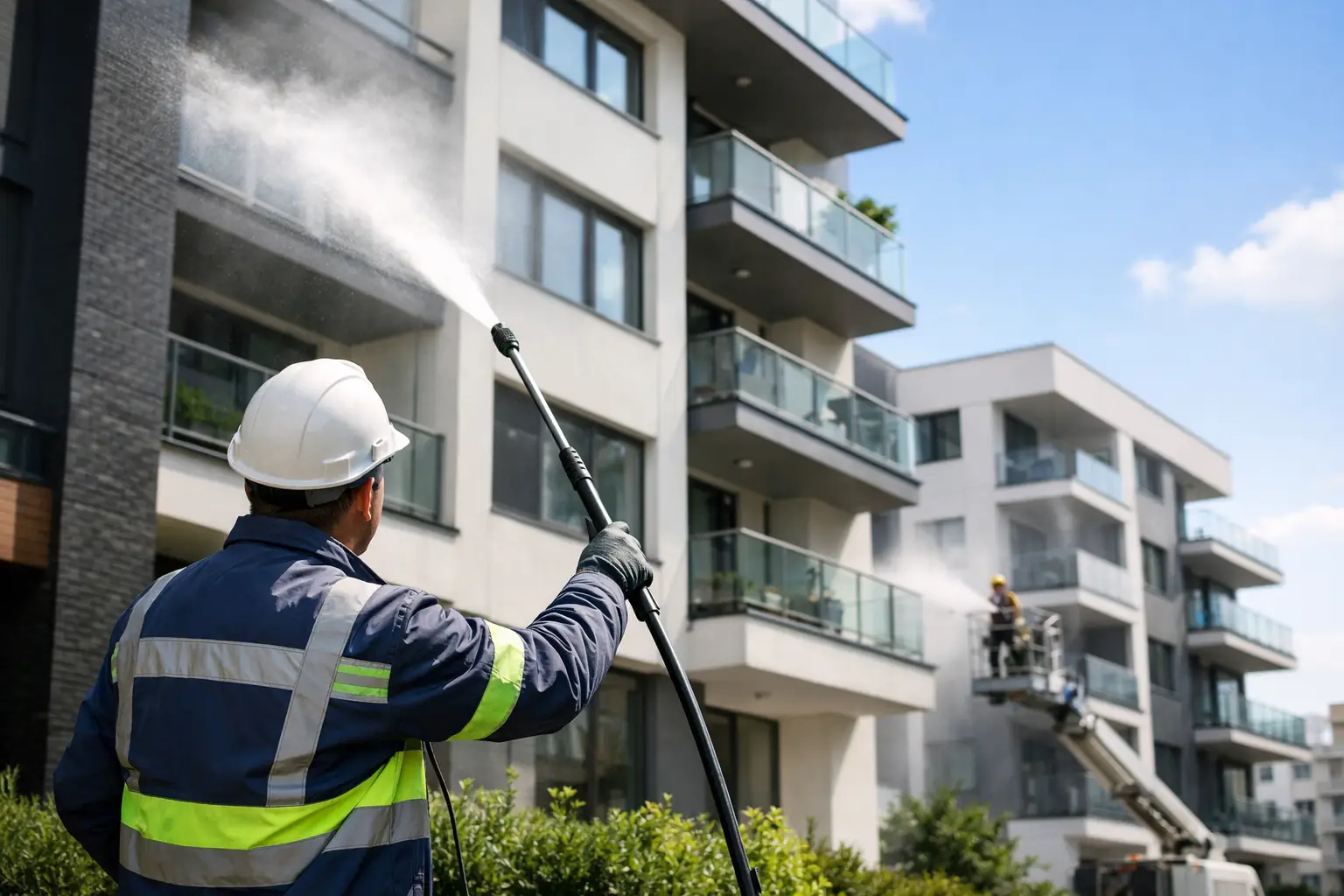
A clean complex is not just a nicer place to come home to. Body corporate exterior cleaning helps protect common surfaces from the mould, algae, dust and vehicle grime that build up quickly in Southeast Queensland’s humid, changeable conditions. Done properly, it improves presentation, reduces slip risks and helps avoid the higher cost of premature surface repairs.
For committees and strata managers, the challenge is rarely deciding whether cleaning is needed. It is planning the work around residents, selecting a contractor who understands different materials, and getting a result that lasts without damaging paintwork, paving or landscaped areas.
Why exterior cleaning belongs in a body corporate maintenance plan
Shared outdoor areas receive constant use and constant exposure. Entry paths, driveways, bin areas, pool surrounds, retaining walls, car parks and building facades all collect contaminants at different rates. A shaded pathway may become slippery with algae well before a sunny driveway looks dirty, while a rendered wall can show mould streaks after a wet season.
Leaving these surfaces too long can create more than a visual issue. Organic growth holds moisture against concrete, tiles, paint and stone. On paths and stairs, it can reduce traction. On building exteriors, it can make an otherwise well-maintained property look neglected to tenants, visitors and prospective buyers.
Regular cleaning is therefore a practical form of preventative maintenance. It keeps common areas presentable between larger works, supports a safer environment for residents and makes inspections easier. When dirt is removed, committee members can better identify cracked tiles, failing sealant, drainage problems or deteriorating paint that may otherwise be hidden.
The right frequency depends on the property. A leafy complex with shaded walkways and a busy bin enclosure may need targeted cleaning more often than an open, low-traffic site. Many body corporates benefit from an annual full exterior clean, with additional attention to high-risk areas after prolonged wet weather.
Body corporate exterior cleaning is not one cleaning method
The biggest mistake in exterior maintenance is treating every surface with high pressure. Pressure cleaning has an important role, particularly for durable concrete driveways, car parks and hard-wearing paved areas. But excessive pressure can scar concrete, dislodge jointing material, force water into gaps and damage painted or delicate finishes.
A professional approach starts with the surface, the contamination and the condition of the area. Soft washing uses low-pressure application with suitable treatments to break down mould, algae and grime before a controlled rinse. It is often the better choice for painted facades, rendered walls, cladding, eaves, fences and other surfaces where preservation matters as much as appearance.
For body corporate sites, that distinction matters. One property may contain exposed aggregate, concrete, colour-sealed pavers, natural stone, tiled pool surrounds and painted common-area walls. Each has different cleaning requirements. The goal is not simply to make everything look brighter on the day. It is to achieve a visible result while protecting the surface underneath.
Areas that usually need attention
A planned exterior clean can cover the visible spaces residents use every day, as well as the overlooked areas that affect the overall standard of the complex. Common priorities include building washes, entryways, pathways, stairs, driveways, visitor parking, car parks, pool areas, shared patios, bin bays, retaining walls, fences and common windows.
It is worth assessing the whole site before booking the work. If the committee only responds to the most obvious dirty area, other surfaces can soon make the property look uneven again. A clear scope also helps compare quotes properly, because every contractor is pricing the same work rather than making assumptions about what is included.
Plan the job around residents and access
Exterior cleaning should improve the resident experience, not create unnecessary disruption. Clear communication is essential, especially in townhouse complexes, apartment buildings and sites with limited parking or single-entry access.
Let residents know the work date, expected hours, areas that will be temporarily unavailable and any requests about moving vehicles, outdoor furniture or personal items. Where car parks or driveways are being cleaned, staged access can minimise inconvenience. For shared pool areas, cleaning outside peak use periods is often the sensible option.
A site inspection before work begins is valuable for another reason: drainage. Wash water needs to be managed carefully, particularly around stormwater drains, landscaped beds and pool zones. An experienced contractor will identify practical access points, protect nearby areas where needed and work in a way that respects the property and its occupants.
Timing also depends on the task. Cleaning immediately before painting, sealing, leasing campaigns or an annual general meeting can make sense. For larger complexes, splitting the work into stages may be more manageable than closing multiple common areas at once.
Do not overlook sealing after cleaning
Cleaning restores a surface, but sealing can help preserve it. This is especially relevant for concrete, tiles, pavers and natural stone in high-traffic or exposed common areas. A suitable sealer can assist with moisture resistance, reduce staining and make ongoing maintenance easier.
Sealing is not required for every surface, and it should never be used to cover a surface that has not been properly cleaned and allowed to dry. The condition of the material matters too. A worn or previously coated surface may need a different approach from new exposed aggregate or unsealed pavers.
For a body corporate, the decision is usually about lifecycle cost. A cheaper clean-only approach may be appropriate for a sound, low-traffic area. In a pool precinct, entry path or driveway that is regularly exposed to moisture, tyre marks and foot traffic, cleaning and sealing may deliver better value over time.
What to look for in an exterior cleaning contractor
The lowest quote is not always the lowest-cost outcome. A contractor should be able to explain how they will clean each surface, rather than offering one method for the whole site. Ask how they approach painted finishes, natural stone, pool surrounds and slippery pathways, and whether they inspect for fragile or damaged areas before starting.
For body corporate exterior cleaning, reliability is just as important as equipment. You need clear scope, sensible scheduling, responsive communication and a team that understands residents will be moving through the site. Professional-grade equipment helps, but care, chemical knowledge and pressure control are what protect the property.
Before approving work, make sure the quote identifies the areas to be cleaned and any exclusions. If windows, tennis courts, bin bays, retaining walls or sealing are required, they should be stated clearly. This avoids scope gaps and makes it easier for the committee to report back to owners.
Boost Exterior Cleaning provides tailored soft washing, pressure cleaning and surface restoration for shared residential and commercial properties across Southeast Queensland. The focus is always on matching the cleaning method to the surface, so the result looks sharp without taking unnecessary risks with the finish.
Build a practical maintenance schedule
A useful maintenance plan does not need to be complicated. Start by identifying the areas that affect safety, access and first impressions, then inspect them after wet periods and before key property events. Keep notes on which zones become slippery or discoloured first. Over a year or two, those patterns make budgeting and scheduling much easier.
High-use entries and shaded paths may need spot treatment between major cleans. Building exteriors may only require a full soft wash annually or less often, depending on surrounding trees, weather exposure and the type of finish. Car parks and driveways need a separate assessment because oil marks, tyre residue and traffic volume change the cleaning requirement.
A clean exterior sends a quiet but clear message: this is a property that is cared for. With the right method and a regular schedule, common areas stay safer, surfaces last longer and residents can take greater pride in where they live.


