

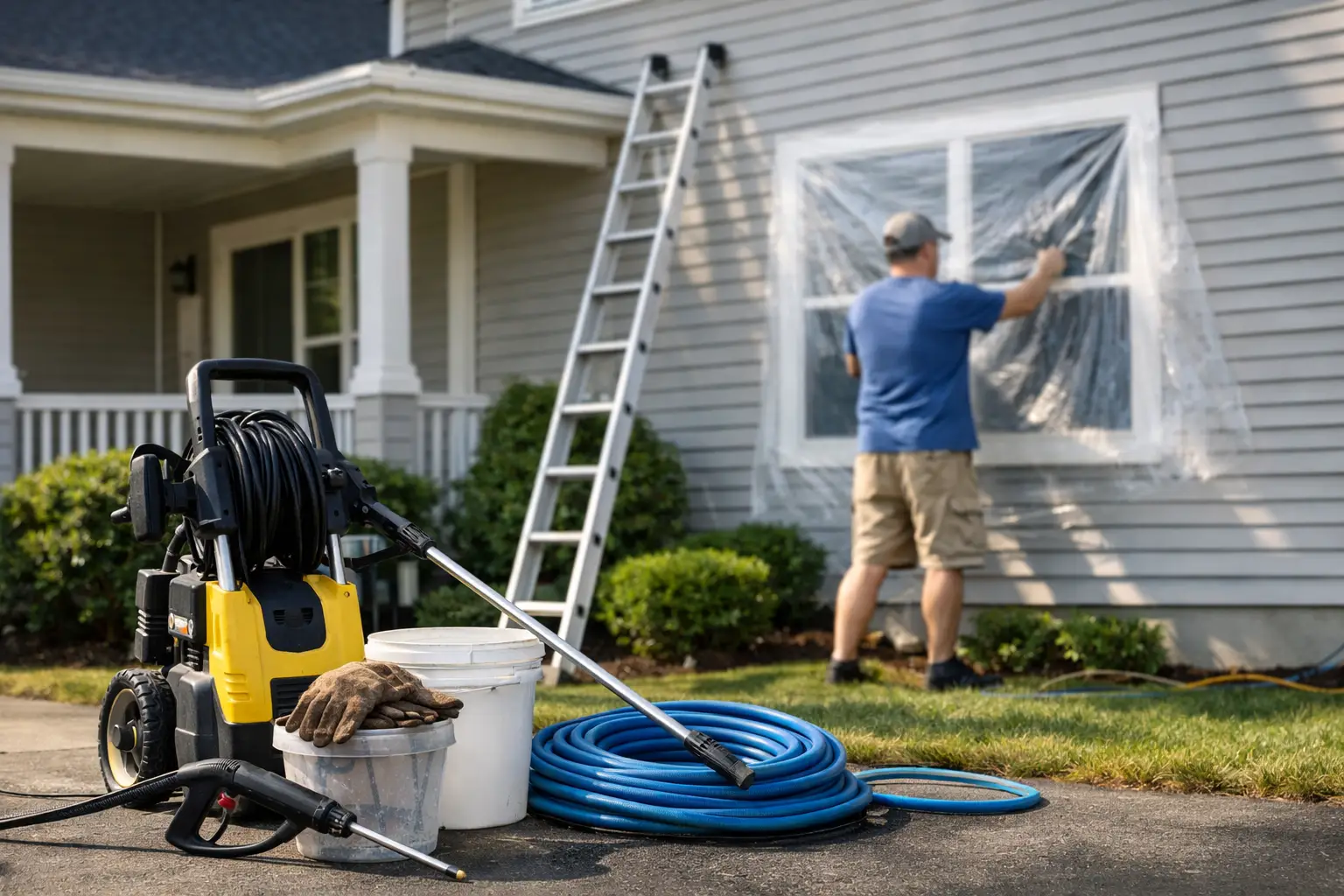
Mould on painted walls, algae around eaves and built-up grime on exterior surfaces can make a well-kept property look tired fast. Knowing how to prepare your house for washing helps the job run safely, protects the things you value and gives your cleaner clear access to deliver the best possible result.
Most preparation is straightforward. You do not need to spend a weekend doing the cleaner’s work, but a few practical checks before the team arrives can prevent avoidable issues with water, access, pets and outdoor belongings.
Start by clearing access around the home
Exterior cleaning works best when technicians can move safely around every side of the building. Make sure gates are unlocked, side passages are clear and access to walls, eaves, gutters, paths and outdoor living areas is not blocked by stored items.
Move vehicles away from the house, preferably out of the driveway and clear of any overspray area. This includes cars, motorbikes, trailers, boats and work utes. Although professional cleaners control their wash area carefully, moving vehicles protects finishes and makes room for hoses and equipment.
If access is tight, such as a narrow side path or a shared driveway, let your cleaning provider know before the booking. They can plan equipment placement and discuss the best approach for your property. For strata, body corporate or commercial sites, organise any required gate codes, loading-zone access or caretaker approval ahead of time.
Protect outdoor furniture and personal items
Take loose items inside where possible. Outdoor chairs, tables, cushions, children’s toys, pot plants, barbecues, door mats and decorations can all get in the way or collect cleaning runoff.
Large or heavy items do not always need to be moved. If a fixed outdoor kitchen, built-in seating area or large planter needs protection, point it out to the cleaning team on arrival. A professional will assess the material and work around it using the appropriate method. Soft washing is designed for painted surfaces and delicate finishes, but preparation still helps prevent unnecessary contact with items that do not need cleaning.
Pay particular attention to laundry on clotheslines. Bring it in before the job begins, even if it appears well away from the house. Wind can carry fine spray further than expected.
Close windows and check exterior openings
Before washing starts, close all windows and external doors securely. Check louvre windows, sliding windows, garage doors, pet doors, skylights and any windows that are commonly left slightly open for ventilation. Ask everyone in the household to do the same, particularly if someone is working from home.
It is also worth checking screens and seals. Older flyscreens, loose window seals and damaged weather strips may allow water through when exterior surfaces are cleaned. House washing should not force water into a sound, closed window, but existing gaps and damage can create problems.
If you know there is a leak, cracked pane, damaged cladding section or loose render, mention it before work begins. The right cleaning pressure and treatment depend on the surface condition. Early notice allows the technician to take extra care or exclude an area that needs repair first.
Cover vulnerable electrical items
Outdoor power points, light fittings, security cameras, intercoms and air-conditioning units need consideration. Fixed electrical equipment is usually cleaned around rather than directly sprayed, but notify the team about any item that is damaged, poorly sealed or unusually positioned.
Unplug removable outdoor appliances and bring portable speakers, fairy-light transformers and electric patio heaters indoors. If an exterior power point has no weatherproof cover, let the technician know. Do not attempt makeshift electrical repairs immediately before a wash.
Prepare gardens, pools and water features
A good exterior wash should improve the appearance of your home without neglecting the spaces around it. Trim back branches, vines or dense shrubs that sit hard against walls where practical. This gives the cleaner access to the surface and reduces the chance of foliage holding moisture and organic growth against the building after the wash.
Move lightweight pot plants away from walls, especially those beneath downpipes or close to entrances. For established garden beds that cannot be moved, identify sensitive plants when the team arrives. Cleaning professionals can wet down vegetation, manage runoff and take appropriate precautions for the treatment being used.
Pool areas need a little extra planning. Remove towels, pool toys and loose furniture, and keep the pool cover closed if you have one. If a pool, pond or water feature is close to the work area, tell the cleaner before they begin so the area can be managed carefully. The same applies to rainwater tanks and visible tank inlets.
Keep pets, children and visitors safely inside
Exterior cleaning equipment, wet surfaces and open gates are not a good mix with pets or young children. Keep dogs, cats and other animals indoors or in a secure area well away from the work zone. If your pet is anxious around machinery or unfamiliar people, arrange for them to be off-site during the service if possible.
Let the cleaning team know about any animals on the property, including pets in side yards. This is especially important if a gate must be opened to reach the rear of the home.
Wet driveways, paths, decks and pool surrounds can be slippery while they are being cleaned and before they dry. Delay outdoor play, deliveries and non-essential visitors until the work is complete. For commercial properties, schools and shared residential sites, clear communication with tenants, staff or families helps keep pedestrian areas safe.
Point out problem areas before the wash
A quick walk-around with your technician can be valuable, particularly for older homes or properties with several surface types. Show them the areas that concern you most, such as black mould on eaves, green algae on rendered walls, staining beneath windows, cobweb build-up or slippery paths.
Also point out any existing damage. Loose paint, cracked tiles, deteriorated timber, crumbling mortar and fragile screens should be recorded before cleaning begins. Washing removes surface contamination, but it cannot repair materials that have reached the end of their service life. In some cases, cleaning may reveal paint failure or stains that were previously hidden beneath grime. That is not damage caused by the wash – it is a clearer view of the surface underneath.
Taking a few dated photos before the service is sensible for homeowners, property managers and body corporate representatives. It provides a clear record of the property’s condition and makes the before-and-after improvement easy to see.
Make water and access arrangements clear
Most house washing jobs require access to an outdoor tap. Check that the tap is working, reachable and not blocked by stored items. If the tap is inside a locked courtyard, garage or utility area, make arrangements for the team to access it.
Your provider may bring specialised equipment and treatment solutions, but every site is different. Apartment buildings, commercial sites and larger properties can have water restrictions, security procedures or site-specific safety requirements. Raise these during quoting rather than waiting until the team arrives.
If you cannot be home, confirm access instructions in advance. Provide gate codes through the agreed channel, secure pets and make sure the technician has a way to contact you if a question arises. Never leave keys or access details in an obvious location unless this has been specifically arranged.
Choose the right day, but do not overthink the weather
Light rain does not always prevent exterior washing, particularly when the treatment needs time to work on mould and algae. Severe weather, lightning, high winds or conditions that create unsafe access may require rescheduling. Your cleaner will make that call based on safety and the expected finish.
Avoid booking other outdoor trades for the same time. Painters, gardeners, removalists and window installers can all need the same access areas. If you are preparing a home for sale or a tenancy changeover, schedule house washing early enough to allow surfaces to dry before photography, inspections or other maintenance work.
A simple pre-wash check on the morning
On the day, do one last check: close windows and doors, move vehicles, bring in laundry, secure pets and clear outdoor items from the walls and paths. Then make sure gates are unlocked and the outdoor tap is accessible.
That small amount of preparation lets the cleaner focus on what matters – safely removing mould, algae, dirt and pollutants from the exterior surfaces that shape your property’s first impression. When the wash is complete, allow treated areas to dry fully, then enjoy the brighter, cleaner presentation of a home that is easier to maintain.


