

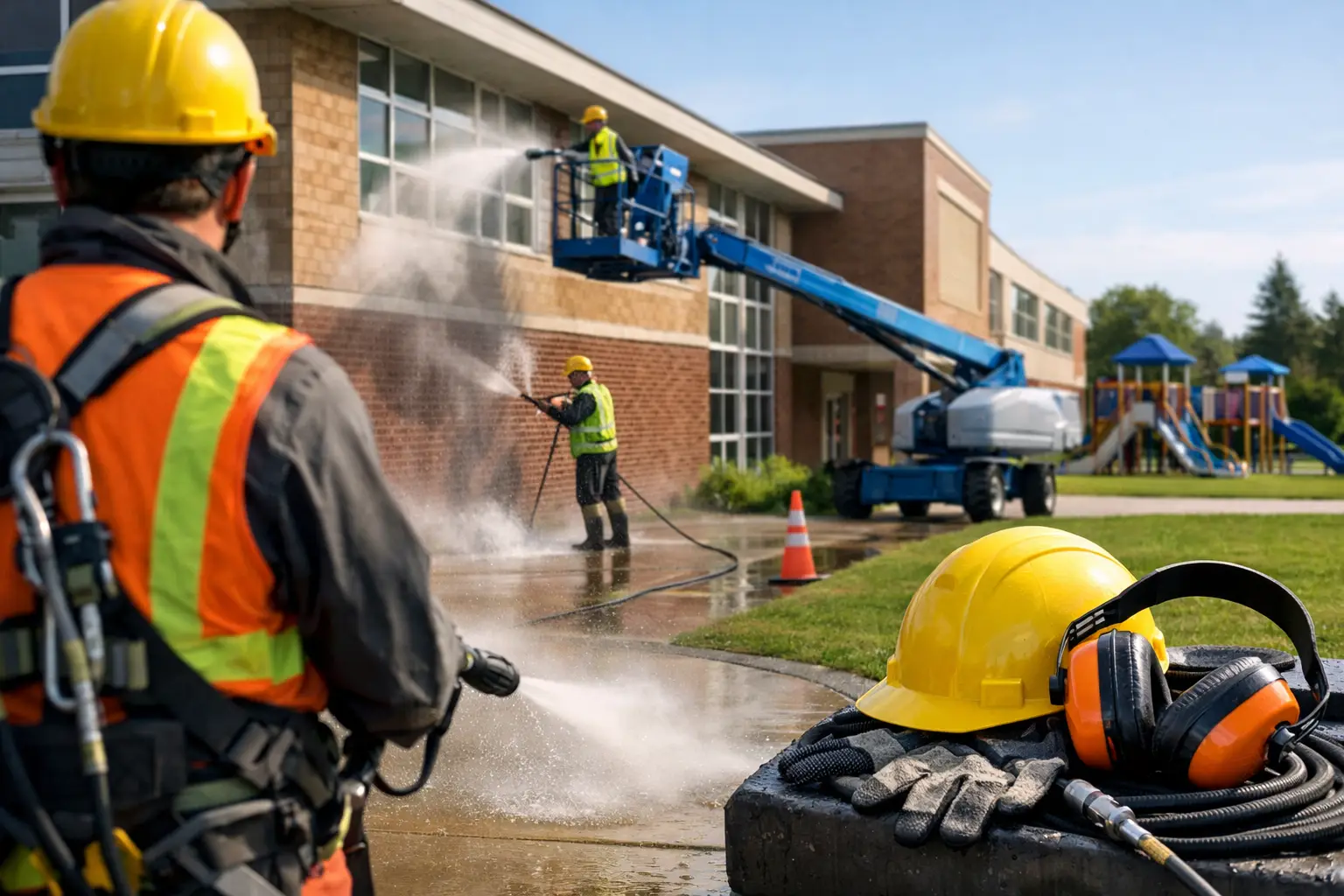
A clean school exterior does more than improve first impressions at the front gate. It helps reduce slippery algae on paths, removes mould from shaded walls and keeps facilities looking cared for by students, families, staff and visitors. This school exterior cleaning safety guide explains how to plan exterior cleaning around student safety, surface protection and the everyday operation of a busy campus.
For schools, the challenge is not simply getting surfaces clean. Cleaning work often takes place near classrooms, playgrounds, car parks, covered walkways and outdoor learning areas. The right method, timing and site controls make the difference between a successful maintenance job and unnecessary disruption.
Start with a site-specific cleaning plan
Every school has different risks. A small primary school with enclosed courtyards needs a different approach from a large secondary campus with multiple buildings, sports courts, bus zones and high-traffic footpaths. Before work starts, inspect the site and identify the areas that need treatment, the surface materials involved and the people who may be affected.
The plan should account for access points, emergency routes, school drop-off and pick-up times, playground use, vehicle movement and any areas that need to remain open. It should also identify drains, gardens, electrical fittings, solar equipment, outdoor furniture and sensitive surfaces such as painted cladding, timber, sandstone or older concrete.
A professional contractor should provide clear documentation for the job, including a site risk assessment and safe work method statement where required. For school facility managers, this creates a practical record of what will be cleaned, how the work area will be controlled and who to contact during the job.
Schedule cleaning when the campus is quiet
Timing is one of the strongest safety controls available. School holidays, pupil-free days and weekends generally provide the safest window for larger exterior cleaning projects. They reduce pedestrian traffic and allow contractors to clean walkways, stairs, entrances and play areas without rushing around normal campus activity.
It depends on the size of the job. A small wall wash or window clean may be possible outside peak hours, while cleaning a full building façade, car park or covered walkway is usually better suited to a closure period. If works must occur during term time, establish exclusion zones that are clearly separated from students and staff.
Avoid cleaning near arrival, departure and bus collection periods. These are the times when vehicle movement, distracted pedestrians and wet paths create the greatest risk. A clean entrance is valuable, but it should never compromise a safe route through the grounds.
Use the right method for each surface
High pressure is not the answer to every exterior cleaning problem. Used incorrectly, it can strip paint, damage joints, force water behind cladding, scar concrete and disturb loose materials. On school buildings, that can turn a maintenance task into an expensive repair.
Soft washing is often the safer option for painted walls, rendered surfaces, weatherboards, roofs and other delicate finishes. It uses a controlled application of suitable cleaning solutions at low pressure to treat mould, algae and organic staining at the source. After appropriate dwell time, the surface is rinsed gently, helping preserve the finish while delivering a visible result.
Pressure cleaning still has an important role on durable hard surfaces such as concrete paths, car parks, pavers and some sporting areas. Even then, pressure needs to be matched to the condition of the surface. Older concrete, cracked pavers and deteriorating coatings require a more cautious approach than newer, sound surfaces.
A thorough inspection prevents guesswork. It also helps determine whether staining is cosmetic, whether it is creating a slip hazard, and whether a surface requires repair before cleaning begins.
Treat mould and algae, not just the visible grime
Queensland’s heat, humidity and summer rain create ideal conditions for mould and algae, particularly on shaded paths, southern-facing walls, awnings and pool-adjacent areas. Simply blasting away the green growth may make a path look better for a short time, but it may not address the underlying contamination.
A suitable treatment followed by careful rinsing is more effective for ongoing presentation and safety. The aim is to remove the growth without damaging nearby paintwork, gardens or drainage systems. This is particularly relevant around school entries, ramps, stairs and covered walkways where wet organic growth can quickly become slippery.
Set up proper exclusion zones and signage
Cleaning equipment, hoses, wet surfaces and treatment products all need to be controlled. Before work starts, restrict access to the active area using barriers, cones and clear signage. The exclusion zone should be large enough to protect people from overspray, trip hazards and slippery runoff, not just the immediate cleaning point.
Hoses should be routed away from doors, footpaths and emergency access routes wherever possible. Where a hose must cross a pedestrian area, it needs suitable protection and active supervision. Contractors should never leave equipment unattended where students can access it.
For work at height, controls become even more important. Ladders, elevated work platforms and roof access should only be used when the job has been assessed and the appropriate equipment and trained operators are in place. Schools should not accept shortcuts around height safety to save time.
Protect gardens, drains and outdoor assets
A school’s exterior includes far more than walls and paths. Native gardens, vegetable patches, playground equipment, shade structures, water tanks, solar panels and outdoor seating all need consideration before cleaning begins.
Protecting plants may involve pre-wetting vegetation, using controlled application methods and rinsing carefully after treatment. The correct approach depends on the cleaning solution, plant type, weather and proximity to the work area. On a hot day, for example, treatment can dry too quickly and increase the risk of residue on surfaces or landscaping.
Drainage also needs a plan. Runoff should be managed so sediment, leaf litter and cleaning residue do not collect in stormwater pits or flow into areas where it can cause problems. A contractor should understand the site’s drainage layout before beginning large-scale pressure cleaning, especially in car parks and heavily soiled hardstand areas.
Outdoor assets require surface-specific care as well. Tennis courts, painted line markings, pool surrounds and sealed concrete can all be damaged by overly aggressive pressure or unsuitable chemicals. The best result comes from choosing the cleaning method for the asset, rather than applying one setting across the entire site.
Communicate clearly with staff and contractors
A safe job runs more smoothly when everyone knows what is happening. Facility managers should advise relevant staff about the cleaning schedule, affected areas and temporary access changes. If classrooms, administration offices or maintenance teams are close to the work zone, nominate a contact person who can respond quickly if conditions change.
Contractors should arrive with a clear scope of work, suitable equipment and a plan for securing chemicals and machinery. They should also confirm access to water, power if needed, gates, parking and any restricted areas before the scheduled start time. This avoids last-minute changes that can create safety gaps.
Weather needs to remain part of the conversation. Heavy rain can make access difficult and dilute cleaning treatments. Strong winds can increase the chance of overspray. Extreme heat can affect working conditions and product performance. Rescheduling may be inconvenient, but it is often the sensible decision.
Make exterior cleaning part of planned maintenance
Waiting until paths are visibly green or walls are heavily stained usually means the job is larger, slower and more disruptive. Regular inspections allow schools to target problem areas early, particularly shaded walkways, entry points, retaining walls, bin areas and locations exposed to irrigation overspray.
A planned cleaning programme can also help extend the life of paint, coatings, concrete and outdoor surfaces. Removing mould, algae, pollutants and built-up grime supports a cleaner presentation while reducing the chance of staining becoming difficult to remove. For schools managing budgets across multiple buildings, this preventative approach is often more cost-effective than reactive restoration.
Boost Exterior Cleaning works with schools across South East Queensland to clean exterior surfaces using the pressure, treatment and site controls each area requires. The goal is straightforward: cleaner grounds, safer access and a campus that continues to look well maintained.
A well-planned clean should leave the school looking brighter without interrupting learning or compromising safety. When the method suits the surface and the site is properly controlled, exterior maintenance becomes one less concern for the facilities team.


