

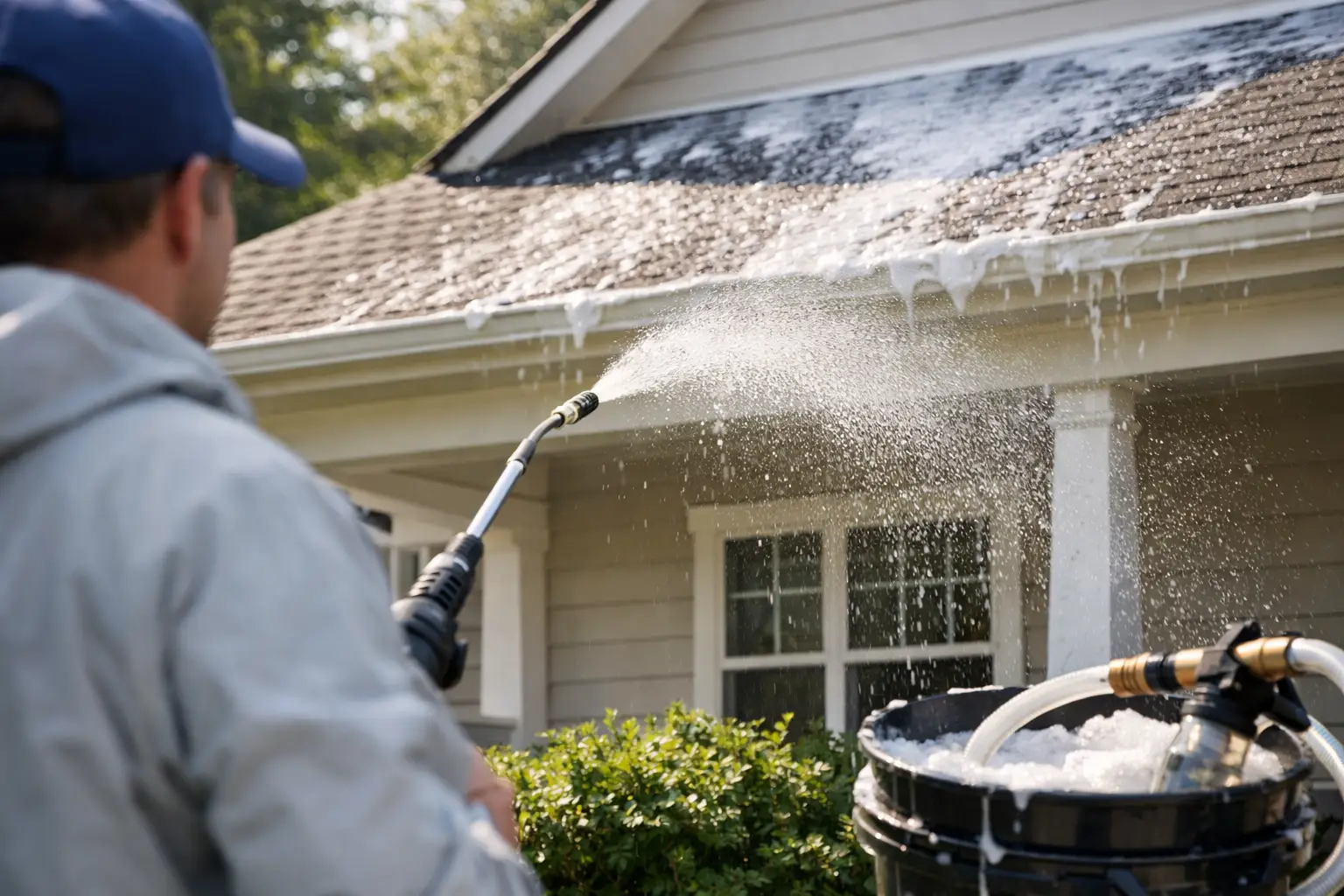
A home can look tired long before it needs painting. Green algae along the eaves, black mould on rendered walls and dull grime on cladding can quickly take the shine off an otherwise well-kept property. Soft washing is designed to treat that build-up properly without relying on the high pressure that can damage paintwork, seals and delicate exterior finishes.
For homes, strata properties, schools and commercial sites across Southeast Queensland, it is one of the most effective ways to restore exterior presentation while protecting the surfaces underneath. The difference is not simply using less pressure. It is using the right treatment, application method and rinse for the material being cleaned.
What is soft washing?
Soft washing is a low-pressure exterior cleaning method used to remove organic growth and surface contamination. Rather than blasting dirt away with force, a trained operator applies a suitable cleaning solution to break down mould, algae, mildew, lichen, dirt and airborne pollutants. The surface is then rinsed gently using controlled water pressure.
This approach is particularly valuable in Queensland’s humid, subtropical conditions. Moisture, shade and seasonal rain create ideal conditions for mould and algae to grow on painted walls, rooflines, rendered finishes, weatherboards, fences and outdoor entertaining areas. A rinse alone may improve the appearance for a short time, but it does not always address the growth causing the discolouration.
A proper soft wash treatment is about cleaning the surface and treating the contamination at its source. When completed correctly, it produces a noticeable before-and-after result without exposing vulnerable surfaces to unnecessary force.
Why pressure is not always the answer
Pressure cleaning has an important place in exterior maintenance. It is often the right method for hardwearing concrete driveways, paved areas, car parks and other durable surfaces. But high pressure is not suitable for every job.
On painted exterior walls, render, timber, older cladding, window surrounds and certain roof materials, excessive pressure can strip paint, force water behind joins, roughen the finish or damage seals. These problems can be expensive to repair and may not be obvious until later.
Soft washing gives the cleaning solution time to do the hard work. Because the process relies on treatment rather than impact, it can be used on surfaces where preserving the finish matters just as much as removing the grime. The best method always depends on the surface, its condition and the type of contamination present.
Common surfaces suited to soft washing
Soft washing is commonly used on painted house exteriors, rendered walls, weatherboards, vinyl or composite cladding, eaves, fascias, gutters, fences and exterior trims. It is also useful for delicate areas around windows, pool enclosures and outdoor living spaces where a high-pressure approach may create avoidable risk.
Older homes often benefit most from this gentler method. Aged paint, worn seals and fragile exterior materials need care, especially when years of moisture, pollution and biological growth have built up. The goal is a cleaner property, not a cleaning job that creates a new maintenance issue.
How professional soft washing works
A quality result starts before any equipment is switched on. The operator should inspect the property, identify the surface materials and check for problem areas such as peeling paint, open cracks, damaged seals or fragile landscaping. This helps determine whether soft washing is appropriate and how the treatment should be applied.
Nearby plants, garden beds, outdoor furniture and sensitive areas are protected or pre-wet as required. Cleaning solutions are selected and diluted for the job, then applied evenly at low pressure. The treatment is allowed to work on the mould, algae and grime before a controlled rinse removes the residue.
The process may vary from one property to the next. A rendered home with heavy mould in a shaded side passage needs a different approach from a modern commercial façade with traffic film and dust. That is why professional assessment matters. One setting and one chemical mix should never be treated as the answer to every exterior cleaning job.
Cleaning results without harsh surface wear
The visible benefit of soft washing is immediate. Walls look brighter, colours appear more even and stained exterior areas regain their presentation. The longer-term benefit is that organic growth is treated rather than simply pushed around the surface.
For homeowners preparing to sell, this can lift kerb appeal without the cost of repainting. For rental providers and property managers, it can help present a property well between tenancies. For schools, retail sites and offices, a clean exterior supports a safer, more professional environment for visitors, staff, students and customers.
When should you book a soft wash?
There is no single schedule that suits every property. Homes surrounded by trees, properties near the coast and buildings with shaded walls usually need attention more often than open, sunny sites. In many cases, an annual exterior wash is a practical starting point, with more regular maintenance for high-growth areas.
It is worth acting when you first notice green streaks, black spotting, slippery outdoor surfaces or widespread dullness. Waiting until mould and algae become heavily established can make the job more involved and allow staining to worsen. Regular cleaning is generally easier on surfaces and more cost-effective than leaving a property for several years between treatments.
Before major events, property listings, tenancy changes or building inspections are also good times to arrange exterior cleaning. A freshly washed façade, entry area and outdoor space can change the way a whole property feels on arrival.
Soft washing for commercial and shared properties
Commercial premises and shared sites have different pressures to manage. Building managers need cleaning completed safely, with minimal disruption to tenants, customers and daily operations. They also need a method that is appropriate for a range of surfaces, from painted walls and signage surrounds to awnings, common-area façades and outdoor amenities.
Soft washing can form part of a planned maintenance program for office buildings, shopping centres, schools, body corporate properties and healthcare or community facilities. Keeping mould and grime under control helps protect presentation and can reduce the chance of contamination spreading across large visible areas.
For multi-surface sites, the right contractor will combine methods where needed. Soft washing may be used for walls and delicate finishes, while pressure cleaning is used for durable concrete paths, driveways and parking areas. This surface-by-surface approach delivers a more complete result without treating every part of the property as if it needs the same level of pressure.
What to avoid when cleaning exterior walls
DIY cleaning can be tempting, particularly when staining is limited to one side of the house. However, using a pressure washer too close to painted or rendered surfaces is a common cause of damage. Strong store-bought chemicals can also affect plants, finishes and surrounding materials if they are not selected, diluted and rinsed correctly.
Avoid treating visible mould as only a cosmetic issue. If the conditions that support growth are still present, such as poor drainage, overhanging vegetation or persistent shade, it may return sooner. Cleaning is most effective when paired with sensible property maintenance, including clearing gutters, trimming vegetation away from walls and addressing water run-off issues.
Safety matters too. Exterior cleaning often involves ladders, wet surfaces and work around windows, electrical fixtures and landscaped areas. Professional equipment and experience reduce the risks while giving you a more consistent finish.
Choose a surface-safe cleaning method
The best exterior cleaning result is not the one achieved with the most pressure. It is the one that removes contamination, respects the material being cleaned and leaves the property looking cared for. At Boost Exterior Cleaning, that means assessing each surface and matching the method to the job, whether it needs soft washing, pressure cleaning or a combination of both.
If your walls, eaves or exterior finishes are showing signs of mould, algae or built-up grime, early treatment can make a real difference. A professionally cleaned exterior does more than improve kerb appeal. It helps you maintain the surfaces that protect your property every day.


