

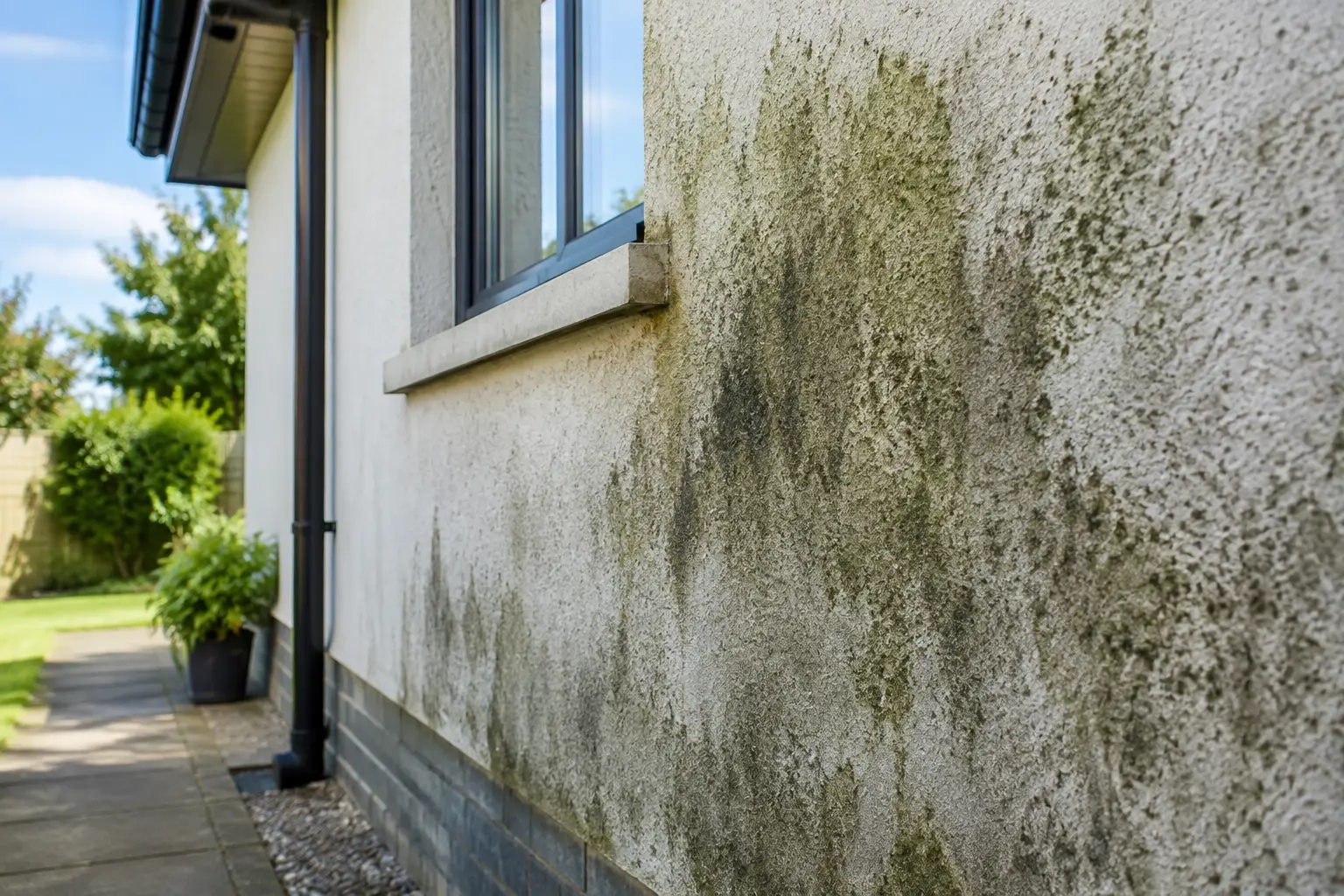
Dark spotting on a rendered wall can make an otherwise well-kept property look tired surprisingly quickly. If you are asking what causes mould on render, the short answer is moisture combined with shade, airborne spores and a surface that stays damp for too long. In Southeast Queensland’s warm, humid conditions, that combination is common on homes, unit complexes, schools and commercial buildings.
Mould growth is not simply a cosmetic issue. Left untreated, it can spread across walls, stain finishes and hold moisture against the surface. Regular, surface-safe exterior cleaning helps restore the presentation of render while reducing the conditions that allow biological growth to return.
What causes mould on render walls?
Render is a porous cement-based finish applied over brick, blockwork or other wall systems. Even when painted or sealed, its slightly textured surface can collect dust, pollen, salt residue and other fine organic matter. These deposits give mould and algae something to settle into, particularly where water is slow to evaporate.
The visible growth on render is often described as mould, although it may also include algae, mildew, lichen or a combination of biological contaminants. Black, green and grey marks are especially common on external walls that receive little direct sun. The exact cause can vary from property to property, but moisture is nearly always part of the picture.
Humidity and wet weather
Queensland humidity creates ideal conditions for mould and algae. After rain, morning dew or storms, render absorbs and holds a small amount of moisture. A sunny, well-ventilated wall will usually dry quickly. A shaded wall, however, may remain damp long enough for spores already in the air to establish themselves.
Extended wet periods can accelerate the problem, but one heavy shower is rarely the sole cause. It is the repeated cycle of wetting without proper drying that allows staining to become more noticeable over time.
Shade from trees, fences and nearby buildings
North-facing and open walls often dry faster than walls hidden behind mature trees, high fences, neighbouring buildings or covered walkways. Dense vegetation can block sunlight and airflow while dropping leaves, pollen and organic debris onto the wall.
This is why one side of a house can look clean while another develops dark streaks. The difference is not always the quality of the render or paint. It is often the local microclimate around that section of the building.
Poor drainage and water run-off
Overflowing gutters, leaking downpipes, failed flashing and air-conditioning discharge can continually wet sections of render. You may notice mould concentrated below a gutter line, beside a downpipe or around an external tap. These patterns are useful clues that cleaning alone may not solve the issue.
Ground levels also matter. Garden beds built too high against a wall, blocked drainage and irrigation directed at the building can expose the lower render to excess moisture. Before arranging a clean, it is worth checking whether there is an obvious water source that needs attention.
Dirt, dust and airborne contaminants
Render does not need visible mud to become a growth surface. Fine dust, vehicle pollution, pollen, cobwebs and salt carried through the air can build up gradually. In coastal areas, salt residue may attract and retain moisture, which can contribute to surface staining.
Once this film develops, mould and algae spores have a better chance of taking hold. Regular house washing removes the contamination that supports growth, rather than just improving the immediate appearance.
Why some rendered homes develop mould faster
Two properties in the same street can age very differently. The amount of sun, surrounding vegetation, roof design, wall orientation and maintenance history all affect how quickly mould appears.
Older paintwork can also play a part. As exterior coatings weather, they can become chalky or less water-repellent. The render beneath may then stay damp for longer after rain. That does not automatically mean the wall needs repainting, but it does mean the cleaning method must be chosen carefully to avoid further stress on the finish.
Homes close to bushland, waterways or the coast often need more frequent exterior maintenance. Commercial properties and schools face another challenge: larger wall areas, heavy foot traffic, car park dust and landscaping that can create shaded, damp zones around buildings.
Mould on render versus a render or moisture problem
Most dark growth on render is surface contamination that can be professionally treated. However, some signs suggest there may be an underlying building issue as well.
If staining repeatedly returns in one concentrated area, appears directly beneath a leaking gutter or is accompanied by bubbling paint, cracking, loose render or dampness inside the building, investigate the source of moisture. Cleaning can remove the visible growth, but persistent leaks and drainage problems need to be repaired to prevent ongoing damage.
White, powdery marks are different again. This may be efflorescence, where salts move through masonry and dry on the surface. It can occur after moisture passes through the wall and should not be mistaken for mould. A professional inspection helps distinguish between biological staining, salt deposits and coating failure so the right treatment is used.
Why high-pressure washing is not always the answer
It is tempting to attack mould with a pressure washer, particularly when the marks are obvious. On render, excessive pressure can be counterproductive. It may strip paint, scar the textured finish, force water into cracks or expose weak areas of the surface.
The safest method depends on the condition of the render, the age of the paint, the type of growth and whether there are nearby windows, gardens or delicate finishes. In many cases, soft washing is the better approach. This uses an appropriate cleaning treatment to break down mould, algae and grime, followed by a controlled, low-pressure rinse.
The goal is not simply to blast the wall clean. It is to remove contamination thoroughly while protecting the render and its coating. A wall can look brighter immediately after a harsh clean, yet suffer avoidable damage that makes it harder to maintain in the future.
How to reduce mould returning to rendered walls
No exterior wall stays completely free of airborne spores, especially in humid coastal and subtropical areas. The practical aim is to reduce moisture and remove surface build-up before growth becomes established.
Keep gutters and downpipes clear so rainwater moves away from the building as intended. Trim back branches that sit close to rendered walls, particularly where they block morning sun or trap moisture. Check that sprinklers are not spraying the house and that garden beds do not hold wet soil against the base of the render.
A planned exterior wash is also worthwhile, rather than waiting until stains are heavy. The right frequency depends on the property’s location and exposure. A bright, open home may only need periodic maintenance, while a shaded property near the coast or surrounded by trees may need attention more regularly.
For strata sites, schools and commercial buildings, scheduled cleaning can be easier to manage than reactive cleaning. It keeps presentation consistent, helps maintain paintwork and reduces the chance of visibly stained walls becoming a larger maintenance job.
When to arrange professional render cleaning
Arrange professional cleaning when marks are spreading, the render is difficult to reach safely or you are unsure whether pressure will damage the finish. It is particularly sensible before selling a home, preparing a rental for a new tenancy or improving the presentation of a customer-facing premises.
A trained exterior cleaner can assess the wall, identify the likely source of staining and select a treatment suitable for rendered surfaces. At Boost Exterior Cleaning, this means matching the pressure and cleaning method to the material rather than applying a one-size-fits-all wash.
A clean rendered wall changes the first impression of a property, but the best result comes from dealing with the conditions behind the mould as well. Keep water moving away from the building, allow walls room to dry, and treat growth early before it becomes embedded in the finish.


