

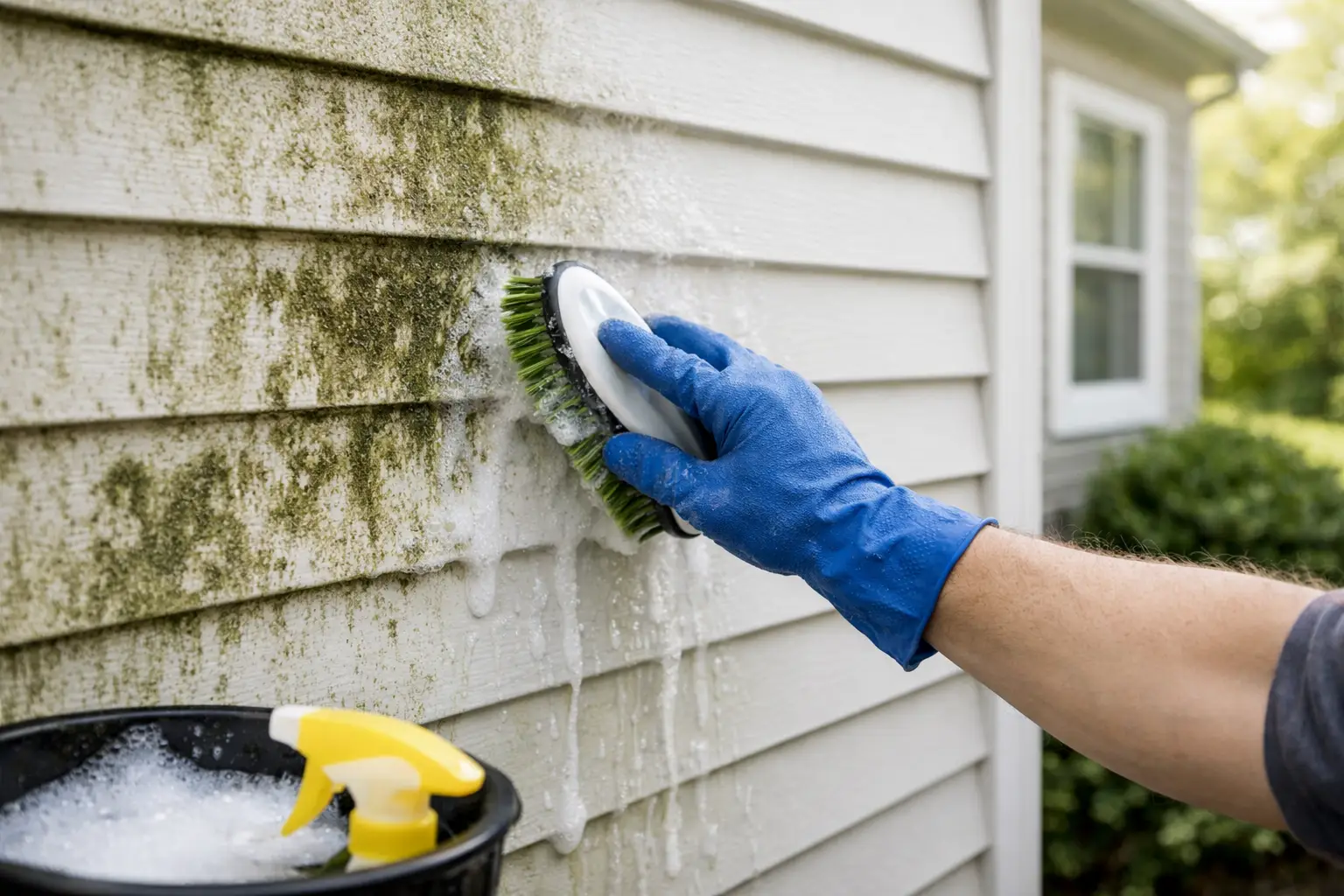
That green-black staining on exterior walls is not just making the place look tired. If you need to remove mould from house exterior surfaces, the right method matters because the wrong one can strip paint, scar render, drive water into cracks, and leave you with a bigger repair bill than the cleaning itself.
In Southeast Queensland, mould and algae build-up is common thanks to humidity, shade, rain and warm weather. It often starts on the southern side of the home, under eaves, around gutters, behind downpipes, and anywhere moisture hangs around longer than it should. What looks like a simple wash job can be more complicated once you factor in painted surfaces, older homes, oxidised finishes and delicate materials.
Why exterior mould keeps coming back
Mould on the outside of a home is usually a moisture problem first and a cleaning problem second. If a wall stays damp because of poor sun exposure, overflowing gutters, nearby garden growth or blocked drainage, spores will keep settling and regrowing. That is why some DIY jobs look good for a few weeks, then the staining starts to return.
Surface type also plays a part. Render, painted weatherboards, fibre cement, brick and cladding all react differently to water pressure and cleaning solutions. A method that works on a hard concrete wall may be far too aggressive for painted timber or aged coatings.
The safest way to remove mould from house exterior walls
For most homes, a soft wash approach is the safer and more effective option. Soft washing uses low pressure combined with the correct treatment to break down mould, algae and grime without blasting the surface. That matters on painted exteriors where high pressure can gouge timber, lift flaky paint and force water behind boards or into wall cavities.
Pressure cleaning has its place, but it depends on the surface. It suits some hard external areas far better than house walls. Driveways, paths and some masonry can handle more force. Painted render, weatherboards and coated cladding usually need more care.
If you are cleaning it yourself, the goal is not to hit the wall as hard as possible. The goal is to kill and remove the growth while protecting the finish underneath.
Check the surface before you start
Before cleaning, look closely at what you are dealing with. If the paint is chalky, peeling or already damaged, even low pressure can make deterioration more obvious. If there are gaps around windows, cracked render, loose pointing or swollen timber, adding water may do more harm than good.
Also check whether the dark marks are mould alone or a mix of mould, algae, dirt and oxidation. Oxidised paint often leaves a powdery residue and needs a gentler, more controlled clean. This is one reason a one-size-fits-all approach rarely works across an entire property.
How to clean mould off exterior surfaces properly
Start by removing loose debris and trimming back plants that are holding moisture against the wall. Wet down surrounding garden beds so any overspray is diluted, and cover delicate plants if you are using a treatment solution.
Apply an exterior-appropriate mould treatment according to the product instructions. Let it dwell for the recommended time so it can do the work. This step is where many DIY attempts fall short. People rush straight to rinsing, but mould staining needs treatment time to break down properly.
After that, rinse with low pressure from a sensible distance. Work in sections and avoid driving water upward under laps, boards or flashings. If the staining remains, a second treatment is often safer than increasing pressure. More force is not usually the answer on exterior house surfaces.
For brick or more durable masonry, you may be able to use a slightly firmer rinse, but caution still matters around mortar joints and older surfaces. On painted weatherboards, render and fibre cement, gentler is better almost every time.
What not to do
The biggest mistake is using a high-pressure cleaner on house walls without understanding the surface. It can strip paint, etch soft material and create patchy results that are obvious in daylight. Another common mistake is using household bleach too heavily or without proper dilution. It may lighten staining temporarily, but it is not always the best option for long-term treatment, and careless use can affect surrounding vegetation and finishes.
Scrubbing too hard can also leave shiny patches or wear marks, especially on older painted exteriors. If you are already seeing damage during the clean, stop and reassess rather than pushing through.
When mould is more than a cosmetic issue
Sometimes exterior mould is a sign of a maintenance problem that cleaning alone will not solve. Leaking gutters, poor stormwater flow, failed seals around windows, roof run-off and dense planting against walls can all keep surfaces damp. If those conditions stay the same, mould will return sooner than you want.
This is especially relevant for rental properties, body corporate sites, schools and commercial buildings where presentation and upkeep are tied to safety and asset value. A visibly mouldy exterior can make a property look neglected, but more importantly, long-term moisture exposure can shorten the life of paint systems and surface coatings.
Should you DIY or call a professional?
That depends on height, access, surface condition and how widespread the mould is. A small, reachable area on sound masonry may be manageable as a DIY task if you use the right treatment and keep pressure low. A two-storey home, older painted weatherboards, rendered façades, or heavily affected walls are different jobs altogether.
Professional exterior cleaning is usually the better option when you want a proper result without gambling on paint damage. An experienced operator will adjust pressure, choose the correct treatment and match the method to the material. That is the difference between simply blasting dirt around and actually restoring the surface safely.
For many homeowners, the real value is not just the visible improvement. It is avoiding the cost of repainting or repairs caused by the wrong cleaning method. Property managers and commercial operators tend to see it the same way – reliable maintenance is usually cheaper than reactive fixes.
Remove mould from house exterior surfaces without damaging paint
Painted exteriors deserve extra care because mould often grows on surfaces that are already weathered. If you clean too aggressively, you can end up with streaking, premature paint failure or obvious clean marks where oxidation has been disturbed unevenly.
A proper soft wash treatment helps deal with biological growth first, then allows for a controlled rinse that lifts residue without chewing through the coating. On older homes, this approach is often the difference between a fresh-looking exterior and one that suddenly needs patch repairs.
It also gives a more even finish. Rather than creating tiger stripes from a pressure cleaner wand, the surface comes up cleaner with less risk of patchiness. For homeowners preparing for sale or tenancy turnover, that cleaner finish can make a noticeable difference to street appeal.
How often should exterior mould be cleaned?
In humid parts of Queensland, many properties benefit from an annual exterior wash, while shaded homes or heavily treed sites may need attention more often. Commercial buildings, schools and multi-residential complexes often work best on a planned maintenance schedule rather than waiting until staining is severe.
Regular cleaning is easier on surfaces because the build-up has less time to take hold. It also helps preserve paintwork, keeps entries and external walls looking cared for, and makes it easier to spot minor maintenance issues before they turn into bigger ones.
If the mould is concentrated in the same areas each time, it is worth addressing the cause as well as the clean. Improve drainage, clear gutters, increase airflow around walls and trim back vegetation where possible. Cleaning removes the growth. Better moisture control slows the return.
Getting the result you actually want
When people search for the best way to remove mould from house exterior walls, what they usually want is simple: a home that looks clean again without accidental damage. The best method is the one that suits the surface, the condition of the coating and the level of contamination.
That is why soft washing is often the preferred option for residential exteriors. It is safer on delicate finishes, more effective on organic growth, and better suited to preserving the surfaces you have already paid to paint and maintain. In many cases, it delivers the visible transformation people want without the risks that come with overusing pressure.
If your walls are showing mould, algae or dark weather staining, do not wait until the build-up is baked in for another season. A careful clean now is usually easier, safer and more cost-effective than trying to reverse months or years of neglect later.


