

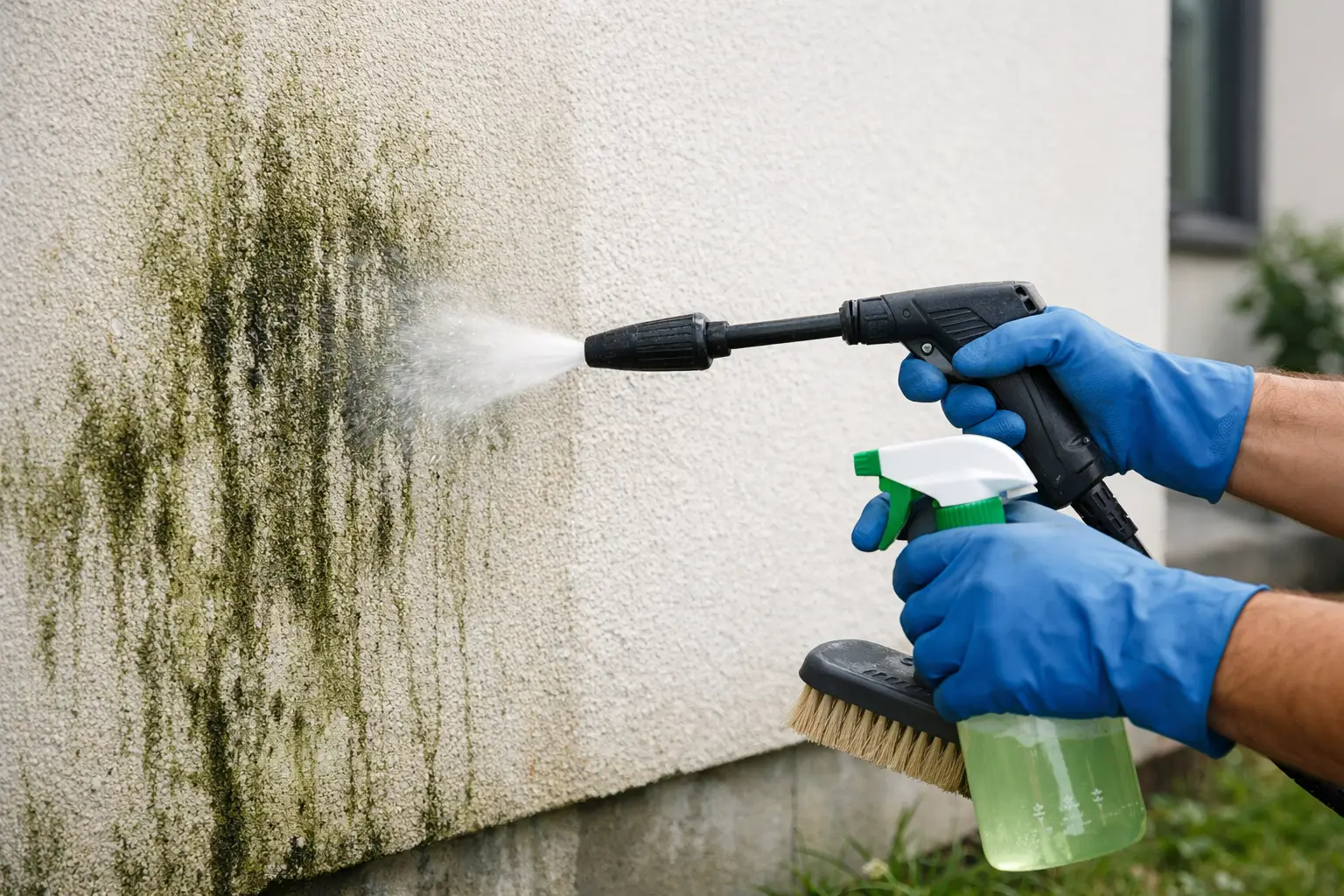
That black or green staining on render usually starts small – under eaves, near downpipes, along shaded walls – and then spreads faster than most property owners expect. If you need to clean mould off render, the method matters just as much as the product. Use too much pressure or the wrong chemical mix, and you can end up with patchy colour, etched coating, or damage that costs more than the clean-up.
Why mould grows on render so easily
Rendered walls cop a lot outdoors. They hold dust, stay damp in shaded spots, and often sit close to garden beds, sprinklers, fences, or trees that reduce airflow. In Southeast Queensland, warm temperatures and humidity create ideal conditions for mould, mildew and algae to keep returning.
Not all staining on render is the same. Black mould, green algae, lichen and general grime can look similar from the ground, but they do not always respond the same way. That is why a proper assessment comes first. A wall with light organic growth may only need a soft wash treatment, while heavy staining or porous older render may need a more careful staged approach.
The safest way to clean mould off render
In most cases, the safest way to clean mould off render is low-pressure washing combined with the right treatment for organic growth. This is often called soft washing. It is designed to kill mould at the source and rinse the surface without blasting the render apart.
High pressure is where many DIY jobs go wrong. Render can look hard-wearing, but many finishes are more delicate than they appear, especially if they are painted, aged, already cracked, or have absorbed moisture over time. A pressure cleaner used too aggressively can scar the surface, force water behind coatings, and leave visible streaks.
Soft washing works because it treats the cause, not just the surface stain. Instead of trying to strip mould off by brute force, it breaks down and kills the growth so it can be rinsed away with controlled pressure. The result is usually cleaner, more even, and less risky for the finish.
What you need to consider before you start
Before any cleaning begins, check the condition of the wall. If the render is chalky, flaking, cracked, or hollow in places, cleaning needs extra care. The same applies if the wall has been painted and you are not sure how well that coating is bonded.
You also need to think about what sits below and around the wall. Cleaning solutions can affect nearby plants, and runoff can move into garden beds, lawns, paths and drains. Windows, light fittings and adjacent surfaces should be protected as well.
How to clean mould off render without damaging it
If you are tackling a small area yourself, keep the process controlled. Start by dry brushing off loose debris only if the surface is sound. Then apply a mould treatment suited to exterior masonry or render, following the product directions carefully. Let it dwell for the recommended time so it can work on the organic growth.
After that, rinse gently with low pressure. The goal is to wash away dead growth and residue, not hammer the wall. Work in sections from top to bottom so dirty water does not run back over cleaned areas. If mould remains, a second treatment is often safer than increasing pressure.
Avoid scrubbing too hard with stiff brushes on painted render. That can burnish the surface or remove paint, leaving obvious clean patches. It is also worth testing a small, inconspicuous area first, especially on coloured render where fading or uneven weathering may already be present.
Common mistakes that make render look worse
The biggest mistake is assuming more pressure means a better result. It often means more damage. Another common issue is using household bleach too strongly or without proper control. While bleach-based products can kill mould, poor dilution or uneven application can leave blotchy results and create runoff issues.
Some owners also clean only the visible worst spots. That rarely solves the problem for long. Mould spores spread beyond the darkest staining, so a spot-clean can leave the wall looking uneven and allow regrowth around the edges.
Then there is timing. Cleaning in direct heat can dry products too quickly before they have had time to work. Cleaning during wet weather can dilute treatment and reduce effectiveness. Like most exterior maintenance, good results depend on surface condition, weather, and technique.
When professional soft washing is the better option
For larger walls, multi-storey homes, commercial facades, schools, and body corporate properties, professional cleaning is usually the smarter move. The same goes for heavily stained render, delicate painted finishes, or surfaces that have already been damaged by past pressure cleaning.
A professional operator should assess the render type, the level of contamination, nearby vegetation, access requirements, and the safest wash method before starting. That matters because there is no single setting or single product that suits every rendered wall. New acrylic render, older cement render, painted bagged finishes and repaired sections can all react differently.
This is where experience counts. A proper soft wash does more than improve appearance. It helps preserve the coating, reduce premature deterioration, and restore a cleaner presentation without unnecessary risk. For homes, that can lift street appeal quickly. For commercial sites and managed properties, it helps maintain a cleaner, more professional standard for tenants, visitors and the public.
Why mould keeps coming back on render
Even after a good clean, mould can return if the conditions that caused it stay the same. Shaded southern walls, leaking gutters, overflowing downpipes, dense planting and poor drainage all feed moisture into the problem. In some cases, automatic sprinklers hit the wall daily and keep the lower sections damp year-round.
That is why cleaning should be paired with simple prevention where possible. Trim vegetation back from the wall. Fix plumbing leaks. Adjust sprinklers away from rendered surfaces. Improve airflow around narrow side passages. Keep gutters clear so water is directed away properly.
A maintenance clean is often more cost-effective than waiting until staining becomes heavy again. Once mould is established deep in porous surfaces, it can take more treatment and more time to restore a uniform result.
Painted render versus unpainted render
Painted render usually needs a gentler touch because the coating itself can be the most vulnerable part of the surface. If paint is weathered or low quality, even careful cleaning may reveal existing flaws that were hidden by dirt and staining. That does not mean the cleaning caused the issue, but it can make pre-existing wear more obvious.
Unpainted render can sometimes tolerate slightly more agitation, but it is also more absorbent. That means mould and algae can sit deeper in the surface and may need repeated treatment. Again, it depends on age, porosity and condition.
For both types, the aim is the same – remove the organic growth, protect the finish, and avoid forcing water where it should not go. A clean wall should not come at the expense of the surface underneath.
Is DIY worth it?
For a small, accessible patch on sound render, DIY can be reasonable if you use the right treatment and stay conservative with pressure. But once the staining covers broad areas, reaches upper levels, or sits on a fragile finish, the risk goes up quickly.
What looks like a simple weekend job can turn into inconsistent results, plant damage, water ingress, or a wall that needs repainting. Property managers and commercial operators usually cannot afford that sort of guesswork. They need a result that is safe, presentable and repeatable.
That is why many owners choose a service that specialises in soft washing rather than general high-pressure cleaning. At Boost Exterior Cleaning, the focus is on using the right pressure and treatment for the surface, not just blasting away at the stain.
A clean wall is only part of the job
When render is cleaned properly, the difference is immediate. The property looks brighter, better maintained and more cared for. But the real value is in protecting the surface while you do it.
If you are looking at mould-stained render now, the best next step is not to attack it with maximum pressure. It is to choose a method that clears the growth, respects the finish, and gives you a result that still looks good long after the wall has dried.


