

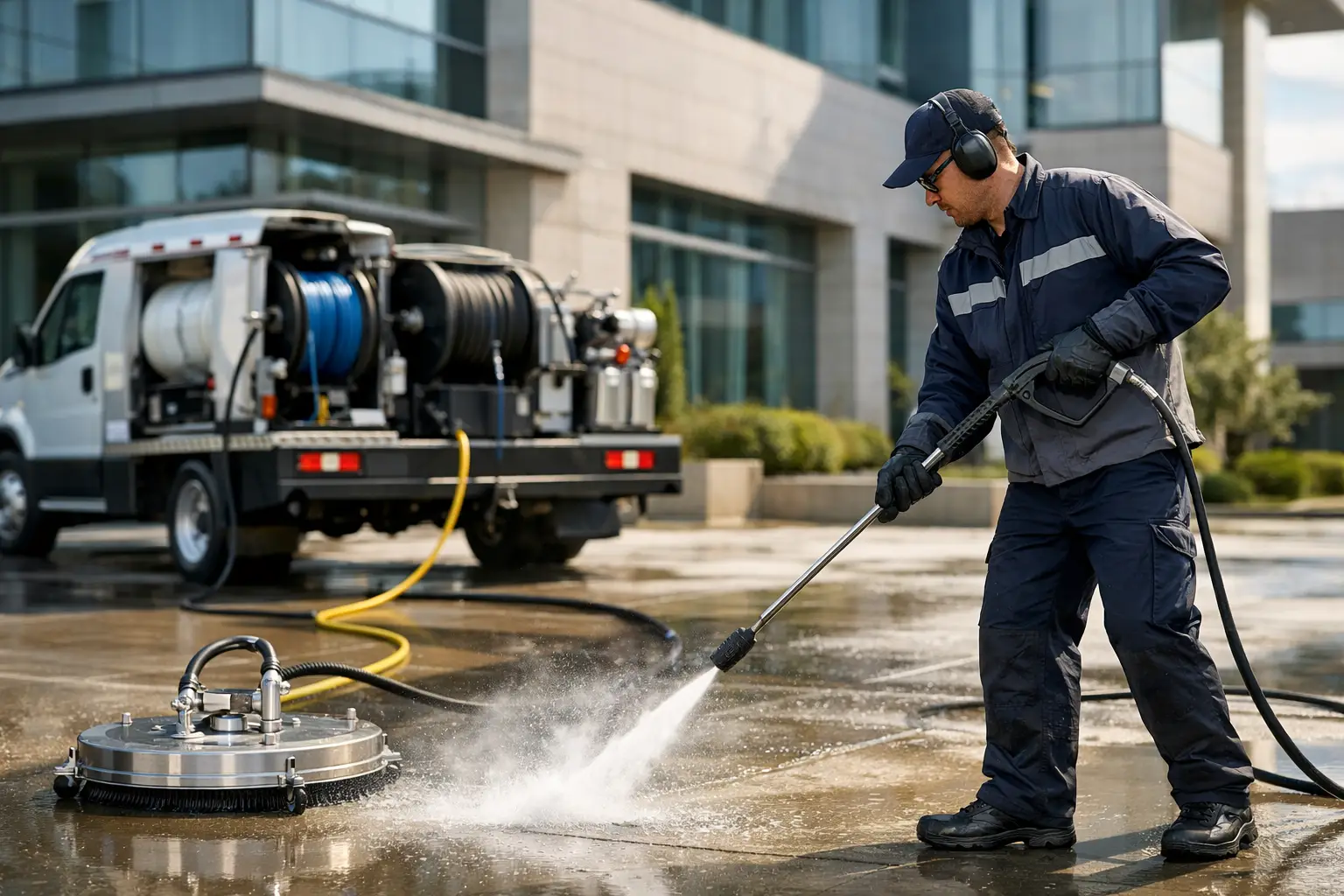
A stained entry, slippery pathways and grime building up on walls do more than make a property look tired. They send a message to tenants, customers, staff and visitors before anyone steps inside. That is why commercial pressure washing is not just about appearance. Done properly, it is part of routine property maintenance that helps protect surfaces, reduce hazards and keep your site looking cared for.
For commercial property owners and facility managers across Southeast Queensland, the challenge is rarely whether cleaning is needed. It is when to do it, how often to do it, and who can clean the site without causing damage. The wrong pressure on painted walls, render, aged concrete or delicate finishes can create more work than it solves. A better result comes from matching the cleaning method to the surface, the level of build-up and the way the site is used day to day.
What commercial pressure washing actually covers
Commercial pressure washing can include far more than a quick blast of water across a car park. On most sites, the work spans multiple surfaces with very different cleaning needs. Building exteriors, footpaths, loading zones, bin areas, shopfront surrounds, drive-through lanes, schools, strata common areas and parking lots all collect their own mix of dirt, algae, mould, oil, tyre marks and pollution.
Some of these areas can handle higher pressure. Others cannot. Concrete hardstands and heavily soiled service areas often need a stronger approach to lift embedded grime. Painted surfaces, cladding, signage surrounds and older exterior finishes may need soft washing instead, using lower pressure and appropriate treatment to break down organic growth without stripping coatings or forcing water where it should not go.
That distinction matters. A site can look clean on the day and still suffer avoidable wear if the wrong method is used. Good commercial cleaning is not about using maximum pressure. It is about using the right pressure.
Why property managers schedule commercial pressure washing
Most commercial clients call when presentation has slipped, but the real value is in staying ahead of the problem. Dirt and organic growth do not just sit on the surface. In Queensland conditions, moisture, humidity and shade give mould and algae ideal conditions to spread quickly, especially around walkways, retaining walls, tiled entries and southern sides of buildings.
Regular cleaning helps stop that build-up from becoming a safety issue or a maintenance bill. Slippery surfaces create risk around schools, shopping centres, office entries and unit complexes. Stained facades can affect tenant perception. Neglected external areas also make it harder to present a property for lease renewal, resale or routine inspections.
There is also the simple reality that some stains become harder and more expensive to remove the longer they sit. Oil in parking bays, rust runoff, leaf staining and ingrained grime usually respond better when cleaned early. Leave them too long and the result may still improve, but full restoration becomes less predictable.
The biggest mistake with exterior cleaning
The most common mistake is assuming every outdoor surface can be cleaned the same way. It cannot. High pressure has its place, but it is not a cure-all. Used carelessly, it can etch concrete, damage mortar joints, lift paint, mark timber, disturb jointing sand and shorten the life of decorative finishes.
This is where experience shows. A capable operator will inspect the material first, assess what is causing the staining, and choose the treatment accordingly. Sometimes that means pressure cleaning. Sometimes it means soft washing. Sometimes it means a combination of pre-treatment, controlled pressure and post-rinse work to get the result without unnecessary risk.
For commercial sites, this matters even more because surfaces vary across the same property. A shopping centre, school or body corporate complex might have exposed aggregate, painted bollards, rendered walls, tiled stairwells and concrete paths all within a few metres of each other. One setting does not suit all of that.
Where results matter most on commercial sites
High-traffic areas usually give the fastest visual return. Main entries, pedestrian paths, car park walkways and frontage areas shape first impressions immediately. If these areas are stained or slippery, the whole property feels neglected even if the building itself is well maintained.
Bin enclosures and service zones are another priority. They are often overlooked until odour, staining or pest activity becomes noticeable. Regular washing here supports hygiene, presentation and general site management.
Parking lots also deserve more attention than they usually get. Aside from appearance, they collect oil, grime, rubber transfer and organic growth that can make the site feel older than it is. A clean parking area lifts the whole property and supports a stronger presentation for tenants and customers alike.
On institutional sites such as schools, the focus often shifts slightly. Safety, cleanliness and scheduling around site access become just as important as visual improvement. Cleaning needs to work around drop-off times, student movement and operational constraints, not disrupt them.
How often should commercial pressure washing be done?
It depends on the site, the surface and the amount of traffic. A retail frontage or food-related premises may need more frequent attention than a low-traffic office block. Shaded areas with persistent moisture often need cleaning sooner than open, sun-exposed surfaces. Coastal exposure, tree cover and nearby road traffic also make a difference.
For many properties, an annual clean is enough to maintain presentation and control build-up. Others benefit from a six-month schedule, especially where mould, algae and heavy foot traffic are ongoing issues. The key is consistency. Waiting until surfaces are heavily stained usually means the clean takes longer and the deterioration is more advanced.
A practical maintenance plan keeps the property looking presentable year-round while reducing the chance of damage from prolonged contamination. It also makes budgeting easier because the work becomes planned maintenance rather than a reactive fix.
What to expect from a professional service
A proper commercial exterior clean should start with a site assessment, not a guess. Access points, water availability, drainage, surface types, staining and operational hours all affect how the work should be carried out. On active sites, safety and timing are part of the job, not an afterthought.
You should expect clear communication about what can be cleaned, what results are realistic and where special care is needed. Not every stain disappears completely, especially if a surface has been neglected for years, but most properties improve dramatically when the right process is used.
You should also expect a method that suits the material. That may mean soft washing for painted exteriors and delicate finishes, and pressure cleaning for harder wearing surfaces such as concrete paths, driveways and parking areas. The best outcome is not just a cleaner property on the day. It is a cleaner property without unnecessary wear.
This is where a specialist approach pays off. At Boost Exterior Cleaning, the focus is on using the appropriate pressure and treatment for each surface so the result looks sharp without compromising the material underneath.
Commercial pressure washing as a maintenance investment
Property presentation affects more than looks. Clean exteriors help support tenancy retention, visitor confidence and the general standard people associate with your site. For body corporate committees and facility managers, it also shows that the property is being actively maintained rather than left to decline.
There is a financial angle as well. Replacing damaged surfaces, repainting prematurely or dealing with slip incidents costs more than routine cleaning. While commercial pressure washing is often seen as a cosmetic service, it works best as preventative maintenance. Keeping grime, mould and algae under control can extend the life of surfaces and reduce the need for more expensive remedial work later.
That does not mean every property needs the same schedule or scope. A small strata complex has different needs from a large shopping centre or school campus. But in every case, the principle is the same. Clean before build-up turns into deterioration.
If your building exterior, pathways or parking areas are starting to look tired, the best time to act is before the problem spreads. A professional clean can sharpen presentation quickly, improve safety underfoot and help protect the surfaces you have already invested in. When the method matches the material, the result is not just a better-looking site. It is a property that is easier to manage well.


