

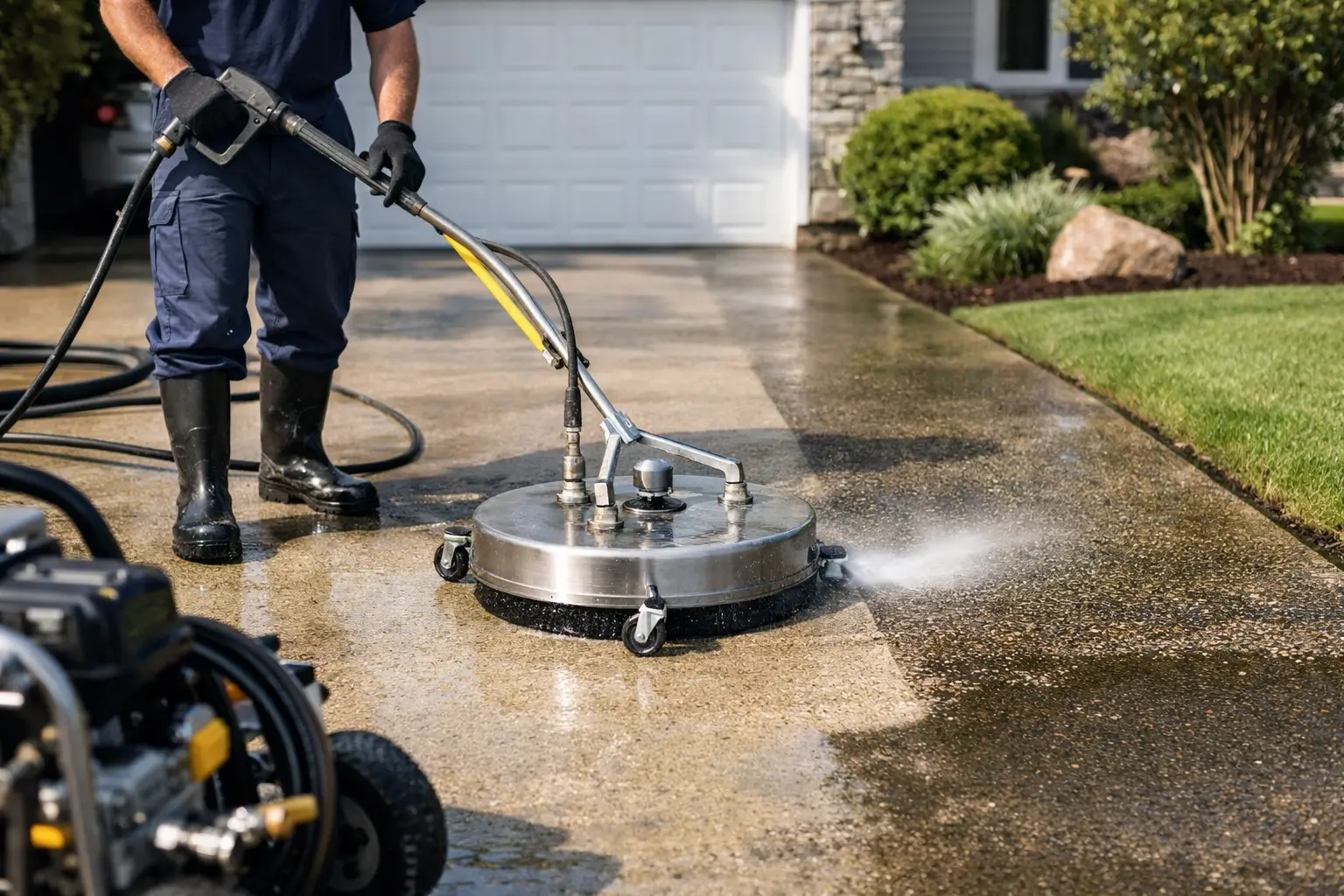
A driveway can make the whole property look tired before anyone even reaches the front door. Oil spots, black mould, algae, tyre marks and built-up grime tend to creep in slowly, then all at once the surface looks older, dirtier and more worn than it really is. That is why driveway pressure cleaning is more than a quick cosmetic fix. Done properly, it restores presentation, improves safety underfoot and helps protect the surface from premature deterioration.
Why driveway pressure cleaning matters
In Southeast Queensland, driveways take a constant hit from weather, traffic and organic growth. Shade, humidity and rain create the perfect conditions for mould and algae. Add vehicles, foot traffic, leaf tannins and general airborne grime, and even a relatively new driveway can start looking neglected.
The issue is not just appearance. Slippery growth on concrete or pavers can create a genuine hazard, especially on sloped driveways, paths leading to entries and shared access areas. For homes going to market, rental properties between tenancies, body corporate sites and commercial premises, the driveway also shapes first impressions. A clean surface signals that the property is cared for. A stained, patchy one does the opposite.
There is also a maintenance angle that many owners overlook. Dirt and biological growth hold moisture on the surface for longer. Over time, that can contribute to staining, surface weakening and a more stubborn clean next time around. Regular cleaning does not stop every issue, but it can slow down the kind of buildup that becomes harder and more expensive to remove later.
Not all driveway pressure cleaning is the same
A lot of people hear the term and picture maximum pressure blasting everything clean. That approach can work on some hard surfaces, but it is not always the right method. Different driveway materials respond differently to pressure, water flow and chemical treatment.
Plain concrete is generally durable, but it can still be etched if pressure is too aggressive or if the operator holds the lance too close. Exposed aggregate needs care to avoid disturbing the surface texture. Pavers often trap grime in joints and can lose jointing sand if cleaned poorly. Decorative coatings and sealed finishes require even more attention because the wrong method can strip or damage the protective layer.
That is where experience matters. Good results come from matching the method to the surface, not forcing every driveway through the same process. In many cases, pre-treatment is just as important as pressure. Mould, algae and organic staining often respond best when treated first, then rinsed and cleaned at the appropriate pressure. That combination gives a better finish and reduces unnecessary wear on the surface.
What a professional clean should address
A proper driveway clean is about more than lifting loose dirt. The goal is to deal with the source of staining and contamination where possible, while leaving the surface evenly cleaned rather than patchy.
Organic growth and slippery surfaces
Black mould, green algae and mildew are common across driveways in shaded or damp areas. These are the growths that often make surfaces slick after rain or early in the morning. Pressure alone may remove the visible layer, but if the treatment does not address the growth properly, regrowth can happen faster. A professional process targets both appearance and hygiene.
General grime and traffic marks
Daily use leaves a film behind. Dust, soil, tyre residue and pollution settle into porous surfaces over time. This kind of grime can dull the whole frontage of a property. A thorough clean brings back brightness and makes edges, patterns and original surface colour more visible.
Rust, oil and stubborn stains
Some stains are more specialised. Oil spots, battery acid marks, rust from irrigation or metal furniture, and leaf or tannin staining may need targeted treatment. Results depend on the age of the stain, the type of surface and whether the driveway has been sealed before. The honest answer is that not every stain disappears completely, but many can be significantly improved with the right process.
The benefit of the right pressure and treatment
This is where quality workmanship shows. Anyone can hire a machine. The difference is knowing how to clean effectively without causing avoidable damage.
Using too much pressure can leave lines, etching or visible wand marks across concrete. On pavers, it can disturb the bedding and leave joints looking uneven. On older surfaces, aggressive cleaning may expose weak areas that were already deteriorating. On the other hand, using pressure that is too low without proper treatment can leave the driveway looking only half done.
The best result usually comes from a balanced approach. That means assessing the surface, applying treatment where needed, allowing enough dwell time and then cleaning with professional equipment set to suit the material. It is a practical, surface-safe approach that gets strong visual results without treating every driveway like a demolition job.
When to book driveway pressure cleaning
There is no single schedule that suits every property. A family home under trees in a humid pocket may need attention more often than a newer home in full sun. Commercial sites and body corporate properties with heavier traffic usually benefit from a more regular maintenance cycle because presentation and safety are ongoing concerns.
For many homeowners, an annual clean is a sensible starting point. If the driveway is already slippery, visibly stained or dragging down the appearance of the front of the home, it makes sense to act sooner. The same applies before listing a property for sale, after building work, or when preparing for an inspection or tenancy changeover.
Timing can also affect results. Cleaning before buildup becomes heavy is usually more straightforward than leaving it until mould, algae and stains are deeply established. Preventive maintenance is often the more cost-effective option over time.
Driveway pressure cleaning before sealing
If a driveway is going to be sealed, cleaning is not optional. The surface needs to be properly prepared first. Dirt, organic growth and residual staining can interfere with adhesion and leave the finished result looking inconsistent.
A cleaned surface gives sealing products the best chance to bond correctly and perform as intended. It also means the final appearance is based on the actual condition of the driveway, not grime trapped underneath a fresh coating. For concrete, pavers and decorative finishes, preparation is what separates a job that lasts from one that starts failing early.
This is one reason many property owners choose to have cleaning and sealing planned together. It saves time, improves the finish and supports longer-term protection.
Residential, commercial and shared property needs are different
A homeowner usually wants a cleaner frontage, safer access and a property that looks looked after. A property manager may be more focused on presentation between tenancies, quick turnaround and keeping maintenance straightforward. Body corporate committees and facility managers often need consistent results across shared surfaces, with minimal disruption and confidence that the method used is appropriate for the site.
The cleaning approach should reflect those priorities. A residential driveway may need detailed stain treatment and careful work around gardens, garage entries and decorative surfaces. A larger commercial or institutional site may call for staged cleaning, clear communication and attention to pedestrian safety during the work. The common thread is reliability. People want to know the job will be done properly, safely and without guesswork.
What to expect from a professional service
A professional operator should be able to assess the driveway material, explain the likely result and be upfront about any limitations before work begins. That includes setting realistic expectations around deep oil staining, older surface wear and areas where existing damage may become more visible once grime is removed.
The actual clean should be methodical, not rushed. Surface-safe treatment, commercial-grade equipment and the right pressure settings all matter. So does care around adjacent walls, garage doors, lawns and planted areas. The finished driveway should look evenly cleaned and visibly improved, without the striping, gouging or patchiness that often comes from poor technique.
At Boost Exterior Cleaning, that focus stays the same across concrete, pavers and other exterior surfaces – use the right method for the material, clean for lasting impact, and protect the finish wherever possible.
A clean driveway changes how a property feels the moment you arrive. If yours is slippery, stained or simply overdue, dealing with it now is usually easier than waiting for the buildup to get worse.


