

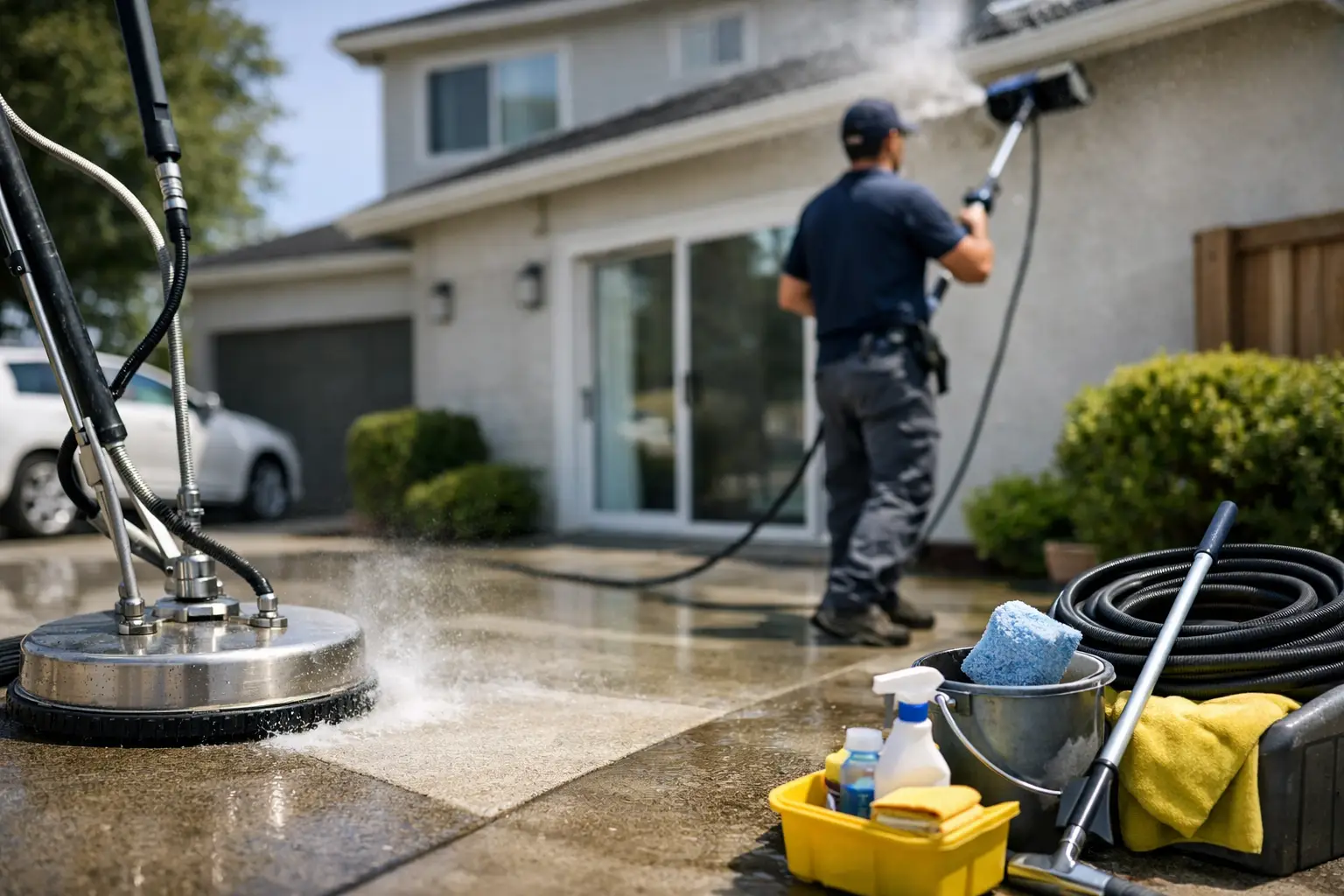
When a tenant moves out, most of the attention goes straight to carpets, kitchens and bathrooms. But the outside of the property can affect the final inspection just as much. End of lease exterior cleaning is often the difference between a home that looks neglected and one that feels properly handed over, especially when mould, algae, cobwebs and built-up grime are obvious from the street.
For property managers and owners, that first look matters. The front path, driveway, walls, windows, fencing and outdoor areas all contribute to presentation. If exterior surfaces have been left to collect dirt, organic growth or stains, it can create unnecessary friction at handover and make the property harder to market for the next tenant.
Why end of lease exterior cleaning matters
A rental property does not need to look brand new at the end of a tenancy, but it does need to look well cared for. Exterior cleaning helps restore that standard. It lifts the general appearance of the property, makes maintenance issues easier to spot and shows that the home has been properly prepared for final inspection.
There is also a practical side to it. Built-up mould, algae and grime are not just cosmetic. On painted walls, rendered surfaces, concrete, pavers and outdoor tiles, this build-up can hold moisture and gradually contribute to wear. On paths and pool surrounds, it can also become slippery. A proper clean before handover is not only about presentation – it can help reduce risk and prevent longer-term surface damage.
For owners preparing a property for new tenants, timing is another factor. Once landscaping, repairs and interior cleaning are complete, a dirty exterior can still drag down the overall result. On the other hand, a clean driveway, brighter walls and clear windows can make the whole property feel looked after without major renovation work.
What is usually included in end of lease exterior cleaning?
The scope depends on the property, the lease conditions and the condition of the surfaces. In many cases, the work centres on the areas most visible during inspection and reletting. That often includes exterior house washing, driveway and path cleaning, window cleaning, garage door washing, fence cleaning and treatment of mould or algae on outdoor surfaces.
Larger properties or more heavily used rentals may also need work around patios, pool areas, retaining walls, bin areas and side access paths. Townhouses, unit complexes and commercial tenancies can involve shared entry points, car parks or foot traffic zones where presentation affects more than one occupant.
It is rarely a one-size-fits-all job. A newer home with light dust and cobwebs needs a different approach from an older property with oxidised paint, blackened concrete or delicate rendered walls. That is why the method matters just as much as the checklist.
Soft washing vs high pressure cleaning
One of the biggest mistakes in end of lease exterior cleaning is assuming that more pressure means a better result. It often does not. High pressure cleaning works well on many hard surfaces such as concrete driveways, some pavers and certain external ground areas where built-up grime needs to be lifted effectively.
But pressure is not suitable everywhere. Painted exteriors, weatherboards, render, eaves and other delicate finishes can be damaged if they are blasted with the wrong equipment or technique. In those cases, soft washing is often the better option. Soft washing uses lower pressure with the right cleaning treatment to break down mould, algae, bacteria and grime while being gentler on the surface.
That balance is important for lease-end work. The goal is to improve presentation, not create fresh damage just before inspection. A professional operator will match the method to the surface rather than applying one approach across the whole property.
The areas that are most often overlooked
Tenants and even some cleaners tend to focus on obvious ground-level dirt while missing the details that stand out during an inspection. Exterior windows are one. Dirty glass can make a clean property still look dull, especially at the front of the home.
Eaves, garage doors and entryways are also commonly overlooked. Cobwebs, wasp nests, dust and mould around these areas can make the property feel uncared for. Side paths and narrow access areas are another trouble spot. They often hold moisture, collect leaf tannin and develop algae because they do not get much sun.
Then there is the driveway. Oil marks, tyre tracks, leaf staining and general grime build up gradually, so owners sometimes forget how tired it looks until it is cleaned. The visual lift from pressure cleaning a driveway can be significant, particularly when the property is about to be advertised again.
Who usually arranges it?
It depends on the lease agreement and the handover process. In some cases, tenants arrange exterior cleaning as part of their bond clean obligations. In others, the owner or property manager books it separately to make sure the work is completed to a consistent standard.
For property managers, outsourcing the exterior clean can save time and reduce back-and-forth at inspection. Instead of debating whether mould on walls or slippery algae on paths counts as acceptable wear, the property can be cleaned properly and presented in a ready-to-lease condition.
For owners, it can also be a smart reset point between tenancies. Even if the previous tenant kept things reasonably tidy, an exterior clean helps prepare the property for photos, viewings and maintenance checks. It is often more cost-effective to do it during vacancy than wait until grime becomes much harder to remove later.
Timing matters more than most people think
Exterior cleaning should usually happen after major gardening, rubbish removal and repair work, but before listing photos or open inspections. If it is done too early, falling leaves, dust and tradie traffic can undo part of the result. If it is left too late, it can create delays in reletting.
Weather also plays a role. Southeast Queensland conditions are hard on exterior surfaces. Humidity, rain, shade and heat all contribute to mould and algae growth, particularly on southern sides of homes, shaded fences and pooled water areas. That means a property can look fine at a glance but still have widespread organic growth once you inspect it closely.
A prompt, well-timed clean helps avoid that last-minute scramble before keys are handed over.
When a cheap clean can cost more
Not every exterior cleaning job delivers the same result. A quick blast with a pressure washer might remove some surface dirt, but it can also leave striping, damage paint, gouge softer materials or fail to treat the organic growth properly. The property may look better for a few days, then start showing streaks or regrowth again.
That matters at lease end because the standard is visible presentation, not just a temporary rinse. Professional equipment, the right chemical treatment and surface-specific pressure control all make a difference. There is a trade-off here: the lowest quote may suit a basic concrete rinse, but it is not always the best choice when the property includes render, painted surfaces, stone, pool areas or ageing finishes.
For owners of older homes in particular, a gentler and more considered approach is usually worth it. Preserving paintwork and external finishes can avoid repair costs that far outweigh the cleaning price.
End of lease exterior cleaning for commercial and mixed-use sites
The same principles apply beyond residential rentals. Commercial tenancies, retail frontages, schools and mixed-use properties also benefit from exterior cleaning at the end of occupancy. Entryways, signage surrounds, car parks, loading zones and shared foot traffic areas all shape how the property is perceived by incoming tenants, customers or facility users.
In these settings, presentation and safety often go hand in hand. Greasy build-up, mould on paths, dirty external walls and stained concrete can quickly make a site feel poorly maintained. A proper clean helps hand the space back in a condition that supports faster turnover and a better first impression.
What to look for in a service provider
The best results come from a team that understands surfaces, not just equipment. Ask whether they use soft washing where needed, whether they treat mould and algae rather than simply rinsing over it, and whether they clean a broad range of exterior areas as part of handover preparation.
Fast quoting and clear communication also matter. Lease-end work usually runs on a schedule, and delays can affect inspections and new tenant move-in dates. A dependable operator should be able to assess the property, explain what is needed and complete the work without guesswork.
At Boost Exterior Cleaning, that practical approach is what matters most – using the right pressure, the right treatment and the right method for each surface so the property presents well without unnecessary risk.
A clean exterior will not fix every lease-end issue, but it can remove one of the most visible ones. When handover day arrives, the property should look ready for what comes next, not like it has been left behind.


