

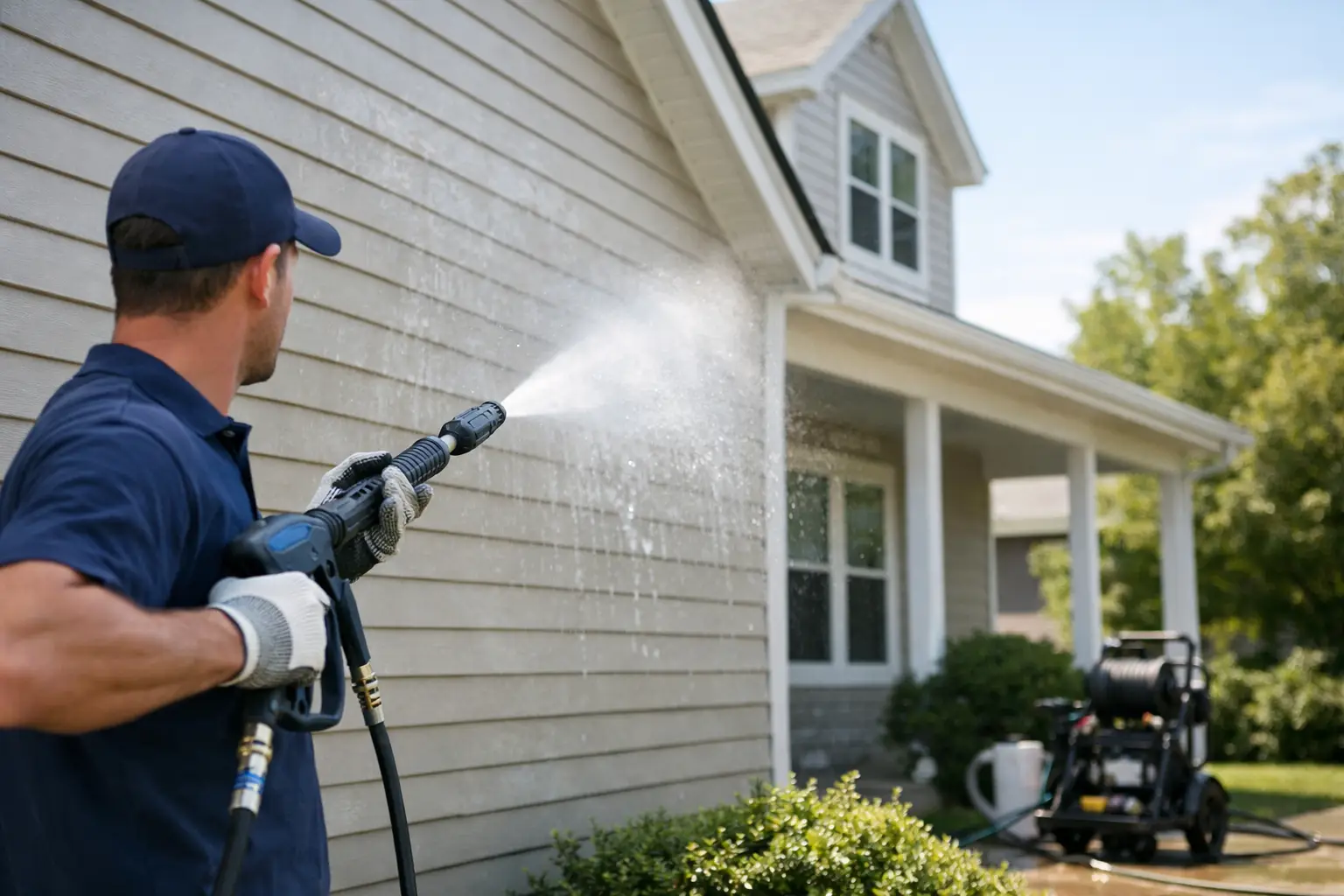
Street-facing walls cop the worst of it in South East Queensland. Humidity, summer storms, road grime, mould and algae can leave a home looking tired long before anything is actually broken. That is why a proper guide to exterior house washing matters – not just for presentation, but for protecting paintwork, cladding, render and other exterior surfaces from avoidable wear.
A clean exterior changes how a property feels straight away. It can lift kerb appeal before a sale, improve presentation for tenants, and stop organic growth from settling in and causing ongoing staining. But not every house should be cleaned the same way. The right result comes from matching the cleaning method to the surface, the level of contamination and the condition of the home.
What exterior house washing actually involves
Exterior house washing is more than spraying water at the walls. A proper wash usually involves assessing the building materials, identifying mould, algae, cobwebs, dust build-up and oxidised residue, then choosing the right combination of water pressure, detergents and treatment time.
For many homes, especially painted exteriors, weatherboards, render and delicate finishes, soft washing is the safer option. This method uses low pressure and specialised cleaning solutions to treat organic growth and lift grime without the harsh force that can strip paint, force water into gaps or damage surface coatings.
Pressure cleaning still has a place, but usually on harder exterior surfaces where higher pressure is appropriate. The problem starts when people assume high pressure equals a better clean. In reality, too much pressure can leave visible damage that costs far more to repair than the clean itself.
A guide to exterior house washing methods
The first thing to understand in any guide to exterior house washing is that there is no one-size-fits-all approach. Different materials respond differently, and age matters too.
Soft washing for painted and delicate surfaces
Soft washing is generally the preferred method for homes with painted walls, render, weatherboards, cladding and areas prone to mould or algae growth. Instead of relying on force, it uses cleaning agents to break down contamination at the source. That means you are not just rinsing off the visible mess. You are treating the growth that caused it.
This approach is especially useful on older homes where paint may already be weathered. A gentler wash helps reduce the risk of lifting flaky coatings or etching the finish. It is also a better option where presentation matters but surface preservation matters more.
Pressure cleaning for tougher exterior areas
Some parts of a property can handle more pressure. Brick, certain concrete surfaces and heavily soiled hard areas may need pressure cleaning to shift built-up grime. Even then, pressure should be controlled, not maxed out.
A good operator adjusts equipment to suit the substrate. That is a big difference between professional cleaning and a DIY blast with a hire machine. Used properly, pressure cleaning is effective. Used carelessly, it can scar surfaces, damage mortar lines and send water where it should not go.
Why timing makes a difference
House washing is not only about appearance. Timing affects both the result and the long-term upkeep of the property.
If mould, mildew and algae are left too long, they become harder to remove and more likely to leave permanent staining. Dirt also holds moisture against surfaces, which can accelerate deterioration over time. For painted homes, this can shorten the life of the coating and bring forward repainting costs.
For homeowners, annual or routine exterior washing often makes sense as part of general maintenance. For property managers and body corporates, scheduled cleaning can help maintain standards across multiple buildings without waiting until presentation drops off badly. Commercial and school sites often benefit from the same thinking – regular maintenance is usually more cost-effective than occasional major recovery work.
The main risks of getting it wrong
The biggest mistake in exterior house washing is treating every surface as if it is concrete. High pressure might look impressive for a few minutes, but it can create problems that are not obvious until later.
Paint can be stripped or weakened. Water can be forced behind cladding or into small gaps around windows and trims. Render can be marked. Timber can fur up or splinter. Even where there is no immediate visible damage, over-aggressive cleaning can shorten the life of surface coatings.
Chemical choice matters too. If the wrong product is used, or if it is mixed too strongly, it can affect nearby plants, stain adjacent materials or leave uneven results. Proper rinsing, dwell times and surface knowledge are part of the job.
That is why method matters just as much as equipment. Professional-grade machines help, but they do not replace judgment.
How to tell what your home needs
Most properties give fairly clear signs when they are due for a wash. Dark streaks on walls, green growth on shaded sides, cobweb build-up under eaves, grime around gutters and a dull overall appearance are common indicators.
The trick is working out whether the issue is mainly surface dirt, organic growth, oxidation or a mix of all three. A home near busy roads may collect more airborne grime. A home in a leafy or shaded area may deal with persistent algae and mould. Coastal conditions can also affect build-up and surface wear.
If the exterior still has a sound finish but looks tired, washing is often enough to restore presentation. If the paint is failing, heavily chalking or peeling, cleaning may still help, but expectations need to be realistic. Washing can improve the surface and prepare it for further work, but it will not reverse coating failure.
What a professional wash should include
A quality exterior house wash starts with a site check, not a price pulled from thin air. The operator should look at the materials, access, degree of soiling and any problem areas such as mould-heavy walls, oxidised sections or fragile finishes.
From there, the cleaning process should be tailored to the house. That may mean soft washing the walls, carefully rinsing around windows and doors, treating stubborn growth, and making sure adjacent areas such as paths or entry points are left tidy.
For many clients, the real value is not just the clean itself. It is the confidence that the property is being handled with the right pressure and the right treatment. That is especially important before sale, before photos, before tenant inspections or as part of ongoing maintenance on a larger site.
DIY or professional service?
There are situations where a homeowner can rinse down low-risk areas and remove light dirt. But full exterior house washing is one of those jobs that looks simpler than it is. The gear is stronger, the surfaces vary, and the risk of doing damage is real.
DIY may suit a small, straightforward area if you know the material and use the correct pressure. It becomes a different story when the house has multiple finishes, older paint, hard-to-reach elevations or widespread mould and algae. In those cases, a professional service is usually the safer and more effective option.
For commercial properties, schools and managed sites, professional cleaning also brings consistency. There is less guesswork, less downtime and a clearer standard of presentation across the property.
Getting better long-term results
A good wash should do more than provide a quick visual lift. It should help slow the return of build-up by properly treating the contamination rather than only removing the top layer.
That is one reason soft washing is widely preferred for many house exteriors. It is designed to clean and treat at the same time. When paired with the right maintenance interval, it can keep a property looking cleaner for longer and reduce the chance of grime becoming embedded.
It also helps to act early. Washing before staining becomes severe generally delivers a better finish and reduces the need for harsher cleaning later. That is a smart approach whether you own a family home in Brisbane, manage units on the Gold Coast or look after a school or commercial site on the Sunshine Coast.
At Boost Exterior Cleaning, that surface-by-surface approach is central to getting strong results without unnecessary risk. The best exterior clean is not the most aggressive one. It is the one that restores presentation while protecting the materials underneath.
If your exterior is starting to look patchy, green, dusty or weather-stained, do not wait until it becomes a bigger maintenance issue. A well-timed wash can be one of the simplest ways to protect the property, improve presentation and make the whole place feel looked after again.


