

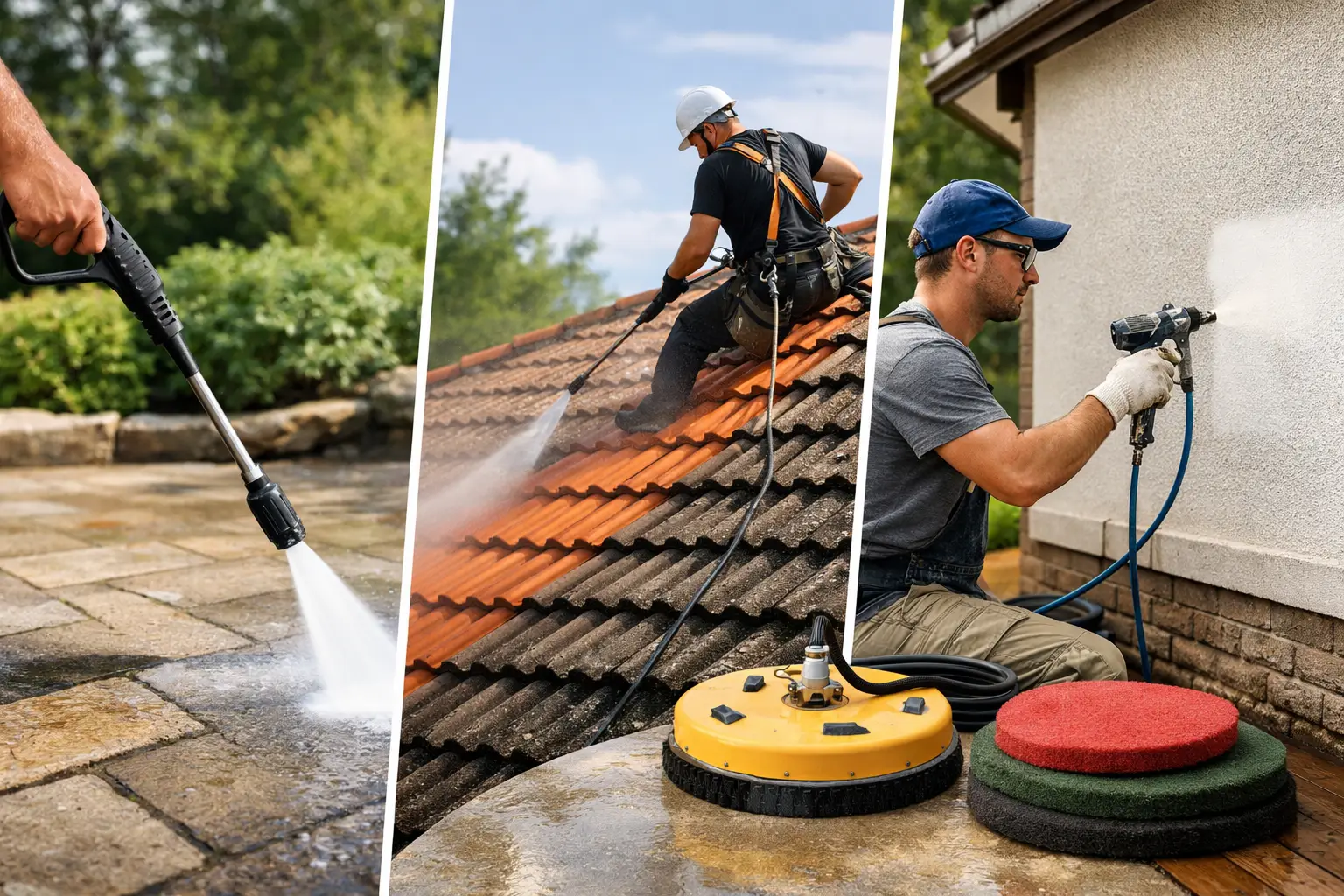
A stained driveway, green mould on painted walls and slippery pool surrounds are more than presentation problems. In Southeast Queensland’s humid climate, organic growth, salt air, pollution and moisture can steadily break down exterior finishes. This guide to exterior surface restoration explains how to assess the problem, choose a surface-safe cleaning method and protect the result for longer.
Restoration does not always mean replacement. In many cases, a professional clean, targeted treatment and suitable seal can bring tired-looking surfaces back to a clean, cared-for condition while helping slow further deterioration. The key is matching the process to the material.
What exterior surface restoration involves
Exterior surface restoration is the planned cleaning, treatment and protection of the areas around a property. It can include house exteriors, driveways, paths, retaining walls, tile roofs, natural stone, pool areas, windows, tennis courts, car parks and commercial building facades.
The job is not simply about applying more pressure. Concrete can usually handle a different approach from painted weatherboards, rendered walls, sandstone or delicate roof tiles. High pressure in the wrong place may strip paint, damage pointing, scar timber, force water into gaps or disturb loose surfaces. On the other hand, a gentle rinse alone may not remove mould spores or embedded grime.
A proper restoration process considers the surface itself, the type of contamination, its condition and where runoff will go. That is how a property gets a visible lift without creating an expensive repair issue.
Start with a practical surface assessment
Before arranging cleaning, walk around the property and look beyond the obvious dirt. Note where stains return first, whether the surface is slippery when wet, and if there are cracks, flaking paint, loose pavers or damaged sealant. These details affect both the method and the expected result.
Black or green growth is commonly mould, mildew or algae. It thrives in shaded, damp areas, especially along southern-facing walls, under eaves, around downpipes, beside pools and on driveways with poor drainage. Red-brown staining may be caused by soil, rust or leaf tannins. White powdery marks on masonry can indicate efflorescence, where salts move through the material as moisture evaporates.
Some marks are cleanable, while others are signs of an underlying issue. Rust stains may need specialist treatment. Deep oil contamination in a driveway may improve significantly but not disappear completely. If paint is already failing, cleaning will reveal its true condition rather than fix it. Clear expectations matter, particularly for pre-sale work, tenancy turnover and large commercial sites.
Check drainage and surrounding vegetation
If mould keeps returning to one wall or path, cleaning is only part of the answer. Blocked gutters, leaking taps, overflowing downpipes and dense vegetation can keep an area damp. Trimming back plants for airflow, clearing drainage points and correcting water flow can make the restored finish last much longer.
It is also worth identifying nearby gardens, ponds and outdoor furniture before work begins. A professional crew should manage cleaning solutions carefully, protect sensitive areas and rinse appropriately rather than treating every job as a quick spray-and-go task.
Choose the right cleaning method for each material
The best method depends on what needs to be removed and what the surface can safely tolerate. This is where professional equipment and experience make a real difference.
Soft washing for painted and delicate exteriors
Soft washing uses low pressure with an appropriate cleaning treatment to remove mould, algae, grime and atmospheric buildup. It is often the preferred option for painted house exteriors, rendered walls, cladding, eaves, fascias and other finishes that could be harmed by aggressive pressure cleaning.
The treatment does the main cleaning work, while the low-pressure rinse carries away loosened contamination. This can produce a dramatic before-and-after result without blasting the surface. It is especially useful for older homes where paintwork, mortar or building materials need extra care.
Soft washing is not a shortcut. It relies on correct chemical selection, dilution, dwell time and controlled application. Too weak, and growth may remain. Too strong or poorly managed, and there is unnecessary risk to surfaces and nearby landscaping.
Pressure cleaning for hard-wearing surfaces
Pressure cleaning is well suited to concrete driveways, footpaths, paved areas, car parks, hard tiles and some commercial surfaces. The goal is to lift built-up grime and slippery growth evenly, without leaving visible wand marks or damaging joints and edges.
For broad concrete areas, professional rotary surface cleaners usually provide a more consistent finish than a pressure wand alone. They also help contain overspray and speed up larger jobs such as car parks, school paths and shopping centre walkways.
Pressure needs to be adjusted for the material. Older concrete, exposed aggregate, soft pavers and damaged grout may require a more cautious approach. High pressure may clean quickly, but it can also open up a weak surface and make future staining worse.
Natural stone, tiles and pool areas need extra care
Natural stone can be porous and easily affected by unsuitable chemicals. Travertine, limestone, sandstone and some pavers may need gentle cleaning and a stone-appropriate sealer afterwards. Acidic products or excessive pressure can etch, discolour or weaken the finish.
Pool surrounds deserve close attention because algae and sunscreen residue can make them dangerously slippery. Cleaning should improve grip and presentation without leaving chemical residue near the water or damaging surrounding tile and coping. The same care applies to tennis courts, where the coating and drainage need to be protected while surface growth is removed.
A guide to exterior surface restoration that lasts
A clean surface is the immediate result. A lasting result comes from addressing what caused the buildup and adding protection where it makes sense.
Sealing is particularly valuable for concrete, tiles and selected natural stone. A quality sealer can help reduce water penetration, limit staining and make ongoing maintenance easier. Driveway sealing can also improve colour and presentation, which is useful before selling a home or handing over a property to a new tenant.
However, sealing is not right for every surface or every condition. The area must be properly cleaned and dry, and existing coatings need to be assessed first. Applying sealer over trapped moisture, contamination or a failing prior coating can lead to patchiness, peeling or a cloudy finish. It pays to get the preparation right rather than rushing the final step.
For most homes, an annual exterior wash keeps mould and grime under control. Heavily shaded homes, coastal properties and pool areas may need attention more often. Commercial sites often benefit from a planned maintenance schedule because clean entries, paths, windows and car parks directly affect safety and customer perception.
When restoration should be left to a professional
A small rinse of outdoor furniture is one thing. Whole-property restoration involves working at height, handling cleaning agents, managing runoff and selecting the right equipment for each surface. It becomes especially worthwhile to call a professional when there is widespread mould, delicate paintwork, stained natural stone, a slippery public area or a large site that needs minimal disruption.
For body corporate managers, schools and facility operators, the benefit is not only appearance. Regular cleaning helps present a well-managed property, reduces slip hazards in algae-prone areas and can prevent grime from becoming a larger maintenance expense. For homeowners, it protects the first impression of the property while helping exterior materials stay in better condition.
Boost Exterior Cleaning approaches each job by selecting the pressure and treatment that suit the surface, rather than using one method everywhere. That practical difference matters on properties with a mix of concrete, paintwork, tiles, stone and high-traffic outdoor spaces.
A restored exterior should look clean without looking damaged or overworked. Start with the surface condition, fix the moisture or drainage issues that feed the problem, and choose cleaning that protects what your property is made of. The result is a safer, sharper-looking space that is easier to maintain through the next Queensland wet season.


