

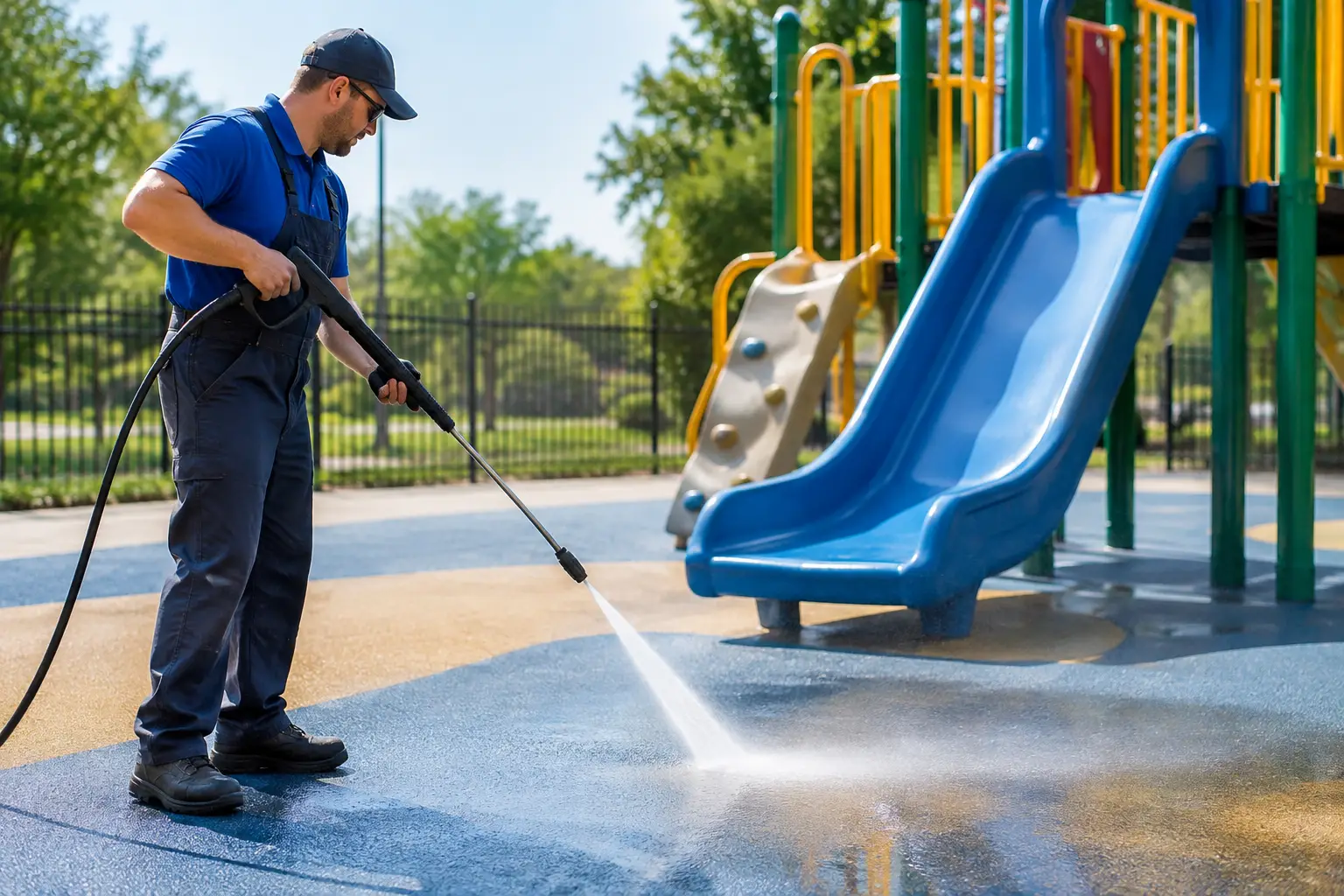
A playground can look fine from a distance while still holding slippery algae, built-up grime, food spills and mould around the areas children touch most. This guide to playground pressure cleaning explains how schools, childcare centres, body corporates and facility managers can restore outdoor play areas without damaging equipment, surfacing or surrounding landscaping.
Why playground cleaning needs a different approach
Playgrounds are high-use spaces with a mix of materials in one relatively small area. A single site may include powder-coated steel, painted timber, plastic panels, rubber soft-fall, concrete paths, shade sails, retaining walls and seating. Each surface reacts differently to water pressure and cleaning products.
That is why playground cleaning should never be treated like a quick wash-down of a driveway. Too much pressure can mark plastic, strip paint, force water into joins, disturb loose-fill surfacing or damage ageing timber. Too little treatment, meanwhile, may leave the mould and algae that make surfaces look neglected and become slippery after rain.
The right result comes from matching the method to the surface. In many cases, a targeted pre-treatment and controlled low-pressure wash is more effective than using high pressure across the entire playground. The goal is a visibly cleaner area that remains safe, functional and ready for regular use.
What a professional playground clean should address
A thorough service starts with an inspection, not with a pressure cleaner switched to full power. The cleaner should identify surface types, visible contamination, drainage issues, damaged coatings and areas where water can pool.
Particular attention is usually needed around slide exits, steps, climbing frames, handrails, seating, bins, drinking fountain surrounds and the footpaths leading into the play area. These are the places where moisture, sunscreen residue, food spills and everyday traffic leave the greatest build-up.
Algae and mould are common across Southeast Queensland, particularly on shaded surfaces or in playgrounds surrounded by established trees. They can return quickly where moisture is trapped beneath equipment or where poor drainage keeps concrete damp. Cleaning removes the existing growth, but identifying the cause helps a site manager plan sensible ongoing maintenance.
A professional clean should also consider the wider presentation of the space. A bright, clean playground makes a better impression on parents, visitors and prospective families. For schools and childcare centres, it reinforces the care taken across the grounds. For strata and public spaces, it supports a more welcoming shared environment.
Pressure cleaning is not always the answer
The term pressure cleaning can be misleading. Pressure is one tool, but it is not automatically the best solution for every playground surface.
Concrete paths, hardstand areas and some metal components can often handle a controlled pressure clean when the operator uses appropriate equipment and keeps a safe working distance. This is particularly useful for removing ground-in dirt, mud and slippery organic growth from walking routes.
Delicate materials need more care. Painted structures, weathered timber, plastic play panels and certain rubber surfaces may require soft washing or low-pressure rinsing after a suitable treatment. Soft washing relies on the correct cleaning solution and gentle application to break down biological growth, rather than trying to blast it away.
Rubber soft-fall deserves special consideration. Its condition, age, joins and manufacturer guidance all affect what method is suitable. Harsh pressure can damage seams or alter the surface texture. Loose-fill materials such as bark or sand should generally be protected from wash water and kept free of runoff carrying dirt from nearby hard surfaces.
How to prepare a playground for cleaning
Good preparation protects both people and equipment. The playground should be closed to users for the duration of the work and until surfaces are dry and safe to reopen. Cleaning is often easiest to schedule outside school hours, before opening time, or during a planned low-traffic period.
Portable toys, sports equipment, loose furniture and rubbish should be removed first. Any sensitive electrical features, signage or nearby garden beds need to be assessed and protected where necessary. A site check should also confirm where wash water will travel, especially near drains, sand pits and landscaped areas.
If a playground is part of a school or childcare facility, clear communication matters. Staff need to know which access points are affected, how long the area will be unavailable and whether an alternative play space is required. For larger sites, cleaning in sections can reduce disruption, although this depends on the layout and safety controls available.
The right process for safer, cleaner surfaces
The exact process varies by site, but a professional playground pressure cleaning service generally follows a careful sequence.
First, loose debris is cleared so the cleaner can see the condition of the surface. A suitable treatment is then applied to affected areas, particularly where algae, mould or organic staining is present. This gives the product time to work rather than relying on excessive force.
The area is rinsed or cleaned with pressure selected for the material. Operators should work methodically around joins, fixtures and drainage points, avoiding direct force on vulnerable seals, labels, moving parts and damaged surfaces. Stubborn staining may need a second treatment rather than more pressure.
Finally, the site is checked for residue, standing water and missed areas. Walkways, steps and transition points should be left clear and rinsed thoroughly. Before reopening, surfaces need adequate drying time, particularly shaded areas and spots beneath equipment where moisture lingers.
Common mistakes to avoid
The most common mistake is treating every surface as concrete. High pressure may deliver a quick visual change, but it can create expensive problems when it is used on coatings, timber or soft-fall without proper assessment.
Another issue is cleaning only the obvious dirt. Algae often begins in shaded corners, around posts and along the edges of paths. If those areas are ignored, the site can look uneven and slippery growth may remain where children and carers walk.
It is also unwise to use unsuitable chemicals or allow wash water to run unchecked into gardens and drainage systems. Cleaning products should be selected for the job, applied carefully and managed by operators who understand how the site drains.
Finally, avoid waiting until the playground looks heavily soiled. By that stage, mould and grime are harder to remove, surfaces can become more slippery, and the clean may require more time and treatment. Planned maintenance is usually simpler and more cost-effective than a last-minute restoration before an inspection, open day or tenancy handover.
How often should a playground be cleaned?
There is no single schedule that fits every site. A covered playground in a dry, open location may only need a detailed clean once or twice a year. A shaded school playground near trees, or a busy childcare centre with frequent food spills and daily use, may benefit from more regular attention.
Consider the site’s exposure to shade, rainfall, leaf litter, nearby traffic pollution and foot traffic. Check high-contact areas after wet weather and inspect paths for early signs of green growth. Regular visual checks allow small issues to be handled before they affect safety or presentation.
For facility managers responsible for multiple outdoor areas, pairing playground cleaning with footpath, courtyard, building wash and parking area maintenance can make scheduling easier. It also creates a more consistent presentation across the property.
Choosing a playground cleaning contractor
The cheapest quote is not always the best value if it assumes one method for every surface. Ask how the contractor assesses equipment materials, whether they use soft washing where appropriate, how they manage runoff and what steps they take to protect soft-fall, landscaping and nearby buildings.
Experience with schools, childcare centres and commercial sites is valuable because these jobs require more than cleaning skill. They require safe work practices, clear scheduling, reliable communication and an understanding of how quickly a public area needs to return to service.
Boost Exterior Cleaning uses surface-appropriate pressure cleaning and soft washing methods to help maintain clean, presentable outdoor spaces across Southeast Queensland. The focus is on removing grime, mould and algae while treating each material with the care it needs.
A clean playground is not simply a cosmetic upgrade. It gives children, families, staff and visitors a better experience of the space, while helping the surfaces beneath the grime last longer. A regular, surface-safe cleaning plan keeps that result easier to maintain all year round.


