

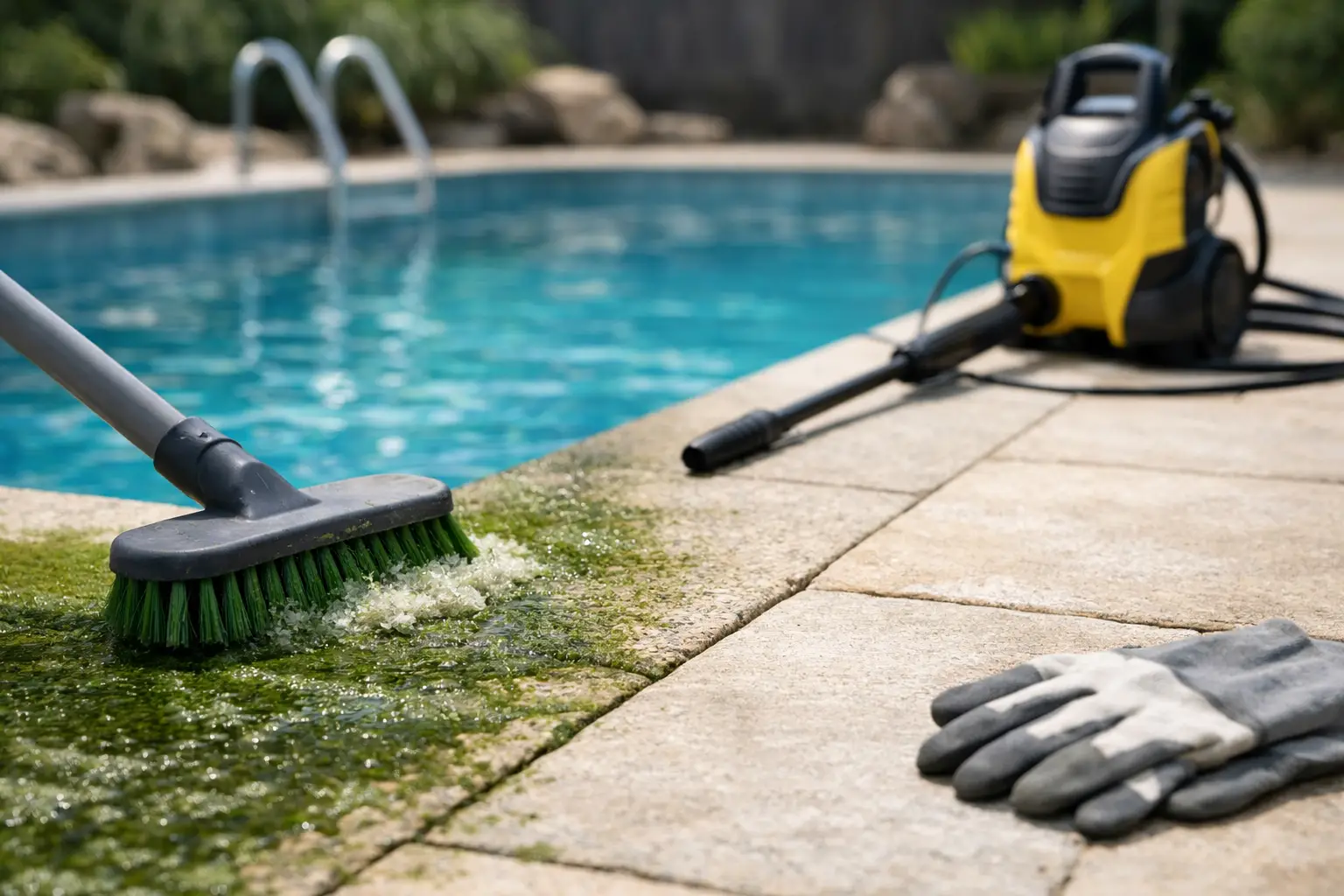
That green film around the pool usually starts small – a bit of discolouration near the waterline, a slippery patch in the shade, a few dark spots between pavers. Then one wet week later, it looks worse and feels unsafe underfoot. If you are wondering how to remove algae from pool surrounds, the right method depends on the surface, the level of build-up, and how you clean it without damaging the area.
Pool surrounds cop plenty in Southeast Queensland. Heat, humidity, splashed chlorinated water, leaf litter and poor drainage all create ideal conditions for algae to grow. Beyond the appearance issue, the bigger concern is safety. Algae turns walkways slick, especially on smooth concrete, tiles and sealed surfaces. That makes proper cleaning less about cosmetics and more about reducing risk and protecting the surface underneath.
Why algae keeps coming back around pools
Algae does not need much to take hold. It thrives where there is moisture, warmth and organic matter. Around pools, that usually means shaded corners, joints between pavers, coping edges, garden-side sections and spots where water sits after rain or regular use.
A lot of property owners make the mistake of treating it like ordinary dirt. A quick hose-off or a hard blast with a pressure cleaner might remove the visible layer for a short time, but if the treatment does not kill the organic growth properly, it often comes back quickly. In some cases, aggressive cleaning also roughens the surface and gives algae more grip next time.
That is why the cleaning method matters just as much as the cleaner itself.
How to remove algae from pool surrounds safely
The safest approach is usually a combination of pre-treatment, appropriate pressure and a thorough rinse. The exact process varies depending on whether you are dealing with concrete, natural stone, tiles or sealed pavers.
Start by clearing the area. Move furniture, pool toys, planters and anything else sitting on the surround. Sweep off loose debris like leaves and dirt so the treatment can reach the algae directly. If there is heavy build-up, this first step makes a noticeable difference.
Next comes the treatment stage. For most pool surrounds, a professional-grade cleaning solution designed to break down algae and other organic growth is far more effective than water alone. This is especially true when the growth has worked into porous surfaces. The goal is not just to lift the green staining but to kill the algae at the root.
After dwell time, the surface can be rinsed or cleaned with controlled pressure. This is where many DIY jobs go wrong. Too much pressure can etch concrete, strip sealers, dislodge jointing sand and damage some tile finishes. Not enough pressure, on the other hand, leaves residue behind. Getting that balance right is what delivers a clean result without creating a bigger maintenance problem.
The best method depends on the surface
Concrete pool surrounds are common because they are durable and cost-effective, but they are also porous. Algae can settle into the surface and hold moisture longer than you might expect. In most cases, concrete responds well to chemical treatment followed by pressure cleaning at the right setting. If the concrete has already been sealed, extra care is needed so the coating is not stripped prematurely.
Pavers can be a little trickier. The surface itself might clean up well, but algae often sits in joints and edges where rinse water does not move easily. If pressure is too high, the sand between pavers can wash out. That leaves the area more vulnerable to movement and weed growth later on. A gentler but thorough wash is usually the better option.
Tiles around pools can look straightforward, but not all tile surfaces are equal. Some glazed finishes are easier to clean, while textured anti-slip tiles can trap grime in the surface profile. Chemical treatment helps loosen the growth before washing, especially on textured areas where a surface-only rinse will not do much.
Natural stone needs the most caution. Stone can react poorly to the wrong product, and high pressure can leave marks or open up the surface. Travertine, sandstone and limestone all benefit from a surface-safe cleaning approach. If the stone has been sealed, that also needs to be factored into the job.
What to avoid when cleaning algae off pool areas
It is tempting to go straight for the strongest pressure setting and try to blast everything clean in one pass. Around a pool, that is rarely the best move. Overuse of pressure can damage finishes, push contaminated water into surrounding areas and create uneven-looking patches where only part of the surface has been stripped back.
Household cleaners are another common problem. Some products are too weak to do the job properly, while others can affect nearby landscaping or react badly with certain surfaces. Around pool water, you also need to be mindful of runoff and where the cleaning solution ends up.
Scrubbing by hand can work on small spots, but it is usually not practical for widespread build-up. More importantly, it often deals with the stain rather than the cause. If you remove the visible layer but leave the growth active in the pores or joints, the algae tends to return quickly.
How to stop algae returning so quickly
Even after a good clean, pool surrounds can become algae-prone again if the conditions stay the same. The aim is not to keep the area perfectly dry all year round – that is unrealistic in Queensland conditions – but to reduce the factors that help algae thrive.
Keep the surface clear of leaf litter and garden debris, especially in corners and along fence lines. Organic matter traps moisture and feeds further growth. If nearby gardens are heavily irrigated, check whether overspray is keeping sections of the pool surround constantly damp.
Shade also plays a part. You may not want to remove established planting or change the feel of the pool area, but selective pruning can improve airflow and let more sun reach damp zones. Better drainage matters too. If water regularly pools in the same place, cleaning alone will only ever be a short-term fix.
For some surfaces, sealing can help reduce future absorption and make maintenance easier. It is not a cure-all, and it only works well when the surface is properly cleaned and prepared first, but on the right material it can slow down how quickly grime and algae take hold.
When DIY is enough and when it is not
If the algae is light, the area is small, and the surface is straightforward, a careful DIY clean may be enough. That usually suits newer concrete or tiled areas with only mild growth and easy access to rinse water.
The job becomes less DIY-friendly when the area is large, the surface is delicate, the staining is deep, or the algae has been building up for a long time. Commercial sites, schools, body corporate properties and larger residential pool areas also need a cleaning method that is efficient, safe and consistent. In those settings, appearance matters, but so does downtime and slip risk.
Professional cleaning is often the better choice when you need more than a quick cosmetic improvement. A proper treatment can remove the growth more completely, protect the surface and leave the area safer to use. That is particularly relevant for pool surrounds where children, guests, tenants or visitors are walking barefoot on a regular basis.
At Boost Exterior Cleaning, this is exactly where the right mix of soft washing, chemical treatment and controlled pressure makes a difference. Not every pool surround should be cleaned the same way, and the best results come from matching the method to the surface rather than forcing one approach onto every job.
A cleaner pool area is also a safer one
There is a clear visual difference after algae is removed, but the bigger benefit is what you feel underfoot. Pool surrounds should look clean, present well and stay safer in wet conditions. That takes more than blasting off the top layer. It takes the right treatment, applied with care, so the surface is cleaned properly without shortening its lifespan.
If your pool area is starting to look green, patchy or slippery, it is worth acting early. Algae is easier to remove before it becomes deeply established, and early maintenance is usually far cheaper than fixing damage caused by neglect. A clean surround does more than improve the look of the space – it helps keep the whole area ready to enjoy.


