

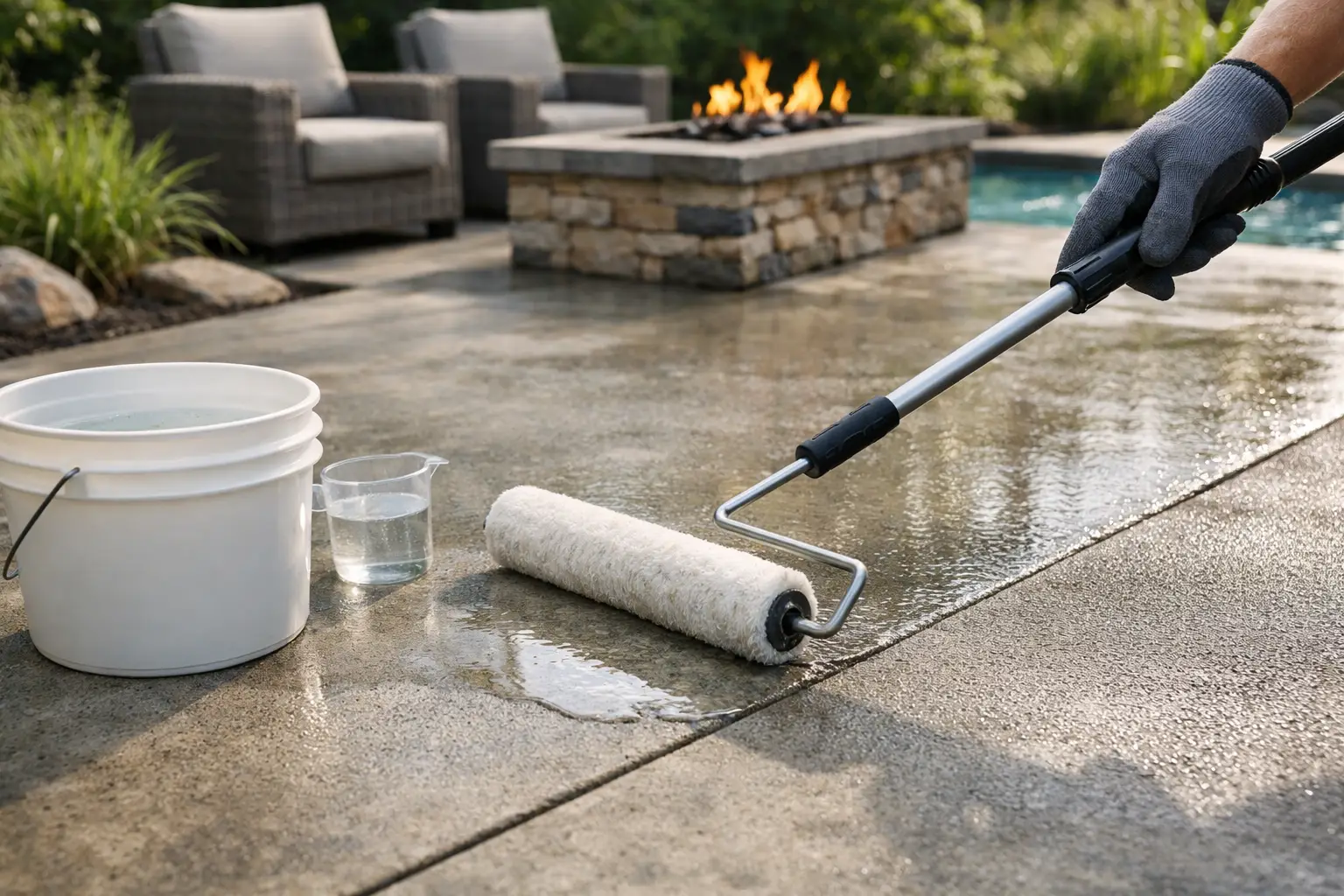
A driveway can look solid enough to ignore for years, right up until oil marks settle in, mould starts spreading through shaded areas, and the surface turns tired well before it should. If you want to seal outdoor concrete surfaces properly, the goal is not just a nicer finish for a few weeks. It is long-term protection against moisture, stains, UV exposure and day-to-day wear.
For homes, unit complexes, schools and commercial properties across South East Queensland, concrete takes a beating. Heat, rain, foot traffic, tyre marks and organic growth all work against it. Sealing helps, but only when the surface is cleaned correctly first and the right product is matched to the job.
Why seal outdoor concrete surfaces at all?
Concrete looks hard and durable because it is, but it is also porous. That means water, dirt, grease and other contaminants can work their way into the surface over time. Once that happens, marks become harder to remove and deterioration can accelerate.
A good sealer creates a protective barrier. Depending on the product, it can reduce water penetration, make routine cleaning easier, limit staining and help the surface keep a cleaner, more even appearance. On decorative or coloured concrete, sealing can also help preserve the finish.
That said, sealing is not magic. It will not fix spalling, major cracking or poor drainage, and it will not last forever. The result depends on the condition of the concrete, how well it was cleaned, and whether the right sealer was used in the first place.
Which outdoor concrete surfaces should be sealed?
Most external concrete benefits from sealing, especially when it is exposed to weather, traffic or regular staining. Driveways are the obvious example because they deal with vehicles, oil drips and constant sun exposure. Patios, pool surrounds, paths, alfresco areas and commercial walkways are also common candidates.
In some settings, sealing is less about appearance and more about maintenance. A school walkway or shopping centre entry, for example, needs to be easier to clean and less likely to hold grime deep in the pores. On residential properties, the driver is often kerb appeal and preserving the surface before it starts to age unevenly.
There are exceptions. Freshly poured concrete usually needs time to cure before sealing. Some older surfaces with trapped moisture issues also need assessment before any coating goes down. If moisture cannot escape properly, the sealer may fail early.
Clean first, seal second
This is where many sealing jobs go wrong. A sealer locks in whatever is on the surface. If dirt, algae, mould, rust or old residue is still sitting in the concrete, sealing over it can make the surface look worse, not better.
Proper preparation matters more than most people realise. Outdoor concrete should be thoroughly cleaned using the right pressure, the right detergents or treatments, and the right method for the surface condition. Aggressive pressure cleaning can etch or damage some areas, while under-cleaning leaves contaminants behind.
For that reason, a professional clean before sealing is often the difference between a finish that lasts and one that starts failing early. At Boost Exterior Cleaning, surface prep is treated as the foundation of the whole job, not an afterthought.
How to seal outdoor concrete surfaces properly
If you are looking at the process step by step, it starts with inspection. The surface needs to be checked for stains, existing coatings, cracks, mould growth, drainage issues and signs of wear. This helps determine whether the concrete is ready for sealing and what prep is needed.
Next comes cleaning. This may include pressure cleaning, targeted treatment for organic growth, and removal of embedded grime or marks. The aim is a clean, dry, stable surface. If the concrete is still holding moisture when sealer is applied, adhesion problems can follow.
Then comes product selection. Penetrating sealers soak into the concrete and are often chosen when a natural look is preferred. Film-forming sealers sit more on the surface and can enhance colour or add a visible finish, from low sheen through to glossier looks. The right option depends on how the area is used, the desired appearance, slip considerations and local weather exposure.
Application needs to be even and controlled. Too much product can cause patchiness, whitening, peeling or a tacky finish. Too little may leave weak coverage and limited protection. Weather also matters. Sealing in the wrong conditions, especially with high humidity or incoming rain, can compromise the result.
Finally, the surface needs time to cure. That means keeping vehicles and foot traffic off for the recommended period. Rushing this stage is a common reason fresh sealer gets marked or damaged.
Choosing the right sealer for the job
Not every sealer suits every concrete surface. A decorative patio and a heavy-use driveway have different demands. So does a shaded footpath compared with a pool area where slip resistance is a serious consideration.
Penetrating sealers are popular for practical protection because they generally keep the concrete looking natural while helping resist water and contamination. They are often a sensible choice where property owners want performance without changing the look too much.
Film-forming products can deliver stronger visual enhancement, which suits some driveways, entertaining areas and presentation-focused properties. The trade-off is that they can require more careful maintenance and may show wear differently over time. In some environments, they can also affect slip characteristics if the wrong finish is used.
This is why product choice should not be based on appearance alone. Surface age, porosity, exposure, traffic levels and maintenance expectations all matter.
Common mistakes that shorten sealer life
The biggest mistake is sealing dirty concrete. Close behind it is sealing damp concrete. Both issues interfere with how the product bonds and cures.
Another common problem is using the wrong pressure or cleaning method during preparation. Surface damage created before sealing will still be there afterwards, and sometimes it becomes more obvious once coated.
Applying sealer too heavily is another trap. More product does not automatically mean better protection. Over-application can lead to bubbling, cloudy areas or uneven wear. Skipping test patches can also be risky, especially on older or previously treated concrete.
There is also the timing issue. Sealing straight before wet weather, or during unsuitable temperature conditions, often leads to disappointing results. On busy properties, poor planning around access can create unnecessary traffic over uncured surfaces.
How long does sealed concrete last?
It depends on the product, the preparation quality and the amount of traffic the surface handles. A lightly used patio may hold its finish longer than a driveway that sees daily vehicle use and full sun. Commercial walkways and shared access areas generally wear faster again.
Maintenance also affects lifespan. Sealed concrete still needs regular cleaning to prevent build-up from degrading the surface and dulling the finish. Letting mould, grime and stains sit for too long makes any protective layer work harder than it should.
As a general rule, sealing should be viewed as part of an ongoing maintenance cycle, not a once-only fix. Reapplication timing varies, but waiting until the surface looks heavily worn is usually leaving it too late.
When professional sealing makes more sense
Some property owners are comfortable taking on small sealing jobs themselves, particularly on straightforward paths or low-visibility areas. But larger driveways, shared residential complexes, schools and commercial sites usually benefit from professional handling.
The reason is not just convenience. It is consistency, product knowledge, proper prep and understanding how different surfaces react to pressure, treatments and coatings. On bigger jobs, mistakes are costly and highly visible.
Professional sealing is especially worthwhile when presentation matters, when safety is a factor, or when the concrete already has staining, mould, old coatings or patchy wear. A proper assessment up front can prevent the wrong product being applied to a surface that needed more prep or a different approach.
Seal outdoor concrete surfaces with the long view in mind
The best sealing jobs do more than make concrete look fresh. They help slow down weathering, reduce clean-up headaches and protect the money already invested in the property. Whether it is a home driveway, a strata pathway or a commercial forecourt, the right result comes from treating cleaning and sealing as one connected process.
If your concrete is starting to stain, fade or hold grime, the smartest next step is not to cover it quickly. It is to get the surface assessed properly, cleaned the right way, and sealed with a product that suits how the area is actually used. That approach gives you a finish that not only looks better now, but holds up better later.


