

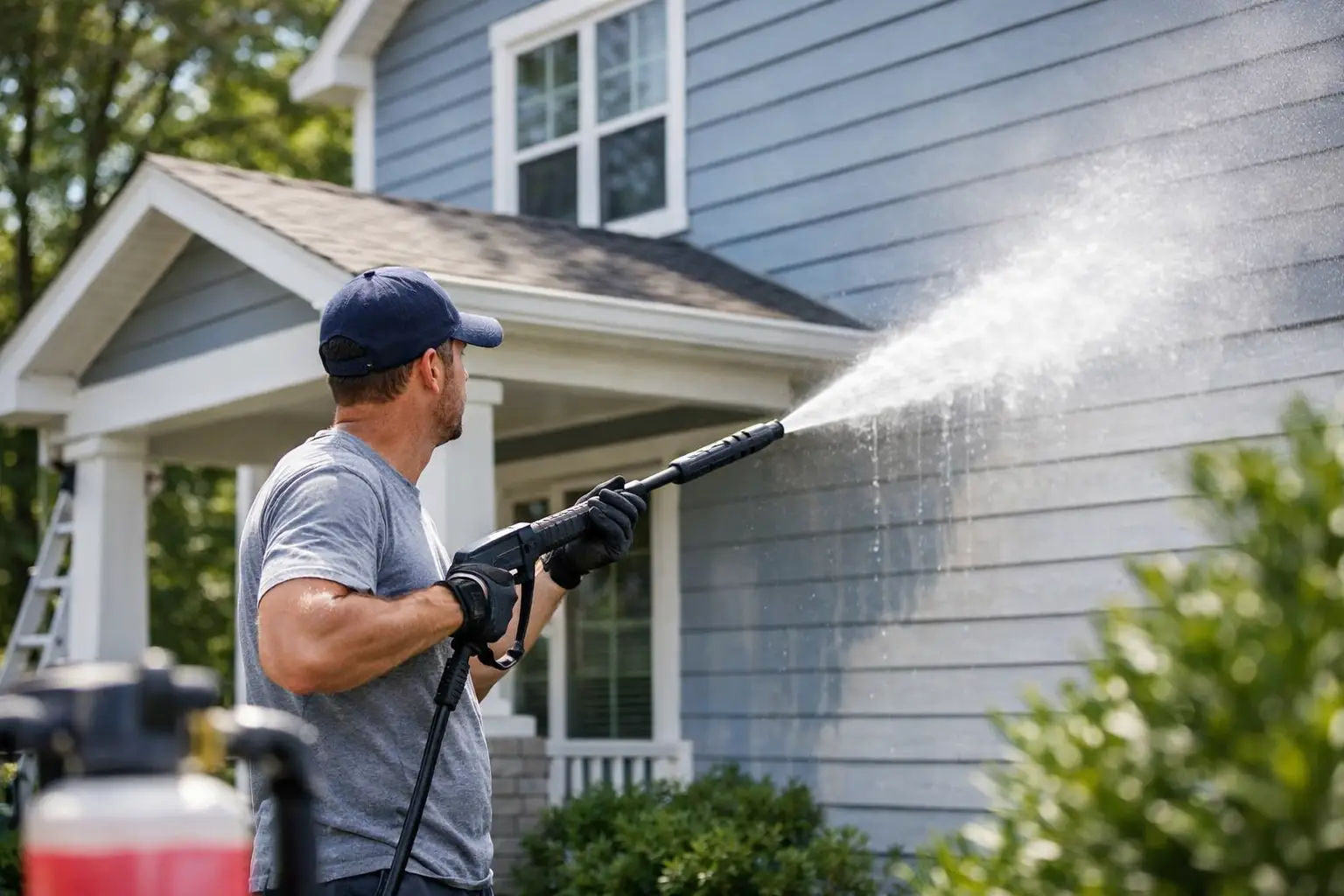
Painted walls can look tired long before the paint itself has actually failed. In Southeast Queensland, that dull film is often a mix of dust, road grime, mould, algae and moisture staining. If you’re wondering how to wash a painted house without stripping paint, forcing water into gaps, or leaving patchy marks behind, the method matters as much as the clean itself.
For most painted exteriors, the safest approach is not blasting the walls with high pressure. It is using the right cleaning solution, controlled water pressure and a wash process that suits the surface. Done properly, house washing lifts organic growth and built-up grime while helping preserve the paintwork underneath.
How to wash a painted house without damaging it
The first thing to know is that painted surfaces are not all the same. A newer acrylic-coated wall in good condition can usually handle more than an older weatherboard home with flaking edges, chalky paint or small cracks around trims and window frames. Brick homes that have been painted also need care, because water can be pushed into mortar joints if pressure is too aggressive.
That is why pressure cleaning and house washing are not automatically the same job. High pressure can be useful on hard exterior surfaces like concrete, but on painted walls it often creates more risk than benefit. In many cases, soft washing is the better option. Soft washing uses lower pressure and specialised cleaning agents to break down mould, algae, bacteria and grime, then rinses the surface clean without the force that can chew through paint or drive water where it should not go.
If your home has peeling paint, rotten timber, open joints, failed sealant or obvious water entry points, washing should be approached carefully. Cleaning will not fix those underlying issues, and in some cases it can expose just how far deterioration has already gone. That is not necessarily a bad thing, but it is better to know before you start.
Start with the surface condition, not the equipment
Before any washing begins, inspect the exterior in full daylight. Look for powdery residue on painted walls, blistering, peeling, rust stains, wasp nests, cobwebs, mould growth under eaves and dark streaks near downpipes. Check around window trims, door frames and penetrations where water could enter.
This quick check tells you two things. First, whether the paint is sound enough to be washed. Second, what kind of contamination you are dealing with. Plain dust and cobwebs are one thing. Thick green algae or black mould spotting is another, and usually needs chemical treatment rather than extra pressure.
It also helps to consider what is around the home. Delicate gardens, outdoor furniture, security cameras, light fittings and exposed power points all need protection. A good wash is not just about cleaning walls. It is about controlling runoff, overspray and the effect on surrounding areas.
The right way to clean painted exterior walls
If you want to know how to wash a painted house properly, think in this order: dry prep, chemical treatment, gentle agitation where needed, then a controlled rinse.
Start by removing loose debris. Brush down heavy cobwebs, clear leaf litter from corners and move obstacles away from the walls. Wet down nearby plants before applying any cleaning solution, and cover particularly sensitive areas if needed.
Next comes the cleaning mix. For painted exteriors, this is usually where the real work happens. A proper house wash solution helps break down organic growth and loosen grime so the rinse can do its job without relying on damaging pressure. The exact product and strength depend on the type of staining, the age of the paint and the material underneath. That is one reason DIY jobs can go wrong – people either use something too weak to work, or too harsh for the surface.
Apply the solution evenly, usually from the bottom up to reduce streaking. Allow it to dwell for the recommended time, but do not let it dry on the surface. On stubborn spots, a soft brush can help lift residue around trims, corners and textured areas.
Then rinse with low to moderate pressure, keeping the spray angle sensible and avoiding direct force into laps, joins, vents and window edges. The goal is to rinse contaminants off the paint, not to test how much pressure the wall can survive.
Pressure matters more than most people think
One of the biggest mistakes homeowners make is assuming more pressure means a better result. On a painted house, it can mean etched surfaces, lifted paint edges and water behind cladding. Once that moisture gets trapped, you may not see the problem straight away. It can show up later as bubbling paint, mildew or internal moisture issues.
There is also the issue of uneven cleaning. High pressure can leave visible clean lines or swirl marks, especially on older painted surfaces where oxidation has built up. That patchiness is frustrating because the house can end up looking worse even though it has technically been cleaned.
Soft washing avoids that problem by treating the cause of the staining rather than trying to blast it away. For homes in humid coastal and subtropical areas, where mould and algae are common, that approach is usually more effective over the longer term as well.
When DIY can work and when it probably should not
A light maintenance wash on a single-storey home with sound paint, easy access and minor dirt build-up may be manageable for a careful homeowner. If you use suitable products, keep pressure low and take your time, you can improve presentation without much trouble.
But plenty of painted houses are not simple jobs. Double-storey homes, steep blocks, oxidised paint, weatherboards, decorative trims, fragile render coatings and heavy biological growth all raise the stakes. So do properties being prepared for sale, lease handover or routine body corporate maintenance, where the finish needs to look consistent across the whole building.
In those cases, professional house washing is usually the safer call. Not because the task is impossible, but because the margin for error is small. The right machine setup, correct dilution, proper nozzle choice and experience reading surface condition all affect the outcome.
Common trouble spots on painted homes
Most painted houses do not get dirty evenly. South-facing walls often hold moisture longer and collect more mould. Areas under eaves can trap cobwebs and dust. Walls near gardens, sprinklers and air conditioning units often show algae or staining sooner than more exposed elevations.
Entry areas and garage fronts also tend to build up traffic-related grime. On coastal properties, salt residue can add another layer of wear. These are the areas where spot treatment and a tailored approach matter. If one side of the property needs a much stronger clean than another, washing everything the same way can be a mistake.
That is also why a fast once-over with a pressure cleaner rarely delivers the best result. A painted home usually needs a methodical clean, not a rushed one.
How often should a painted house be washed?
For many homes, an annual wash is a sensible maintenance interval. In higher-moisture areas, heavily shaded blocks or properties near busy roads, every 6 to 12 months may be more realistic. Washing before contamination gets deeply established is usually easier, safer and more cost-effective than waiting until the walls are visibly stained.
Regular washing can also help extend the life of the paint system. Mould, algae and surface pollutants do more than affect appearance. Over time, they can contribute to premature paint breakdown and make repainting prep more involved and expensive.
A clean exterior also changes how a property is perceived. Whether you are maintaining a family home, managing a unit complex or preparing a commercial site for tenants or customers, presentation counts. Clean painted walls make the whole property feel looked after.
Getting the best result from a professional wash
If you bring in a professional, ask about pressure levels, chemical suitability and whether the process is soft washing or straight high-pressure cleaning. A good operator will explain how they plan to treat painted areas, not just give a flat promise to make it clean.
It is also worth mentioning any existing paint issues upfront. Hairline cracks, peeling sections and old repairs should not be hidden. They help determine the safest approach. At Boost Exterior Cleaning, the focus is on matching the cleaning method to the surface so paintwork is cleaned effectively without unnecessary force.
The best result is not just a brighter wall on the day. It is a cleaner exterior with no avoidable damage, no blown-out joints and no shortcuts that create problems later.
A painted house does not need brute force to look fresh again. It needs the right wash method for its condition, its materials and the kind of grime built up on the surface. Get that part right, and the clean lasts longer, the paintwork stays in better shape, and the whole property presents the way it should.


