

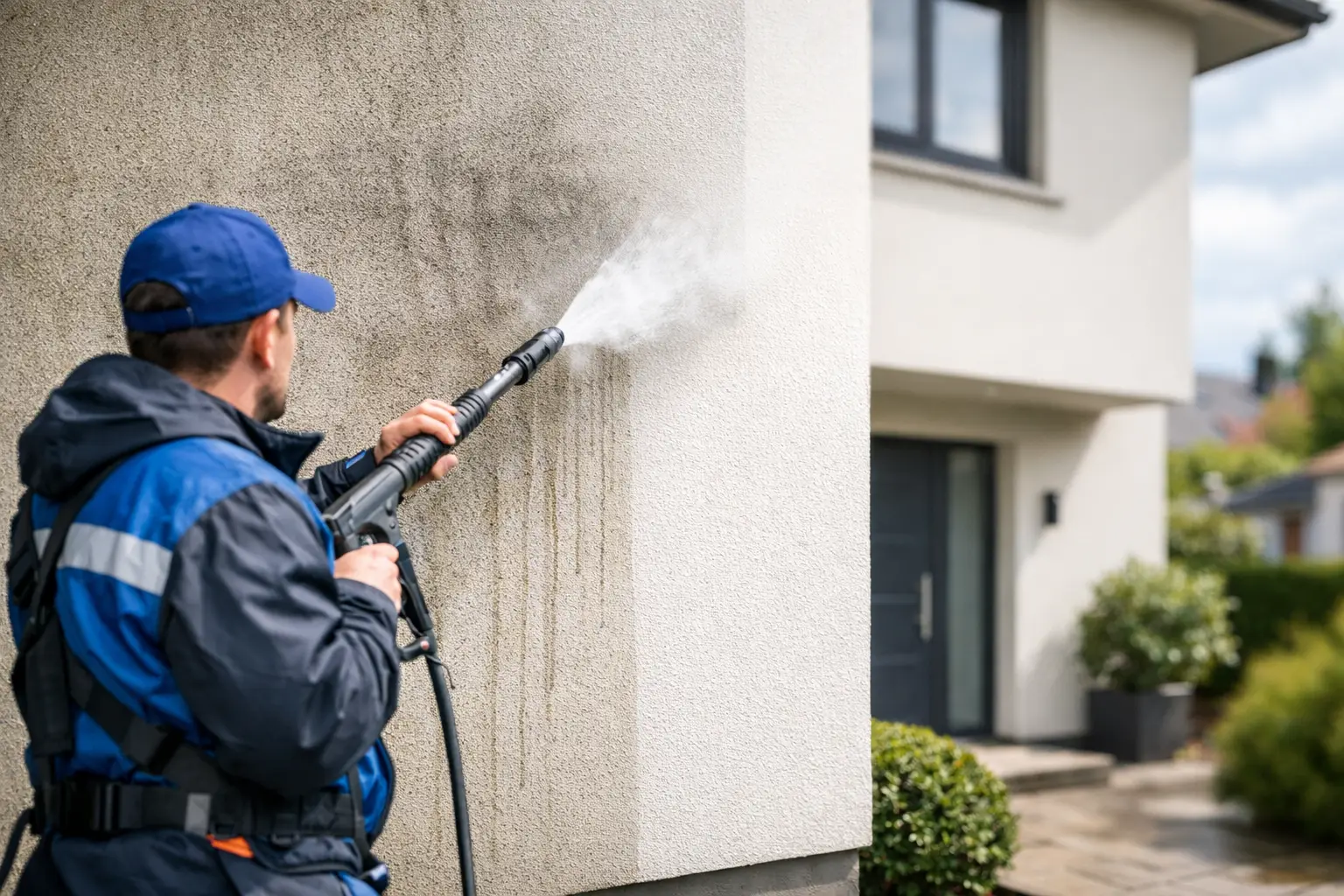
If your rendered walls are starting to look patchy, green or tired, the problem usually goes deeper than surface dirt. A professional render cleaning service is designed to remove built-up grime, mould, algae and staining without damaging the finish underneath. That matters because render can look tough, but the wrong pressure or harsh treatment can leave lasting marks, strip paint, or shorten the life of the surface.
Rendered homes and buildings are common across Southeast Queensland for good reason. They look sharp, suit modern and older properties alike, and can lift street appeal straight away. The trade-off is that render also shows contamination quickly. Moisture, humidity, traffic film and airborne pollutants tend to cling to textured finishes, especially on shaded walls, southern sides, retaining walls and boundary surfaces.
Why render gets dirty so quickly
Render is more porous and more textured than many property owners realise. Even when painted, it can hold onto organic growth and dirt in small pockets across the surface. In Queensland conditions, that often means black mould spotting, green algae streaks, cobweb staining, red dust build-up and general weathering that makes the whole property look older than it is.
On homes, this usually shows up first on front facades, side access walls and areas near gardens or downpipes. On commercial sites, rendered entry walls, shopfront surrounds and boundary walls tend to take the hit. Schools, body corporate properties and unit complexes often see the same issue on perimeter walls and common areas where presentation matters but grime builds gradually enough to be missed until it becomes obvious.
The key point is this – render does not respond well to aggressive cleaning. High pressure might seem like the fastest fix, but it can scar the coating, force water where it should not go, and leave uneven results. That is why method matters just as much as the clean itself.
What a render cleaning service should actually include
A proper render cleaning service is not just someone turning up with a pressure cleaner and hoping for the best. The process should start with identifying the surface type, its condition, whether it is painted or unpainted, and what kind of contamination is present.
Soft washing is usually the right approach for render because it relies on the correct chemical treatment to break down mould, algae and grime before low-pressure rinsing removes the residue. This gives a more even finish and reduces the risk of etching or surface damage. It also deals with the organic growth at the source rather than just blasting off the visible layer.
That distinction matters. If mould and algae are only partially removed, staining can return quickly. A surface-safe treatment helps deliver a longer-lasting result and a cleaner overall appearance.
Soft washing vs high pressure on render
There are times when pressure cleaning has its place on harder exterior surfaces such as driveways, paths and some masonry. Render is different. In most cases, lower pressure with the right treatment is the safer option.
High pressure can create lines, remove loose paint, worsen hairline cracks and leave patchy areas where dirt has been driven deeper into the texture. Soft washing takes longer to plan properly, but it is generally the better choice for preserving painted finishes and delicate exterior coatings.
That does not mean every rendered wall is treated exactly the same way. Older render, already-failing paint, heavily oxidised coatings and previously patched sections all need a more careful approach. An experienced operator will adjust the method rather than applying one setting across the whole property.
When to book render cleaning
Most people wait until render looks obviously dirty from the street, but there is value in acting earlier. Once organic growth becomes established, it is harder to remove cleanly and more likely to leave staining behind. Regular maintenance can also help reduce premature repainting, which is where the bigger expense usually sits.
For homeowners, common times to book include before selling, after a long wet season, before exterior painting, or as part of annual property maintenance. For commercial sites and managed properties, timing often ties into tenancy turnover, routine presentation standards, school holiday maintenance windows or scheduled building care plans.
If you are noticing green patches, black spotting, dull streaks under windows, discolouration around garden beds or a general loss of brightness, it is probably time to act. Waiting rarely improves the result.
Render cleaning service for homes, strata and commercial sites
Residential render cleaning is usually about presentation, preservation and pride in the property. A clean facade lifts the whole look of the home and makes windows, roofing and surrounding surfaces appear sharper too. If you are preparing for sale, rendered walls can have a big impact on first impressions in listing photos and open homes.
For body corporate and strata-managed properties, the focus is often broader. Common walls, entrance statements, rendered fences and bin enclosure walls all affect the presentation of the complex. Residents notice when these areas are neglected, and so do prospective tenants and buyers. Regular exterior cleaning helps maintain standards without jumping straight to repainting.
Commercial and institutional clients tend to look at render cleaning through the lens of upkeep, safety and brand image. A clean building exterior sends a clear message about how the site is managed. For offices, retail centres, schools and public-facing facilities, that matters every day.
What affects the result and the price
Not every rendered surface comes up the same, and any honest provider should say that upfront. The age of the render, whether the wall has been painted, the level of staining, sun exposure, access, water availability and surrounding landscaping all influence the job.
Some staining is organic and lifts well with treatment. Other marks, such as rust runoff, deep tannin staining or long-term paint failure, may improve but not disappear completely. That is not a sign the clean was done poorly. It usually means the issue has moved beyond surface contamination and into the coating itself.
Pricing also depends on scale and complexity. A single rendered front wall is very different from a multi-storey unit complex, a shopping centre facade or a school with multiple rendered buildings. Access equipment, height, surrounding obstacles and the need to protect nearby surfaces all affect labour and planning.
Fast quotes are useful, but they still need to account for the actual surface and condition. The cheapest option can become expensive if it leaves damage behind.
How to choose the right render cleaning service
The best provider is not simply the one with the biggest machine. You want a team that understands surface types, uses the right pressure for the job and can explain the treatment method clearly. Render is one of those materials where experience shows in the result.
Look for a company that talks about soft washing, surface-safe cleaning and long-term maintenance rather than just blasting dirt away. Ask whether the service is suitable for painted render, whether mould and algae are treated properly, and what kind of finish you can realistically expect.
Clear communication matters too. Property owners and managers usually want the same things – a prompt response, a straightforward quote, reliable timing and visible results. That practical side of the service is just as important as the equipment being used.
At Boost Exterior Cleaning, that is exactly how render cleaning is approached: with the right pressure, the right treatment and a focus on restoring the surface without causing unnecessary wear.
Keeping render cleaner for longer
Once render has been professionally cleaned, a few practical steps can help extend the result. Trim back plants that hold moisture against walls. Keep gutters and downpipes flowing properly. Reduce sprinkler overspray where possible. If one side of the property stays shaded and damp, expect it to need more regular attention than sun-exposed walls.
There is no single schedule that suits every building. Some homes need annual cleaning, while others can go longer. Commercial sites with higher visibility or more foot traffic may need more frequent maintenance to stay presentable. The right interval depends on location, moisture levels, tree coverage and the standard you want to maintain.
Clean render does more than freshen up a facade. It helps protect the finish, supports property value and makes the rest of the building look cared for. If your walls are showing mould, algae or weather staining, the smartest next step is not more pressure – it is the right method applied at the right time.


