

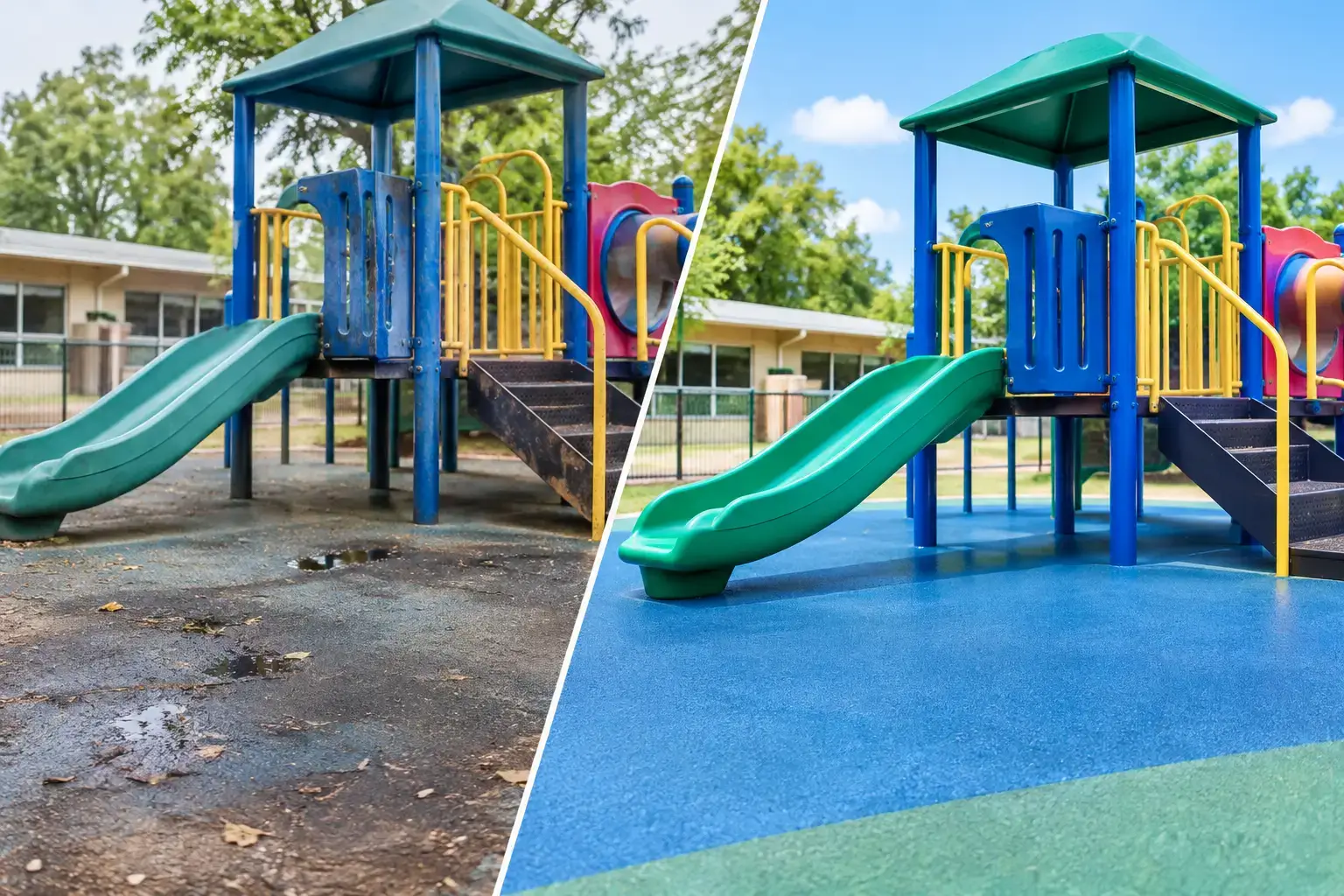
A playground can look tired long before the equipment reaches the end of its useful life. Built-up mould, algae, dust, leaf stains and tracked-in dirt quickly change how outdoor areas feel to students, staff and visiting families. A professional school playground cleaning transformation restores that first impression while helping facilities teams manage slip risks, surface deterioration and day-to-day presentation.
For schools across Southeast Queensland, outdoor areas work hard. They are exposed to humid weather, summer storms, fallen leaves, food spills and constant foot traffic. Concrete paths, rubber safety surfacing, shade structures, seating, fencing and play equipment all collect grime differently. The best result does not come from using maximum pressure everywhere. It comes from choosing the right cleaning method for each surface.
What a school playground cleaning transformation changes
The visible difference is usually immediate. Concrete that appeared permanently dark can regain a cleaner, brighter finish. Play areas look more cared for, pathways become easier to inspect, and coloured equipment is no longer hidden beneath grime and organic growth.
But appearance is only part of the job. Mould and algae can make hard surfaces slippery, particularly in shaded sections of a playground or around drinking fountains. Left untreated, organic growth can also hold moisture against surfaces, contributing to staining and premature wear. Regular exterior cleaning is practical preventative maintenance, not simply a cosmetic extra.
A cleaner playground also supports the confidence families place in a school. Parents notice entry paths, gates, seating areas and outdoor learning spaces during drop-off, pick-up and school events. When these areas are well maintained, they reflect care for the whole campus.
Every surface needs a different approach
Playgrounds combine many materials in a relatively small area. Pressure that is appropriate for a concrete walkway may be too aggressive for painted metal, timber, synthetic turf, rubber matting or older finishes. Using a one-size-fits-all method can strip coatings, force water into vulnerable areas or leave patchy cleaning marks.
Soft washing is often the safer choice for painted play equipment, shade structures, fences and delicate exterior finishes. It uses a controlled, low-pressure application with suitable cleaning treatments to break down mould, algae and grime before rinsing. This avoids the unnecessary force that can damage paintwork or drive contaminants further into surface gaps.
Pressure cleaning has its place too. Durable concrete paths, hardstand areas and some paved zones can benefit from a measured pressure-cleaning process that lifts embedded dirt and organic build-up. The key is adjusting pressure, water flow and treatment to the condition of the surface, rather than treating every area as though it were plain concrete.
Planning a safe school playground clean
A successful clean starts before equipment is switched on. Schools need a contractor who understands that a playground is a high-use environment with safety, access and timing requirements.
The first step is an inspection. This identifies the surface types, heavily shaded areas, drainage points, visible mould or algae, existing damage and any sections needing extra care. It is also the time to flag loose fittings, flaking coatings, worn rubber surfacing or cracked concrete. Cleaning can reveal underlying maintenance issues, which is useful, but it should not be mistaken for a repair solution.
Scheduling matters just as much. Most schools prefer work outside student hours, during pupil-free days, school holidays or in clearly isolated zones. The right timing reduces disruption and gives cleaned surfaces enough time to dry before the area reopens. It also allows the contractor to manage hoses, equipment and work zones without creating unnecessary hazards around students or staff.
Chemical selection requires the same care. Cleaning treatments should be matched to the material being cleaned, applied in controlled quantities and managed carefully around garden beds, drains and nearby surfaces. For a school site, clear communication about the work area, timing and reopening process is part of a professional service.
The areas most often missed
Broad concrete paths are easy to spot, but they are not the only places that benefit from attention. The sections beneath slides and climbing frames can hold compacted dirt. Fencing behind play areas often develops green staining in damp weather. Benches, bin surrounds, retaining walls and the bases of shade structures can all make an otherwise clean playground look neglected.
Entry paths also deserve priority. They create the first impression for families and visitors, and they often receive the heaviest foot traffic. Cleaning these zones alongside the playground gives the site a more complete result than treating a single surface in isolation.
Why routine cleaning protects school assets
Replacing playground surfacing, repainting equipment or repairing damaged concrete can be costly. While cleaning will not prevent every maintenance issue, it can reduce the long-term impact of contaminants that are allowed to sit on exterior surfaces for extended periods.
Mould and algae are particularly persistent in humid, shaded environments. They can return after heavy rain, especially where drainage is poor or trees limit sunlight. In these conditions, a once-off clean may be the right reset, but a maintenance plan is often the more cost-effective approach. The ideal frequency depends on the campus layout, surrounding vegetation, exposure to weather and the amount of use each area receives.
For some schools, an annual clean before the new school year or before major events is sufficient. Others may need more frequent attention in high-shade areas, pool surrounds, covered walkways or heavily used outdoor zones. A site inspection helps determine the practical interval rather than applying a blanket schedule.
There is also a presentation benefit when maintenance is planned. Instead of waiting until surfaces look heavily stained, schools can address build-up earlier, when cleaning is generally more straightforward and the campus remains consistently welcoming.
Choosing the right cleaning contractor
School decision-makers need more than a quick wash-down. Look for an exterior cleaning provider that can explain how it will treat each surface, not simply quote a single pressure-cleaning rate for the whole site.
Experience with soft washing and pressure cleaning is valuable because it gives the contractor more than one tool to work with. Ask how painted surfaces, rubberised areas, older concrete, shade structures and drainage-sensitive zones will be handled. A clear answer should focus on surface condition, safe access, appropriate treatments and controlled water pressure.
It is also worth confirming how the job will be staged around school operations. Reliable communication before, during and after the work helps staff plan access and ensure playground sections are reopened only when suitable for use. The lowest quote is not always the lowest long-term cost if it relies on excessive pressure or overlooks the areas that need gentler treatment.
Boost Exterior Cleaning approaches school sites with this surface-by-surface mindset, combining soft washing and targeted pressure cleaning to deliver a visible result without treating delicate finishes like hard concrete.
Keep the result looking better for longer
After a professional clean, small maintenance habits can extend the improvement. Keeping leaves and mulch clear of paths reduces damp build-up. Trimming back vegetation where practical can improve airflow and sunlight. Reporting leaks from taps or drinking fountains promptly helps prevent recurring staining and slippery patches.
Facilities teams should also keep an eye on drainage after rain. If water pools repeatedly in one part of a playground, cleaning will improve the look of the area, but the underlying drainage issue may need separate attention. Addressing both gives the school a better long-term outcome.
A well-maintained playground sends a simple, powerful message: this is a place where students are expected to play, learn and belong. With the right cleaning method and a sensible maintenance schedule, that message stays visible long after the equipment is packed away.


