

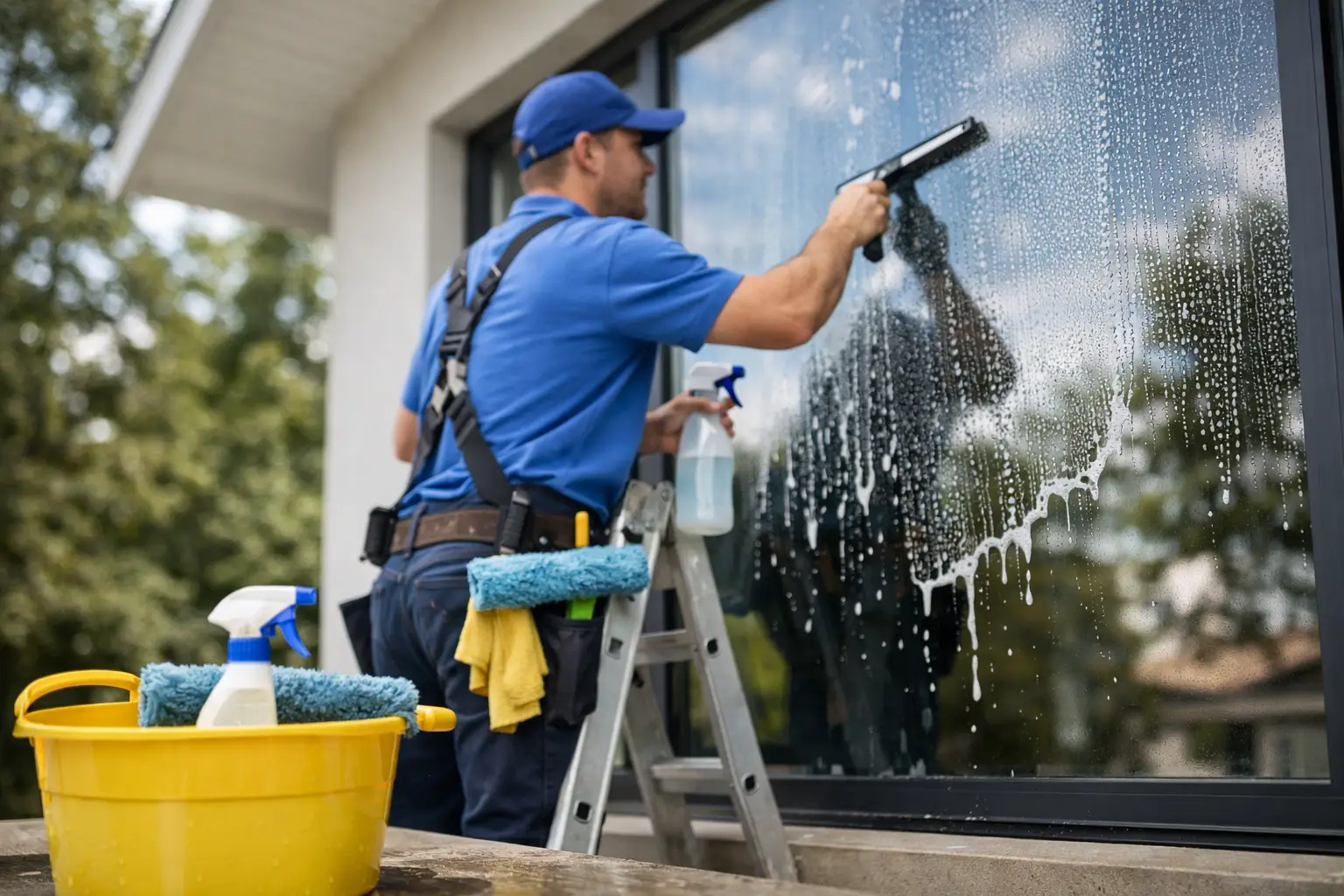
A streaky upstairs window can make an otherwise tidy property look unfinished, but the bigger issue is safety. When people search for how to clean exterior windows safely, they are usually trying to balance two things at once – getting a clear result without ending up on the wrong side of a ladder slip, damaged frame, or scratched glass. The safest method depends on your window height, access, frame material, and the type of dirt you are dealing with.
Why safe window cleaning starts before the first bucket
Exterior windows collect more than dust. In Southeast Queensland, it is common to see a build-up of salt, pollen, road grime, cobwebs, mould spores, and water spotting. If you attack that build-up with the wrong tools or too much pressure, you can leave permanent marks on glass, strip ageing paint, or force water into seals and frames.
That is why safe cleaning is not just about avoiding falls. It is also about protecting the window itself. Tougher methods are not always better. In many cases, a gentler approach with the right solution, soft applicator, and controlled rinsing gives a cleaner finish and causes far less wear over time.
How to clean exterior windows safely at home
If your windows are at ground level or can be reached comfortably from a stable position, a straightforward hand-cleaning method is usually the best place to start. Before anything else, check the area around the window. Wet paving, garden edging, uneven ground, and hoses underfoot all create avoidable hazards.
Start by brushing away loose dust, cobwebs, and grit from the frame and sill. This matters because rubbing dry grit across glass is one of the easiest ways to create fine scratches. Then use a bucket of clean water mixed with a small amount of window-safe detergent. You do not need heavy chemicals for routine cleaning, and more soap does not mean a better result. Too much product often leaves residue and makes streaking worse.
Apply the solution with a soft washer or microfibre sleeve, working from top to bottom. If the glass has bird droppings or stubborn grime, let the solution sit briefly rather than scrubbing aggressively. A squeegee with a good rubber edge will usually give the cleanest finish. Wipe the blade between passes and dry the edges with a clean microfibre cloth.
This method is practical for standard residential windows, but only if you can work from the ground or from a secure, low-risk position. The moment you are stretching, leaning sideways, or balancing to reach a corner, it stops being a simple clean and starts becoming a safety issue.
Choose tools that protect the glass and frames
The safest setup is usually also the simplest. A soft brush, bucket, microfibre cloths, washer, and quality squeegee will handle most routine window cleaning. Extension poles can help for slightly higher windows, especially if they let you keep both feet on the ground.
Avoid abrasive pads, razor blades, or harsh degreasers unless you are absolutely certain the glass and surrounding finishes can handle them. Tinted films, older painted timber frames, oxidised aluminium, and some sealants can all be damaged by aggressive cleaning. What works on one property may be the wrong choice on another.
Watch the weather
Hot glass and direct sun make window cleaning harder and less forgiving. Water and detergent dry too quickly, which leaves streaks and spotting before you can finish properly. Wind is another issue. It can affect ladder stability, blow spray back into your face, and make high work less predictable.
Overcast conditions are ideal, or at least work on the shaded side of the building first. If a storm is rolling through or surfaces are already slippery from rain, leave it for another day.
When ladders become the main risk
Most window cleaning injuries happen because people underestimate access, not because they lack effort. A ladder on uneven soil, pavers, gravel, or wet concrete can shift without much warning. Even a small overreach can move your centre of balance far enough to cause a fall.
If you are using a ladder, it should be the right type, fully opened or properly positioned, and set on stable ground. Keep three points of contact as much as possible, and never lean out past the side rails to reach extra distance. It may feel quicker in the moment, but it is exactly how simple jobs turn into emergency calls.
Second-storey windows are where many DIY attempts stop making sense. Cleaning glass while carrying water, handling tools, and trying to maintain balance is a very different task from changing a light globe or grabbing something from the gutter line. If access is awkward, the safest decision is often not a different ladder. It is a different method altogether.
Water-fed poles are often the safer option
For many exterior windows, a water-fed pole system is the safest and most effective method. This approach allows the operator to clean from the ground using an extendable pole and purified water. The brush loosens dirt while the purified water rinses the surface clean and dries with minimal spotting.
This method is especially useful for higher windows, hard-to-reach panes, and properties where ladder access is limited by landscaping, sloped ground, or delicate surfaces below. It reduces fall risk and helps avoid the overreaching that causes many DIY accidents.
It is not perfect for every situation. Heavily soiled glass, construction residue, oxidised frames, or old mineral staining may still need more specialised treatment. But for regular maintenance cleaning, water-fed poles are a strong option because they combine safety with a quality finish.
Be careful with pressure cleaners around windows
A common mistake is using a pressure cleaner on or near windows in the hope of speeding things up. While pressure cleaning has its place on tougher exterior surfaces, windows and surrounding seals need far more care. High pressure can force water into frames, damage seals, strip paint, and crack weakened glass.
That does not mean exterior glass can never be cleaned as part of a broader property wash. It means the method must suit the surface. Professional exterior cleaners understand where soft washing, low-pressure rinsing, and hand-detailing are the better choice. The right pressure and chemical treatment matter just as much on glass and frames as they do on painted walls or rendered surfaces.
How to know when a professional is the safer call
If your windows are above ground level, difficult to access, close to power lines, blocked by landscaping, or covered in heavy staining, hiring a professional is usually the smarter option. The same applies to commercial sites, strata properties, schools, and larger homes where consistency and safety compliance matter.
Professional window cleaning is not just about convenience. It is about using the right access equipment, the right cleaning method, and the right level of pressure for the job. It also saves time and reduces the risk of accidental damage to frames, flyscreens, painted finishes, and nearby surfaces.
For property managers and commercial operators, there is another practical factor – presentation. Clean windows affect how a site feels from the street, in the car park, and at the entry. When the glass is marked or cloudy, the whole property can look tired even if the rest of the grounds are in good shape.
A few problems that change the approach
Not all dirty windows need the same treatment. Salt spray near coastal areas can leave stubborn residue that does not lift with a quick wash. Mould around frames may point to moisture issues or shaded conditions that need regular maintenance. Hard water spotting can require specialist restoration rather than ordinary cleaning.
Older homes also deserve extra care. Ageing paint, weathered putty, brittle seals, and delicate timber can all be affected by rough handling or excess water. In these cases, slower and gentler is usually safer. That is one reason many property owners prefer experienced exterior cleaners who already understand how different materials respond.
If you are doing it yourself, set a clear limit
There is nothing wrong with cleaning easy-access windows yourself. For ground-floor glass, basic maintenance can be straightforward and cost-effective. The key is setting a limit before you start. If a window needs a ladder, awkward stretching, rooftop access, or stronger cleaning than expected, that is the point to stop.
A good rule is simple: if you cannot clean the window with stable footing and full control of your tools, it is no longer a DIY maintenance task. It is a professional access job.
At Boost Exterior Cleaning, that same thinking applies across all exterior surfaces. The best result comes from matching the method to the material and keeping safety at the centre of the job.
Clear windows should improve your property, not create a risk around it. If the safest approach is the slower one or the one that keeps your feet on the ground, that is usually the right call.


