

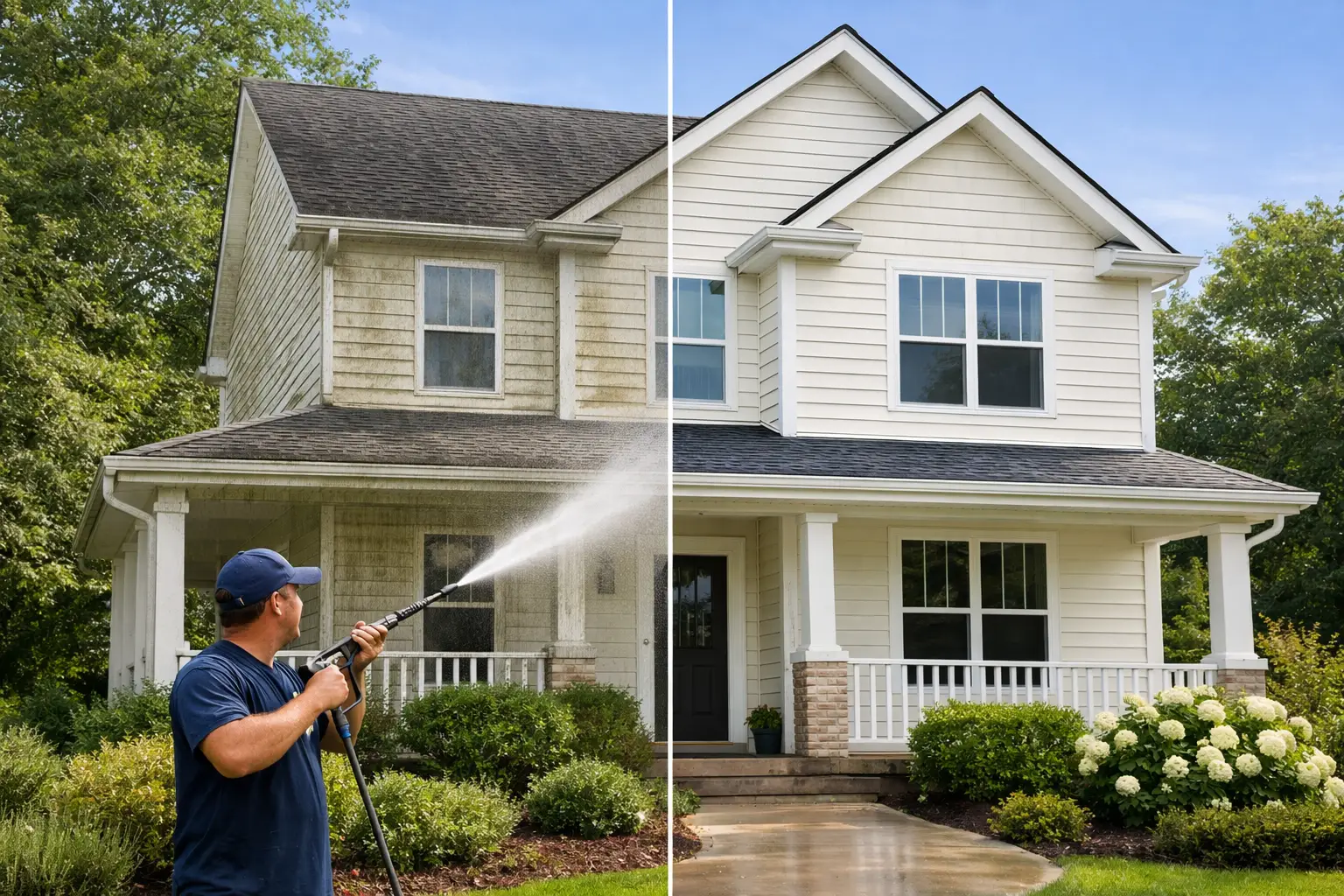
A proper house washing before and after example usually surprises people for the same reason – they did not realise how much grime had built up until it was gone. What looked like faded paint often turns out to be mould, algae, dust, traffic film and general buildup sitting on the surface. Once that contamination is treated properly, the home looks brighter, cleaner and better cared for without the need for repainting.
That is the real value of exterior house washing. It is not just about making a property look sharper for a weekend. Done correctly, it helps protect painted surfaces, reduces staining, and slows the kind of surface deterioration that becomes expensive later.
What a house washing before and after example really shows
The biggest mistake people make when looking at before and after photos is assuming the result came from blasting everything with high pressure. On many homes, that would do more harm than good. Weatherboards, painted render, eaves, trims and other delicate finishes usually need a softer approach.
A good before and after result shows more than a cosmetic change. It shows that the right cleaning method was matched to the surface. In practical terms, that means treating organic growth properly, loosening built-up grime, and rinsing at appropriate pressure so the home is cleaned without stripping paint, forcing water where it should not go, or roughing up the surface.
When you compare the before and after, the changes are usually consistent across the whole exterior. The walls look more even in colour. Dark streaks under gutters are reduced or gone. Green patches around shaded sides of the house disappear. Fascias, soffits and trims look fresher. The home starts to present the way it was meant to.
Before: what is usually hiding on the surface
In Southeast Queensland, exterior walls cop a lot. Humidity, rain, heat and shade create ideal conditions for mould and algae. Add airborne dust, road residue, cobwebs and general pollution, and even a newer property can start looking tired surprisingly quickly.
The front of the house might only show mild dullness, while the southern or shaded side can be heavily affected by green growth and staining. This uneven buildup is one reason homeowners sometimes think their paint is failing in patches. In many cases, the surface simply needs a proper wash.
There is a limit, of course. Cleaning will not fix peeling paint, water ingress, or existing substrate damage. A professional assessment matters because some homes need washing before painting, while others just need maintenance cleaning to restore their appearance.
Common signs seen in a before photo
A typical house washing before and after example starts with surfaces that look older than they really are. You might notice black spotting, green staining, dusty film, spiderweb buildup around light fittings, or dirty runoff marks below gutters and window frames.
On painted homes, lighter colours often look greyed off. On brick or rendered exteriors, the finish can appear patchy or discoloured. Around garages, entryways and covered outdoor areas, grime tends to build up faster because of moisture, foot traffic and reduced sun exposure.
After: what a proper clean changes
The after result should look clean, even and refreshed – not damaged or unnaturally stripped back. That difference matters. A quality wash restores presentation while keeping the integrity of the surface intact.
Painted exteriors usually regain clarity in colour. Whites look whiter, creams lose that dingy cast, and darker colours look sharper rather than chalky. Trims stand out properly again. If the property is being prepared for sale or rent, that immediate lift in street appeal can change the whole first impression before anyone steps inside.
For landlords, body corporates and facility managers, the after result also helps send a message that the property is maintained. That matters for residential tenancy turnover, school presentation, commercial buildings and shared complexes where appearance reflects standards of care.
Why soft washing often delivers the best before and after result
Soft washing is often the reason a house washing job looks dramatic without looking aggressive. Instead of relying on brute force, it uses targeted treatment and controlled water pressure to remove contamination safely from more delicate exterior surfaces.
This is especially important on painted weatherboards, rendered walls, coated finishes and older homes where excessive pressure can gouge surfaces, lift paint edges or drive water behind cladding. A softer method treats the cause of staining, particularly organic growth, rather than just skimming off what is visible at the top.
That approach can also produce a longer-lasting clean. If mould and algae are treated properly, the surface tends to stay cleaner for longer than if it was simply rinsed with pressure alone. It depends on location, shade, moisture and surrounding vegetation, but the method makes a real difference.
Not every surface should be cleaned the same way
This is where experience matters. A concrete driveway can handle a very different process from a painted exterior wall. Window frames, eaves, pool surrounds, timber features and masonry all respond differently to pressure and chemical treatment.
The best operators do not use one setting for the whole property. They assess the material, condition and level of contamination, then adjust the process accordingly. That is how you get a strong visual result without creating a new problem.
When before and after results matter most
Some property owners book house washing as annual maintenance. Others only think about it when the home starts looking neglected. Both approaches are valid, but the timing often affects how dramatic the result is.
If a property is being prepared for sale, a before and after difference can have immediate value. Clean exteriors photograph better, present better at inspections and help buyers feel the home has been looked after. The same applies before lease advertising or handover.
For commercial sites, schools and managed properties, exterior washing is often less about one dramatic transformation and more about consistent presentation. Regular cleaning helps prevent the kind of heavy buildup that becomes harder and more costly to remove later.
Older homes are another good example. Owners sometimes delay washing because they worry about damaging paintwork. In reality, that is often when a proper soft wash is most useful. It can lift years of grime gently and make the property look cared for again without the risks that come with overly aggressive cleaning.
What separates a good result from a rushed job
A strong before and after is not just about how dirty the property was to begin with. It comes down to preparation, product choice, pressure control and attention to detail.
Rushed jobs often leave behind tell-tale signs: streaking under eaves, missed corners, uneven treatment on shaded walls, and dirty residue around fixtures or window edges. Sometimes the main wall looks better, but trims, downpipes and surrounding surfaces are still carrying visible grime. That weakens the result.
A better job looks consistent from the street and up close. The cleaned areas should not just contrast with the dirty sections. The whole exterior should feel renewed.
For homeowners, that means asking not just how fast the service can be done, but how it will be done. For property managers and commercial clients, it means choosing a contractor who understands surface-specific cleaning rather than treating every building the same.
Looking at a house washing before and after example with the right expectations
Before and after photos are useful, but they need context. Lighting changes, weather conditions and camera angle can all affect what you see. The more reliable indicator is whether the cleaned surface looks even, intact and appropriately restored.
It is also worth being realistic about what washing can and cannot do. It can remove dirt, mould, algae and staining. It can dramatically improve presentation. It can help preserve finishes by removing harmful buildup. But it will not repair cracked render, reverse sun damage or hide failing coatings.
That is why the best results come when cleaning is treated as part of property maintenance, not a last-minute fix for every exterior issue.
Boost Exterior Cleaning sees this often across homes and larger sites alike – once the grime is removed properly, the property usually looks newer, sharper and far more inviting than the owner expected.
If your exterior looks dull, patchy or older than it should, the difference between before and after is often less about magic and more about using the right method on the right surface at the right time. A clean home does not just look better from the street. It gives you a clearer picture of the condition you are actually working with.


