

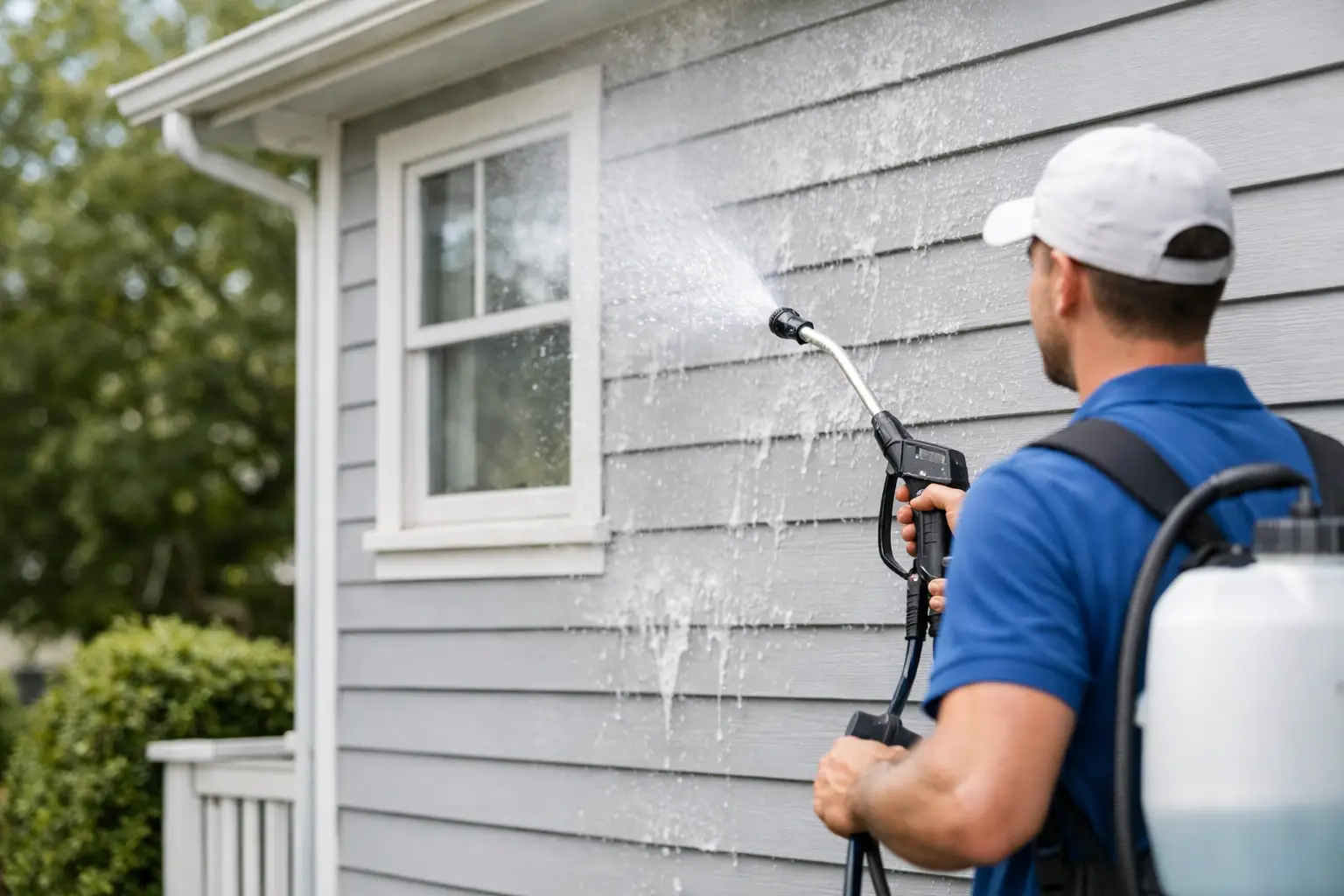
If your weatherboards are starting to show green streaks, black spotting or that dull, chalky film that makes the whole place look tired, the cleaning method matters more than most people realise. When people search for how to soft wash weatherboard homes, they usually want two things at once – a visibly cleaner finish and a way to avoid stripping paint, forcing water behind boards or causing damage that costs more to fix than the wash itself.
Weatherboard homes need a gentler approach than brick, concrete or hard paving. Timber and painted cladding can handle only so much pressure before the surface starts to suffer. That is why soft washing is often the right option. Done properly, it treats mould, algae, mildew and built-up grime at the source, instead of just blasting the surface and hoping for the best.
Why soft washing suits weatherboard homes
Weatherboard exteriors are exposed to a lot in south-east Queensland. Humidity, rain, shade, dust and airborne contaminants all combine to create ideal conditions for biological growth. south-facing walls, shaded sides of the house and areas near gardens are usually the first to show it.
High-pressure cleaning can make a weatherboard home look cleaner for a short time, but it is not always the safest method. Too much pressure can lift loose paint, rough up the timber fibres, push water into laps and joints, and shorten the life of the coating system. Soft washing works differently. It relies on low-pressure application and the right cleaning solution to break down organic growth and loosen grime before a careful rinse.
That difference matters if your goal is maintenance rather than damage control. A weatherboard home can be cleaned thoroughly without treating it like a driveway.
How to soft wash weatherboard homes properly
The basic process is straightforward, but the details make all the difference. Soft washing is not just spraying detergent on a wall and hosing it off. The right prep, pressure and dwell time are what protect the surface and produce an even result.
Start with a close inspection
Before any washing begins, inspect the weatherboards and trim. Look for peeling paint, cracked boards, open joints, rotten timber and areas where previous repairs may have left weak spots. Also check around windows, vents, light fittings and meter boxes.
This step tells you whether the surface is suitable for washing straight away or whether some repairs should happen first. If paint is already failing badly, even low-pressure rinsing can disturb it. Soft washing cleans the surface well, but it is not a substitute for repainting or carpentry repairs.
Protect the surrounding areas
Plants, outdoor furniture, nearby vehicles and delicate surfaces should be covered or pre-wet as needed. Chemical runoff needs to be managed carefully, especially around gardens and painted items that are not being cleaned.
It is also worth closing windows properly and checking that screens and seals are secure. On older homes, this matters even more. Weatherboard properties often have age-related gaps and movement, so a careful setup helps avoid unnecessary water ingress.
Apply the cleaning solution at low pressure
The soft wash mix should be suited to the contamination level and the surface condition. In most cases, the aim is to treat mould, mildew, algae and organic staining while remaining safe for painted weatherboards. This is where experience counts. Too weak, and the growth survives. Too strong, and you risk affecting surrounding materials or stressing older paint systems.
The solution is applied evenly from bottom to top or in controlled sections, depending on the house layout and run-off management. Low pressure is the key. You want coverage, not impact.
Allow proper dwell time
This is the part many DIY attempts get wrong. The cleaning solution needs time to work into the contamination and break it down. If you rinse too early, you leave growth behind and the results fade quickly. If you leave it too long in hot conditions, it can dry unevenly and create patchiness.
Dwell time depends on weather, surface temperature, shade and the amount of growth present. There is no single perfect number for every home. A heavily affected southern wall in winter behaves differently from a sun-exposed frontage in summer.
Rinse gently and thoroughly
After the dwell period, the surface is rinsed using low pressure and controlled water flow. The goal is to remove residues, dead organic matter and loosened grime without forcing water up under the boards or into openings.
A gentle rinse is what separates soft washing from aggressive pressure cleaning. If the pressure is climbing to the point where paint starts lifting or water starts driving behind the cladding, the method has shifted away from what weatherboards need.
Common mistakes to avoid
One of the biggest mistakes is assuming more pressure means a better clean. On weatherboards, the opposite is often true. Excess pressure can leave visible marks, create uneven paint wear and drive moisture where it should not go.
Another common issue is using the wrong chemical mix. Timber homes vary widely in age, paint condition and exposure. What works on one property may be too harsh or too weak on another. There is also the temptation to skip pre-treatment and try to rinse mould away mechanically. That might improve the look for a few weeks, but it rarely deals with the root of the problem.
Timing matters too. Washing in full heat, strong wind or unstable weather can affect both safety and finish quality. Soft washing works best when the operator can control application and drying conditions.
When DIY can work, and when it usually does not
For a small, single-storey area with light surface grime, some homeowners can manage a basic soft wash if they understand the products, dilution ratios and safe rinse pressure. But weatherboard homes are less forgiving than many people expect. Once ladders, second-storey access, oxidised paint, electrical fixtures and garden protection come into play, the risk level rises quickly.
That is usually the turning point for homeowners and property managers. The question stops being whether the wall can be washed and becomes whether it can be washed safely, evenly and without causing avoidable damage.
Professional soft washing makes sense when the home is older, the paintwork is valuable, the mould growth is heavy or access is awkward. It also makes sense when presentation matters – before sale, before a tenancy changeover or as part of annual maintenance.
How often should weatherboards be soft washed?
There is no fixed rule for every property. A home in a shaded, damp pocket near established trees may need attention more often than a breezy, sun-exposed property. As a general guide, many weatherboard homes benefit from a professional wash every 12 to 24 months.
If you wait until staining is heavy and obvious from the street, the clean becomes more involved and the surface has been sitting under biological growth for longer than it should. Regular maintenance tends to be more cost-effective than occasional catch-up cleaning.
This is especially true for homes being kept in good condition for resale, rental presentation or long-term paint preservation. A clean exterior is not just about appearance. It reduces the build-up that can shorten coating life and make repainting more difficult later on.
What good results should look like
A proper soft wash should leave the weatherboards looking brighter, cleaner and more even in colour, without obvious pressure marks or damage. Mould and algae staining should be treated, surface dirt removed and the overall presentation lifted in a way that looks cared for rather than overworked.
Not every stain disappears completely, especially if the paint is aged, oxidised or permanently marked. That is where honest assessment matters. A quality wash can dramatically improve the home, but it cannot reverse failed paint or timber deterioration. The best operators will tell you where cleaning ends and maintenance begins.
Why the right method protects property value
Weatherboard homes have character, but they also need the right upkeep. Poor cleaning methods can take value off the exterior just as quickly as neglect can. Soft washing protects the finish while still delivering the visual improvement most owners want.
For homeowners, that means better street appeal and less risk to paintwork. For property managers and body corporates, it means a reliable way to keep buildings presentable without creating avoidable maintenance issues. For older homes, it often means preserving materials that are far more expensive to repair than to clean properly in the first place.
That is why companies like Boost Exterior Cleaning put so much emphasis on matching pressure and treatment to the surface. The result is not just a cleaner house. It is a better-maintained one.
If your weatherboard home is looking tired, the smartest move is usually the gentlest one – treat the growth properly, use the right pressure, and clean it in a way that leaves the boards in better condition for the years ahead.


