

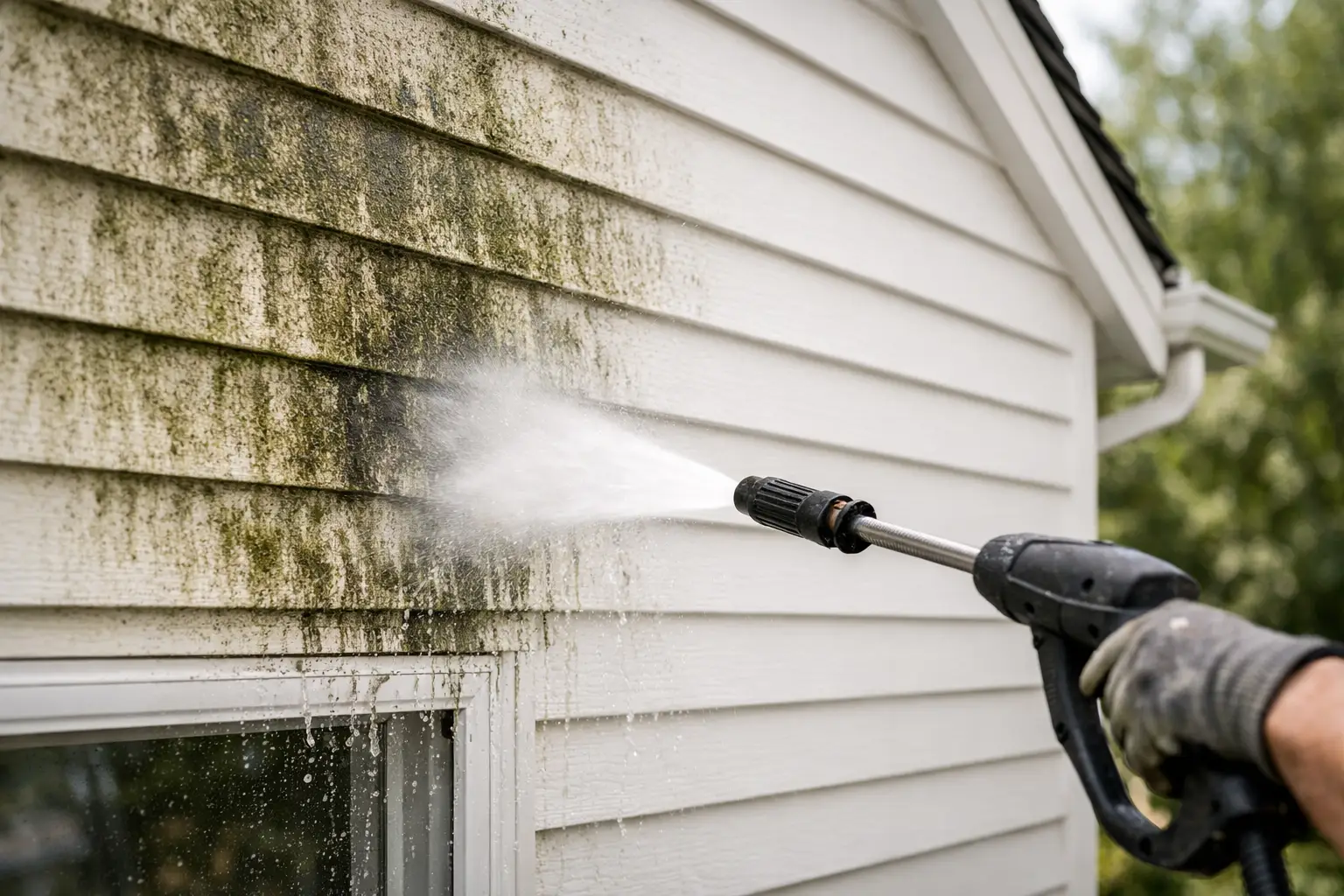
If mould is creeping across painted walls, eaves or rendered surfaces, the best house wash for mould is rarely the strongest product on the shelf. What works best is a treatment that actually kills the growth, suits the surface, and rinses clean without stripping paint or forcing water where it should not go. That is why the right method matters just as much as the chemical.
In Southeast Queensland, mould is not just a cosmetic issue. Warm weather, humidity, rain and shaded areas create perfect conditions for it to return quickly if it is only blasted off the surface. Many property owners have learned that a quick pressure clean can make a wall look better for a week or two, then the staining comes back. In some cases, pressure makes things worse by damaging paint, driving water into gaps, or leaving behind live spores that keep spreading.
What is the best house wash for mould?
For most exterior surfaces, the best house wash for mould is a professional soft wash solution designed to treat biological growth rather than simply rinse away visible marks. These washes are typically sodium hypochlorite based, used at the correct dilution, and combined with surfactants so the solution clings to the wall long enough to do its job.
That does not mean every mould problem should be hit with the same mix. Painted weatherboards, render, brick, concrete, external cladding and timber trims all respond differently. The age of the paintwork matters too. A newer painted facade can usually handle a standard soft wash process, while an older home with chalky or fragile coatings often needs a gentler approach.
The key point is simple – the best result comes from matching the treatment strength and application method to the surface. A stronger wash is not automatically a better wash.
Why soft washing usually beats pressure cleaning
Pressure cleaning has its place on hard surfaces such as driveways, paths and some masonry, but house exteriors are a different story. Most residential walls and trims need a low-pressure application that removes mould safely without chewing through the finish.
Soft washing works because it targets the root cause. Instead of relying on force, it relies on chemistry and dwell time. The mould is treated, loosened and killed before being gently rinsed away. That means less risk to paint, less chance of water ingress, and a cleaner finish across delicate areas such as window frames, fascia boards and coated cladding.
This is especially important on older homes and investment properties where presentation matters but expensive repainting is best avoided. A proper wash can lift the look of the property and help preserve the surface at the same time.
The ingredients that matter in a mould house wash
Most effective exterior mould washes use a few key components. Sodium hypochlorite is the active ingredient that kills mould, mildew and algae. Surfactants help the solution spread evenly and stick to vertical surfaces. Water dilution controls strength so the mix is effective without being unnecessarily harsh.
Some off-the-shelf products also include fragrance or additives marketed as long-lasting protection. Those features are less important than correct application. A quality chemical used badly can underperform. A properly prepared wash, applied at the right ratio and rinsed correctly, will usually deliver better and safer results than a premium retail bottle sprayed on without a plan.
That is also why mixing household cleaners can be risky. Bleach on its own is not a complete exterior cleaning strategy, and combining chemicals without experience can damage surfaces or create safety hazards.
Best house wash for mould by surface type
There is no single answer for every property because mould does not grow on every surface in the same way.
Painted weatherboards and rendered walls
These surfaces are usually best cleaned with a low-pressure soft wash. The treatment needs to be strong enough to kill mould but gentle enough to protect the coating. High pressure can leave lines, lift flaky paint and force water behind boards or cracks.
Brick and masonry
Brick can often tolerate a bit more aggression than painted finishes, but pressure still is not always the first choice. If the staining is biological rather than ground-in dirt, a chemical treatment should come first. On older mortar joints, too much pressure can cause unnecessary wear.
Vinyl or composite cladding
Cladding responds well to soft washing because it can mark or warp under excessive pressure. Mould often sits in overlaps and shaded sections, so even coverage matters more than force.
Timber trims, soffits and eaves
These areas are common mould hotspots, particularly where airflow is limited. They benefit from a controlled wash that treats mould without saturating edges, gaps and joins.
Roof-adjacent walls and shaded sides of the house
These sections usually need more than a quick clean because they are exposed to recurring moisture, runoff or lack of sun. If the surrounding environment is driving growth, the wash may need to be paired with routine maintenance to keep the results lasting longer.
What to avoid when washing mould off a house
One of the biggest mistakes is using too much pressure because the result looks instant. Fast visual improvement can hide long-term damage. Paint can be etched, sealants can be disturbed, and water can end up where it should not be.
Another common mistake is under-treating the area. If the wash is too weak or rinsed too quickly, the mould staining may fade for a short time without the growth being properly killed. That often leads to a return visit from the mould sooner than expected.
It is also worth being careful around gardens, outdoor furniture and surrounding surfaces. Any mould treatment needs to be managed properly to protect nearby plants and finishes. Professional operators account for runoff, overspray and surface compatibility before they start.
DIY house wash or professional service?
For very light mould on a small, accessible area, a careful DIY clean may help. But there is a difference between cleaning a low section of wall and treating an entire home properly. Multi-storey access, chemical handling, surface assessment and rinse control all matter.
A professional service is usually the better option when the house has widespread mould, delicate paintwork, difficult access, or recurring growth that keeps coming back. The advantage is not just equipment. It is knowing how much pressure to use, how strong the mix should be, and how to clean one part of the property without damaging another.
That surface-specific approach is exactly why soft washing has become the preferred method for many exterior house washing jobs. At Boost Exterior Cleaning, the focus is on using the right pressure and treatment for each surface so the clean looks good without creating avoidable repair costs later.
How long should a mould house wash last?
It depends on the property. A well-executed wash can keep a home looking cleaner for months, but mould regrowth is influenced by shade, moisture, nearby trees, roof runoff, ventilation and local weather. A south-facing wall tucked behind dense greenery will usually need more frequent attention than an open, sunlit facade.
That does not mean the treatment failed. It means the environment is working against the surface. In those cases, regular maintenance is often the smartest and most cost-effective option. Cleaning before mould becomes heavy is easier on the surface and usually delivers a better-looking result.
Choosing the right contractor for mould washing
If you are comparing services, ask how they clean painted surfaces, whether they use soft washing, and how they handle older coatings or delicate materials. A good operator should be able to explain their process clearly. They should talk about surface safety, not just power and speed.
It also helps to choose a team that works across different property types. House washing, commercial building washing and strata maintenance all involve different challenges, but the principle stays the same – the best clean is one that removes mould effectively while protecting the asset.
For homeowners, property managers and facility operators, that matters because presentation and maintenance go hand in hand. A mould-stained exterior can make a property look neglected, even when the structure is sound. A proper wash restores appearance, helps preserve finishes and makes ongoing upkeep easier.
The best house wash for mould is the one that suits your surfaces, kills the growth properly and leaves the property cleaner without unnecessary risk. If you are seeing black streaks, green patches or musty staining on exterior walls, it is usually worth acting early. Small mould problems have a habit of becoming bigger ones once heat and humidity settle in.


