

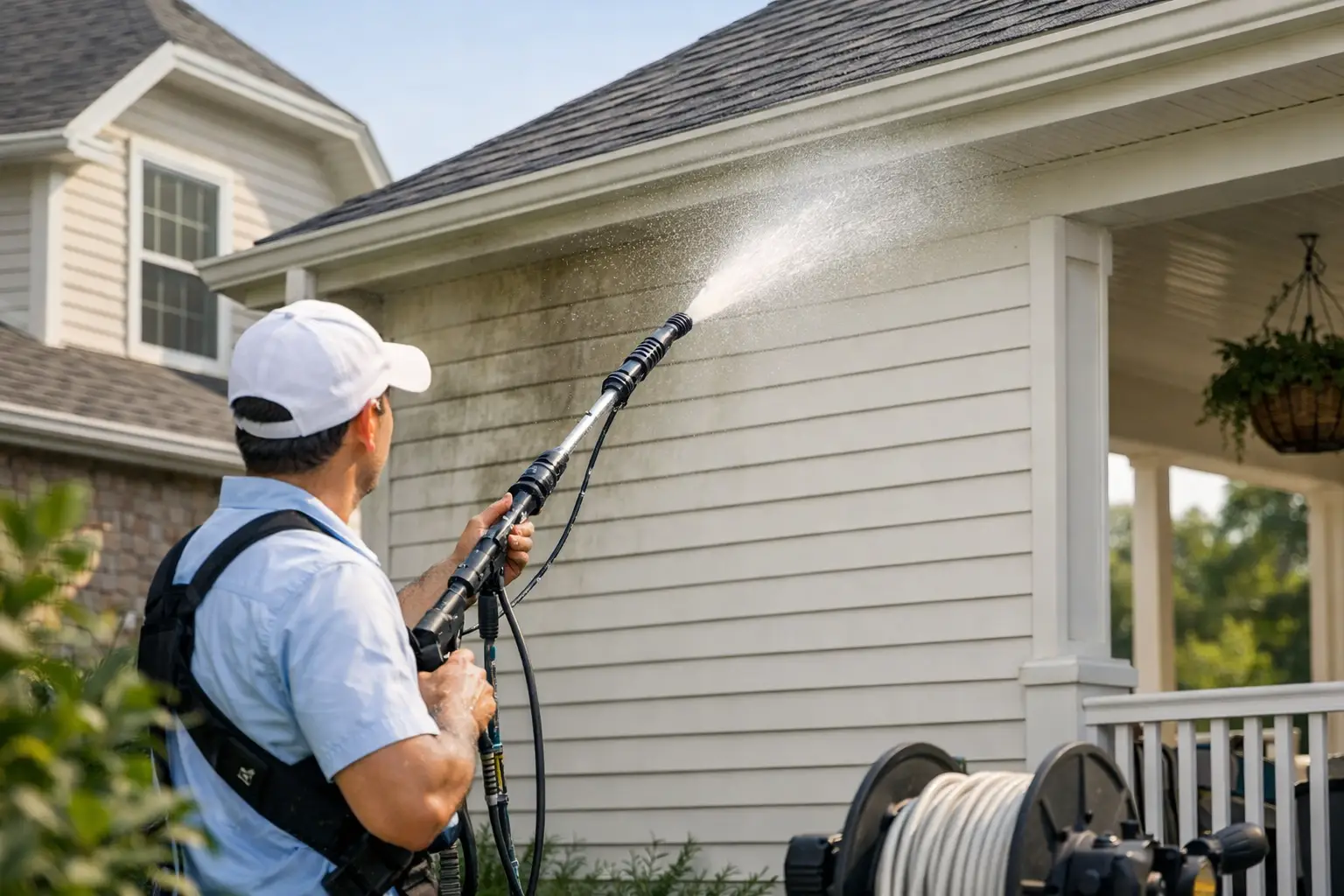
You can usually tell when a home needs attention before you even reach the front door. Green staining on painted walls, cobwebs under the eaves, dark marks around gutters and that dull, tired look across the whole exterior all point to the same problem. House soft washing is designed for exactly this kind of build-up, giving homes a proper clean without the damage risk that comes with using too much pressure.
For many properties across Southeast Queensland, the issue is not just dirt. It is mould, mildew, algae, lichen, pollen, dust and general environmental fallout building up over time. In a warm, humid climate, those contaminants do not sit on the surface harmlessly. They can stain paintwork, make exterior areas look neglected and shorten the life of finishes if they are left too long.
What house soft washing actually means
House soft washing is a low-pressure exterior cleaning method that uses specialised solutions to break down organic growth, grime and staining before the surface is rinsed clean. The key difference is control. Instead of relying on high pressure to blast contamination off the wall, soft washing treats the cause of the staining and cleans the surface more gently.
That matters on painted exteriors, rendered walls, weatherboards, cladding, eaves, gutters, soffits and other surfaces that can be marked, etched or forced open by incorrect pressure. A house wash should improve presentation, not leave behind stripes, water ingress issues or peeling paint.
This is why the method needs to match the surface. Some exterior areas can handle stronger pressure. Others absolutely should not. Knowing the difference is what separates a proper result from an expensive mistake.
Why soft washing suits so many Queensland homes
In Brisbane, Logan, the Gold Coast, Buderim and the Sunshine Coast, exterior surfaces deal with a steady mix of moisture, heat, airborne dust and organic growth. South-facing walls often stay damp longer. Shaded areas around fencing, gardens and neighbouring homes tend to collect mildew faster. Coastal properties also have to deal with salt and airborne residue that can leave exteriors looking worn well before their time.
House soft washing works well in these conditions because it does more than improve appearance. It helps remove the living growth that keeps coming back if you only rinse the surface. That is especially useful for older homes, repainted homes and properties being prepared for sale, rent inspections or routine annual maintenance.
There is also the street appeal factor. A clean exterior can lift the whole look of a property in a single visit. When walls, gutters and trims are bright and consistent again, the home looks better cared for straight away.
Where house soft washing is the better option
Not every part of a property should be cleaned the same way. High-pressure cleaning has its place on harder surfaces such as some driveways, paths and certain concrete areas. But for the home itself, soft washing is often the safer choice.
It is especially suitable for painted weatherboards, exterior render, fibre cement cladding, delicate trims, eaves, fascia boards, pergolas and other areas where surface preservation matters. It is also the right approach when the main issue is organic staining rather than compacted surface grime.
There are trade-offs, and that is worth being clear about. If a surface is heavily oxidised, failing, or already has loose paint, cleaning alone will not fix the underlying condition. Soft washing can remove contamination, but it will not repair damage that is already there. In those cases, the goal is careful cleaning that prepares the surface for maintenance rather than pretending the problem does not exist.
The difference between soft washing and pressure cleaning
This is where many homeowners get mixed messages. Pressure cleaning sounds stronger, so it can seem like the better option. Stronger does not always mean better.
Pressure cleaning depends on water force to remove build-up. On the right surface, that is effective. On the wrong surface, it can gouge timber, scar paint, force water behind cladding, disturb seals and leave visible cleaning lines. Soft washing uses lower pressure and appropriate treatment to clean with less risk to delicate finishes.
A good operator does not treat these methods as competing services. They use both where appropriate. The real question is not which method is more powerful. It is which method is safest and most effective for the material in front of them.
What gets removed during house soft washing
Most homes are carrying more contamination than owners realise. Even when an exterior does not look heavily soiled from the street, close inspection often shows a mix of black spotting, green streaking, cobweb build-up, insect residue and grime around windows, trims and downpipes.
House soft washing is commonly used to remove mould, mildew, algae, lichen, dirt, dust, cobwebs, bird droppings and general atmospheric staining. It can also freshen surfaces that have gone dull from regular exposure to rain splash, garden overspray and pollution.
The result is not just a brighter wall. It is a cleaner, healthier exterior surface that is less likely to keep deteriorating under a layer of growth and grime.
Why technique matters more than equipment alone
Professional equipment helps, but equipment by itself does not protect your home. The real value comes from knowing how much pressure to use, what treatment is suitable for the material, how long it should dwell, and how to rinse thoroughly without harming nearby surfaces.
That is particularly important around gardens, window frames, screens, light fittings and painted trims. Every home has variables. Sun exposure, age of paint, existing wear, nearby landscaping and access all affect how the job should be done.
This is also why cheap, rushed cleaning can cost more later. If the surface is cleaned too aggressively, the immediate result might look sharp for a day or two, but the damage tends to show up afterwards. Paint can lift, timber can fuzz, and water can find places it should not be. A careful soft wash avoids creating new problems while solving the original one.
When to book house soft washing
For many homes, an annual wash is enough to keep the exterior in good condition. Properties in more shaded spots, humid pockets or coastal areas may need attention more often. If you can see green growth, black spotting, spider activity around the eaves or obvious dullness on painted surfaces, it is usually time.
There are also practical moments when house soft washing makes a lot of sense. Before listing a property for sale, before professional photography, after renovation work, ahead of tenancy turnover, or as part of a broader maintenance plan, a proper exterior wash can make the whole property present better.
Commercial and institutional sites benefit for similar reasons. Clean buildings support presentation, upkeep and public confidence. For schools, strata properties and facilities with regular foot traffic, exterior appearance is not just cosmetic. It reflects how the site is maintained.
What to expect from a professional service
A proper house wash should start with an assessment of the exterior materials and the type of contamination present. From there, the cleaning method should be adjusted to suit the home rather than forced into a one-size-fits-all approach.
You should expect clear communication, protection of surrounding areas where needed, and a result that looks clean and even rather than patchy or overworked. Good operators also understand that speed is not the only goal. The best outcome is a visibly improved exterior with no unnecessary wear on the home.
For homeowners and property managers, that peace of mind matters. You are not just paying for a rinse. You are paying for surface-safe cleaning that improves presentation and helps protect the finish you already have.
At Boost Exterior Cleaning, that is exactly how we approach house soft washing – as a practical maintenance service that lifts appearance, removes harmful build-up and treats each surface with the care it needs.
A clean exterior changes how a property feels. It looks sharper, better maintained and ready for whatever comes next, whether that is another year of weather, a sale campaign or simply pulling into the driveway and seeing your home at its best.


