

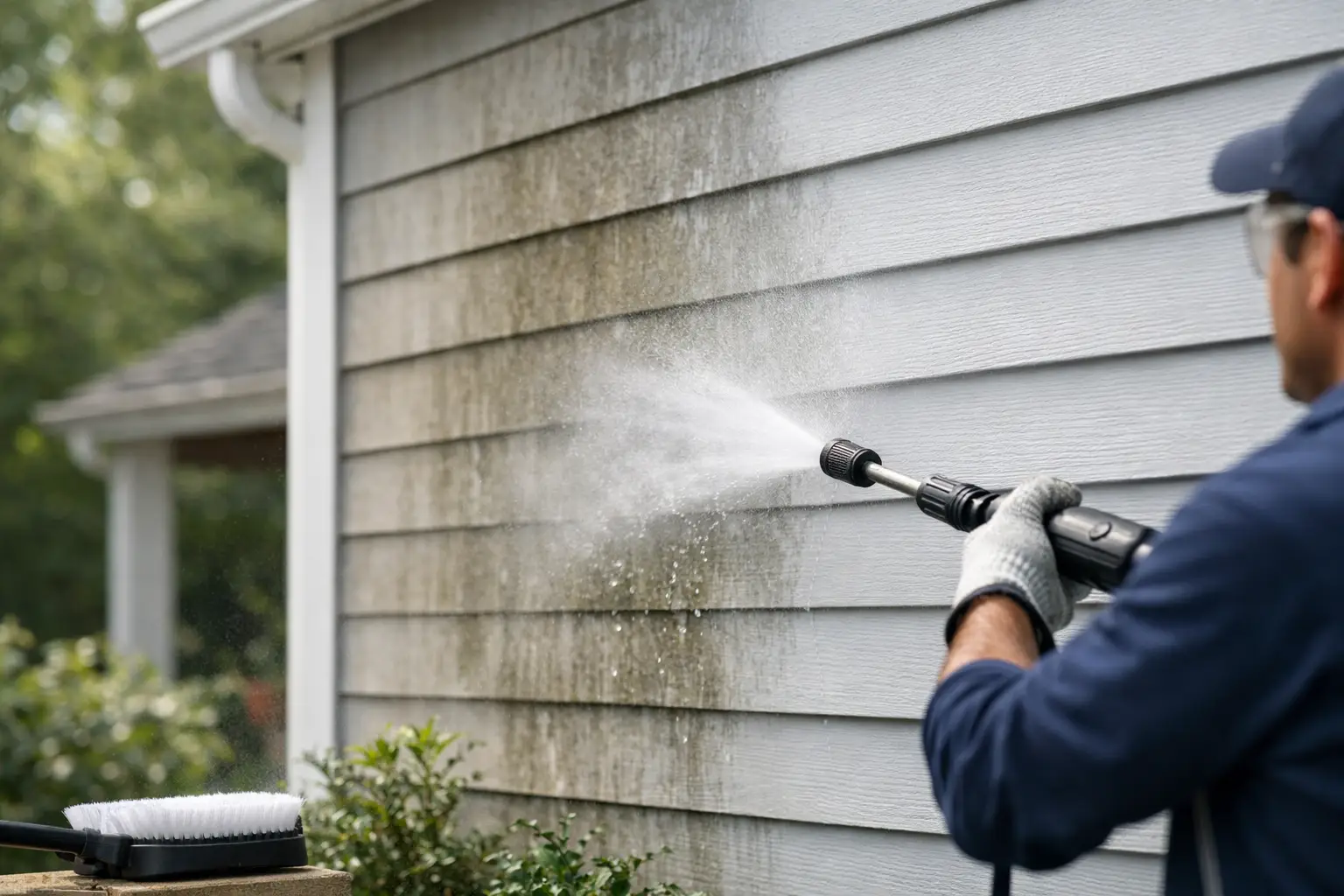
A painted home should look refreshed after a wash, not faded, streaky or marked by water pressure. Paint safe exterior cleaning is the difference between simply blasting away visible grime and treating your exterior with the right combination of low pressure, cleaning solution and care. For Queensland properties dealing with humidity, coastal air, mould and road dust, that difference matters.
Paintwork protects more than the appearance of your home or building. It forms a barrier against moisture and weather exposure. When cleaning is too aggressive, it can shorten the life of that barrier and turn a straightforward maintenance job into an expensive repaint.
What makes exterior cleaning safe for paint?
Paint-safe cleaning starts with recognising that not all exterior surfaces respond the same way. A painted weatherboard wall, rendered façade, Colorbond fence, timber trim and brickwork may sit side by side, but they need different treatment.
High-pressure water can be useful on hard surfaces such as concrete driveways, paths and some commercial hardstands. On painted walls, however, excessive pressure can force water behind laps, lift loose paint, damage aged coatings and leave visible etching. Even paint that looks sound from the ground can be vulnerable if it is old, chalky, sun-affected or already beginning to peel.
Soft washing is generally the safer approach for painted exteriors. It uses purpose-selected cleaning solutions to break down organic growth, dirt and pollution, followed by a controlled low-pressure rinse. Rather than relying on force alone, the process treats the cause of staining and removes it without punishing the surface.
That does not mean every property receives exactly the same treatment. The right method depends on the paint condition, surface material, level of contamination, access, drainage and nearby gardens. A professional clean begins with an assessment, not a one-setting-fits-all machine.
Why mould and algae need more than a quick rinse
Green algae, black mould and lichen are common across Brisbane, Logan, the Gold Coast and the Sunshine Coast. Shaded walls, south-facing elevations, damp garden edges and areas beneath gutters are especially prone to growth. A plain water rinse may make the wall look better for a short time, but it often leaves spores and organic residue behind.
When growth is not properly treated, it can return quickly. It also holds moisture against painted surfaces, creating conditions that may contribute to premature coating breakdown. On timber and older painted cladding, persistent dampness deserves particular attention.
A paint-safe treatment is designed to remove the visible staining while addressing the organic growth responsible for it. The solution must be applied at an appropriate strength, allowed sufficient contact time and thoroughly rinsed where required. Too weak, and it will not clean effectively. Too strong, or poorly controlled, and it can affect surrounding plants, exposed metals or sensitive finishes.
This is where surface knowledge matters. The goal is a clean, even result that protects the property, not a fast wash that creates new problems.
Paint safe exterior cleaning for common surfaces
Painted render and masonry
Rendered homes can develop dark streaks, mould patches and dust buildup that make an otherwise well-kept property look tired. Because render can vary in texture and paint condition, high pressure may leave inconsistent marks or expose weak areas. Soft washing is usually the preferred method, with careful attention around cracks, vents, window seals and any areas where paint has failed.
If a wall is badly chalking, flaking or blistering, cleaning will not repair the coating. In these cases, a careful wash can prepare the surface for painting, but it should be treated as maintenance before repainting rather than a substitute for it.
Weatherboards and painted timber
Timber needs a gentler hand. Water driven into joins and laps can create moisture issues, while harsh pressure can roughen the grain or strip vulnerable paint. Low-pressure application, suitable dwell time and a controlled rinse help remove grime and biological growth while respecting the material underneath.
Older timber homes may also have delicate areas around eaves, window frames and decorative trims. These details need close inspection before cleaning, particularly where paint is already lifting.
Painted metal, fencing and garage doors
Powder-coated and painted metal surfaces collect airborne dust, salt residue and spider webs, particularly in coastal areas. They can usually be cleaned effectively, but aggressive pressure at close range can damage the finish or drive water into joints and openings.
Garage doors, fence panels and metal fascias benefit from a measured soft wash that removes surface contamination without leaving detergent residue or streaking. Rinsing technique is just as important as the cleaner used, especially on darker colours where marks are more noticeable.
Eaves, soffits and trims
Eaves and soffits are often overlooked until mould spotting becomes obvious. These surfaces can be fragile, awkward to access and close to electrical fittings, vents and windows. They require low pressure and careful runoff control. A professional operator will also avoid directing water where it does not belong, including into roof cavities or behind poorly sealed fittings.
The risks of DIY high-pressure washing
Hiring a pressure cleaner can look like the quickest route to a brighter exterior. For some hard surfaces, it can be. But painted walls are not a good place to learn by trial and error.
The most common issue is using too much pressure too close to the surface. This can cut through paint, create stripes, expose bare substrate and force water behind cladding. Damage may not always be visible immediately. Moisture trapped behind finishes can show up later as bubbling paint, stains or deterioration around joins.
Chemical handling is another consideration. Exterior cleaning products need correct dilution, safe application and responsible protection of gardens, pets, pools and stormwater drains. Mixing products or using household chemicals without understanding their compatibility can produce poor results and unnecessary risk.
There is also the practical challenge of working at height. Cleaning upper-storey walls, eaves and fascia boards from ladders while managing hoses and equipment is not a job to rush. For many homeowners and facility managers, professional cleaning is the safer and more cost-effective option once access, surface protection and potential repainting costs are considered.
How to prepare your property for a safe wash
A few simple steps help protect the property and make the cleaning process more efficient. Move outdoor furniture, toys and portable planters away from walls where possible. Close windows and doors, and let the cleaning team know about any leaks, damaged seals or areas of concern.
If you have delicate plants close to the building, point them out before work begins. They can be pre-watered, covered where appropriate and rinsed afterwards as part of good site care. Keep pets inside during the service, and make sure access is available to the relevant exterior areas.
For strata, commercial and school sites, planning is equally important. Cleaning may need to be scheduled around pedestrian traffic, deliveries, student movement, tenant access or car parking. Clear communication and sensible work-zone management allow the job to be completed with minimal disruption.
When exterior cleaning should be followed by repairs or repainting
A professional wash can transform a property, but it cannot make failed paint sound again. Cleaning often reveals the true condition of a surface by removing the dirt that has been hiding cracks, fading, loose coating and water stains.
Look for peeling paint, persistent blistering, soft timber, rust marks, open cracks or staining that returns soon after cleaning. These signs may indicate that repairs, gutter maintenance, drainage improvements or repainting should follow. Addressing the underlying issue protects the value of the cleaning work and helps prevent repeated moisture damage.
For properties being prepared for sale, lease inspections or a new tenancy, timing matters. Exterior washing before photography, open homes or handover can make paintwork and landscaping look sharper. If repainting is planned, cleaning first gives painters a cleaner surface to assess and prepare.
Choosing a contractor who protects the finish
Ask how the contractor decides between soft washing and pressure cleaning. A reliable exterior cleaning provider should be able to explain which surfaces will receive low pressure, how mould and algae will be treated, and what steps are taken to protect gardens, windows and surrounding finishes.
It is also worth asking whether they inspect paint condition before starting. A careful operator will flag pre-existing peeling paint, damaged seals and vulnerable areas rather than washing over them without discussion. Clear expectations prevent surprises and make it easier to achieve the result you want.
Boost Exterior Cleaning uses the appropriate pressure and treatment for the surface in front of us, whether that is a painted home exterior, a commercial façade or the hard surfaces surrounding it. The aim is simple: remove the grime, protect the finish and leave the property looking cared for.
A clean exterior is one of the most visible forms of property maintenance. When it is done with the right method, your paintwork gets the fresh presentation it deserves without paying the price for an overly aggressive wash.


