

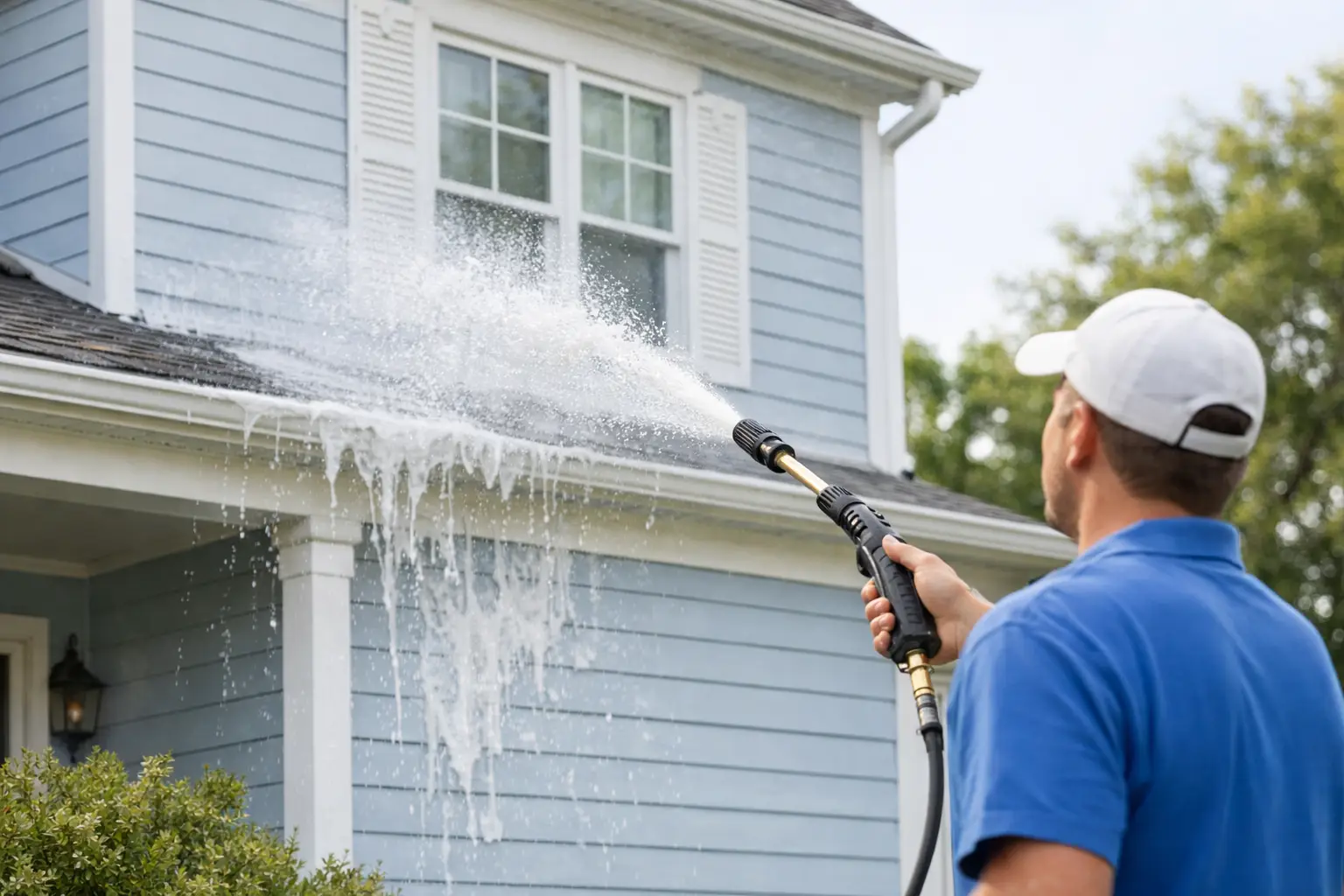
Painted walls can look tired long before the paint has reached the end of its life. In Southeast Queensland, humidity, summer rain, tree cover and airborne grime can leave exterior paintwork streaked with mould, algae and dull residue. Knowing how to soft wash painted exteriors helps remove that growth without the risk of blasting paint, forcing water behind cladding or damaging delicate finishes.
Soft washing is not simply pressure cleaning at a lower setting. It is a controlled cleaning method that uses a suitable treatment to break down organic growth, followed by a gentle rinse. Done properly, it restores the colour and presentation of painted surfaces while helping protect the coating underneath.
Why painted exteriors need a gentle cleaning method
High-pressure water may be useful on hard surfaces such as concrete driveways, but painted exterior walls are different. Even paint that looks sound can have small cracks, thin edges, weathered sections or weak points around windows, vents and joints. A concentrated high-pressure stream can strip paint, scar timber, lift caulking and push water into areas where it does not belong.
Soft washing addresses the cause of common exterior staining rather than relying on force. Mould, mildew, algae and lichen need an appropriate treatment to be properly removed. A gentle rinse then carries away the loosened contamination and residue.
This matters especially for rendered homes, painted weatherboards, fibre-cement cladding, soffits, eaves and older paintwork. The right method can refresh the home’s appearance and reduce the need for premature repainting. However, soft washing will not repair flaking paint, failed sealant or stains that have permanently penetrated an aged coating. Those areas may need preparation and repainting after cleaning.
Check the paintwork before you begin
Start with a walk around the property in daylight. Look closely at the condition of the walls, eaves, trims and areas beneath gutters. If paint is peeling, chalking heavily or bubbling, cleaning needs extra care. A wash can reveal the true extent of a coating problem, but it will not fix it.
Also check for gaps around windows, loose weatherboards, damaged render, cracked mortar and exposed electrical fittings. Water should never be directed into vents, wall openings or damaged building materials.
If you are unsure what finish is on the building, test a small, inconspicuous section first. Some older paints, specialty coatings and freshly painted surfaces can react differently to cleaning solutions. New paint should be allowed to cure fully in line with the paint manufacturer’s guidance before washing.
Prepare the area properly
Good preparation protects the property and makes the wash more effective. Move outdoor furniture, pot plants, mats and children’s toys away from the wall. Cover sensitive items that cannot be moved, and close all windows and doors.
Plants deserve particular attention. Wet surrounding gardens thoroughly with clean water before applying any treatment. This creates a barrier that reduces absorption. Keep plants damp throughout the job and rinse them well again once cleaning is complete. Avoid allowing runoff to enter ponds, pools or stormwater drains.
You should also wear appropriate personal protective equipment, including gloves, eye protection, enclosed footwear and clothing that covers exposed skin. If you are working above ground level, do not stretch from a ladder while handling a hose or cleaning solution. Uneven ground, wet surfaces and ladders are a poor combination. For high walls, second-storey areas and difficult access, professional equipment and trained operators are the safer option.
How to soft wash painted exteriors step by step
The safest approach is to work in manageable sections, generally from the bottom of the wall upward when applying treatment. This helps prevent uneven streaking. Rinsing is usually completed from the top down, allowing dirty water to flow naturally away from cleaned surfaces.
1. Remove loose debris with a low-pressure rinse
Use a garden hose or very low-pressure setting to wet the wall and remove loose dust, cobwebs and surface dirt. Keep the spray wide and gentle. Do not hold the nozzle close to the paintwork, and avoid spraying directly into joints, vents, window frames or light fittings.
This initial rinse also helps the treatment spread more evenly across the surface. On hot days, wetting the wall first can reduce the chance of the solution drying too quickly.
2. Apply a surface-appropriate soft wash treatment
A professional soft wash treatment is selected and diluted according to the surface, contamination level and surrounding conditions. Products used for mould and algae removal are effective because they treat organic growth at its source, but they must be handled carefully and applied at the correct strength.
Do not assume a stronger mix will produce a better result. Excessively strong solutions can affect paint sheen, damage nearby plants or leave patchy results. Too weak a mix may not fully treat the growth, allowing it to return sooner.
Apply the treatment evenly with a low-pressure soft wash system, pump sprayer or other suitable applicator. Keep it off glass where possible and avoid overspray on metal fixtures, screens and sensitive landscaping. Never mix cleaning chemicals unless the product instructions specifically allow it. Combining products can create harmful fumes or unpredictable reactions.
3. Let the treatment dwell, but do not let it dry out
The solution needs time to work on mould, algae and grime. This is called dwell time. The right duration depends on the treatment, temperature, shade and severity of staining, so follow the product directions rather than guessing.
Watch the surface while it dwells. In Brisbane, Logan, the Gold Coast and the Sunshine Coast, exterior walls can dry quickly in direct sun. If the solution begins drying, lightly mist the area or move to a shadier section. A treatment that dries on the wall can leave residue and make rinsing more difficult.
Stubborn dark mould staining may need a second controlled application. Do not respond by increasing water pressure. Patience and correct treatment are far safer for paintwork than force.
4. Rinse gently and thoroughly
Once the treatment has done its job, rinse with clean water using low pressure. Start at the top and work down in smooth, overlapping passes. The aim is to remove residue without driving water behind the exterior surface.
Pay close attention to window ledges, eaves, gutters, wall junctions and plants below the work area. These spots can hold residue if they are not rinsed well. Step back regularly to check for missed patches, drip marks or uneven sections before moving on.
For many painted exteriors, a soft wash and gentle rinse will create a clear improvement immediately. Heavily weathered paint may still look uneven because the coating itself has faded over time. Cleaning removes the dirt hiding the surface condition – it does not restore lost pigment.
Common mistakes that can damage painted walls
The most common mistake is using a pressure cleaner as though every exterior surface is concrete. Narrow nozzles, high PSI and close-range spraying can leave visible lines in paintwork or strip sections back to bare material.
Another issue is cleaning in full sun without managing dwell time. When treatment dries rapidly, it can leave marks and reduce effectiveness. Cleaning one small section at a time is more controlled than coating an entire house and trying to chase it around with a hose.
Poor runoff management can also create unnecessary problems. Chemical residue should not be allowed to wash unchecked into gardens, ponds or drainage systems. Pre-wetting plants, controlling the application and rinsing thoroughly are essential parts of the job, not optional extras.
Finally, do not treat cleaning as a substitute for maintenance. If mould is returning quickly, investigate contributing issues such as blocked gutters, heavy shade, poor drainage, overhanging vegetation or leaking fixtures. Fixing the source can keep the exterior cleaner for longer.
When it is better to call a professional
DIY soft washing can suit a small, accessible wall with sound paintwork and light surface growth. It becomes less suitable when the property has multiple levels, extensive mould, fragile finishes, difficult access or landscaping that needs careful protection.
Professional exterior cleaners use purpose-built soft wash equipment that controls application pressure and solution flow. They can assess each surface, use the appropriate treatment and work efficiently across walls, eaves, cladding, rendered finishes and surrounding hard surfaces. This is particularly valuable for property managers, body corporate sites, schools and commercial buildings where presentation, safety and minimal disruption all matter.
Boost Exterior Cleaning provides surface-safe soft washing for homes and commercial properties across Southeast Queensland, with methods selected to clean effectively while preserving painted finishes.
A clean painted exterior does more than lift kerb appeal. Regular, careful washing gives you a clearer view of the condition of your property, helps reduce organic growth, and keeps the building looking cared for between repainting cycles. If the job involves height, heavy staining or valuable paintwork, choosing a controlled professional soft wash is a practical way to protect the finish as well as the property’s presentation.


