

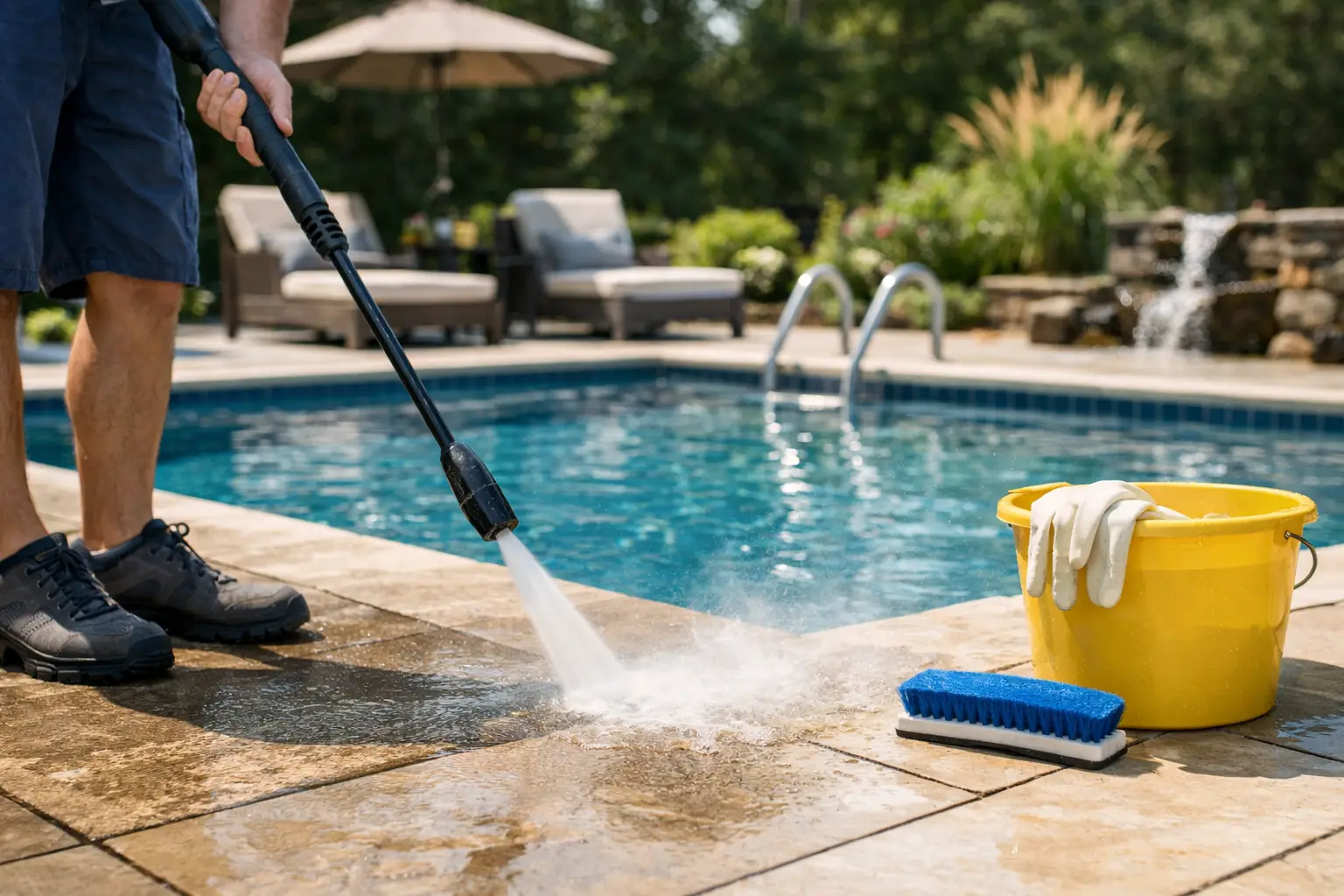
A pool area can look clean at a glance while still being slippery under bare feet. Fine algae, sunscreen residue, leaf tannins and mould often build up across pavers, coping and textured concrete before they become obvious. Knowing how to clean pool surrounds safely helps protect the people using the area, the surface beneath them and the pool water itself.
The right method is not simply about using more pressure or stronger chemicals. Pool surrounds are made from a wide range of materials, including concrete, porcelain tiles, natural stone, exposed aggregate, timber and composite decking. Each responds differently to water pressure and cleaning products. A surface-safe approach delivers the visible result you want without etching pavers, stripping sealers, damaging grout or washing contaminants straight into the pool.
Start by identifying the pool surround material
Before bringing out a pressure cleaner, establish what the surface is made from and whether it has been sealed. This matters more than most homeowners realise. Dense porcelain and well-laid concrete can generally tolerate more mechanical cleaning than soft natural stone, ageing grout or painted concrete. Travertine, sandstone and some limestone products are particularly vulnerable to harsh acidic products and excessive pressure.
Look for warning signs before you begin: loose pavers, cracked grout, flaking sealer, worn coatings, rust marks, dark organic staining or white powdery deposits. Cleaning will not repair these issues, and aggressive treatment can make them worse. If the surface is old, patchy or unknown, test your chosen method in a small inconspicuous area first.
It also pays to consider where the dirt is coming from. Black spotting is often mould, green growth is usually algae, and a dull grey film can be a mix of airborne grime, body oils and chemical residue from regular pool use. Treating the source of the staining is more effective than repeatedly blasting the same area with water.
Prepare the area before cleaning
Good preparation prevents the two biggest pool-cleaning problems: slips and contamination. Choose a calm day where possible. Wind can carry chemical mist onto plants, windows and neighbouring surfaces, while hot direct sun can dry cleaning solutions too quickly and leave uneven results.
Move outdoor furniture, mats, toys and pot plants away from the work zone. Sweep up leaves, dirt and loose debris so they do not turn into muddy residue once wet. Skim the pool first and, where practical, cover it with a fitted pool cover. If a cover is not available, work carefully away from the water and keep rinsing water to a minimum near the pool edge.
For a safe set-up, have these essentials ready:
- Closed footwear with grip, gloves and eye protection
- A broom or blower for dry debris
- A hose with a controllable spray nozzle
- A suitable exterior cleaning product for the surface
- A soft-bristle broom or scrub brush
- A low-pressure washer only where the material allows it
Keep pets and children away until the area is fully rinsed and dry. Wet paving is already a slip risk, and the risk increases when cleaning products are in use.
Choose cleaning products carefully
The strongest chemical is rarely the best choice. A professional exterior cleaner selects products based on the material, the level of organic growth and the location of drains, gardens and pool water. For home cleaning, use a product specifically labelled for the relevant surface and follow the manufacturer’s dilution, dwell-time and rinsing instructions.
Never mix cleaning products. In particular, chlorine-based cleaners should never be combined with acids, ammonia or other household chemicals. The fumes can be dangerous, and a random mix of products can discolour stone, damage metal fittings and affect the chemistry of your pool.
Avoid acidic cleaners on natural stone unless the manufacturer has confirmed they are suitable. Acid can permanently etch the surface, leaving it rough, pale or patchy. It may also attack grout and nearby metal components. Likewise, highly concentrated chlorine treatments can fade coloured concrete, degrade sealers and harm plants if runoff is not controlled.
If mould and algae are widespread, a low-pressure treatment designed to kill organic growth is generally more effective than relying on pressure alone. The cleaning solution does the treatment work, while gentle agitation and rinsing remove the residue. This is the principle behind soft washing, which is often the safer choice for delicate finishes and older pool areas.
How to clean pool surrounds safely, step by step
Begin by lightly wetting the surrounding surface. This helps prevent cleaning solution from soaking in too quickly, particularly on porous concrete or stone. Avoid flooding the area or forcing dirty water towards the pool.
Apply your chosen cleaner evenly over a manageable section. Work in small zones rather than coating the whole pool area at once. This gives you better control over dwell time and stops the product from drying on the surface. Keep the product off the pool water, and rinse any accidental splashes immediately.
Allow the cleaner to sit for only as long as directed. On stubborn algae or mould, use a soft-bristle brush or broom to agitate the surface. Let the cleaning product loosen the growth rather than pressing hard with the brush. Excessive scrubbing can scuff softer stone and wear down coatings.
Rinse thoroughly with clean water, directing runoff away from the pool where possible. Pay close attention to corners, the joint between the coping and paving, drainage channels and areas beneath furniture. These are common places for residue to remain and become slippery again.
If you use a pressure cleaner, start on the lowest effective setting and keep the nozzle moving. Hold it well back from the surface, use a wide fan tip and never concentrate the stream on one point. A narrow nozzle or close-range spray can leave striping on concrete, dislodge grout, expose aggregate and damage the face of natural stone.
Pressure cleaning is best reserved for durable surfaces where the method is appropriate. It is not automatically the right answer for every pool surround. In many cases, low-pressure washing after a suitable treatment gives a cleaner, more even finish with less risk to the surface.
Protect coping, grout, drains and landscaping
Pool coping deserves extra care because it sits directly beside the water. Avoid pushing dirty water and debris across it into the pool. Clean in a direction that moves contaminants away from the edge, and use controlled rinsing rather than a high-volume flood.
Grout and expansion joints can also be vulnerable. High pressure can remove loose material and open gaps where water can later enter. If grout is already cracking or crumbling, arrange repairs before intensive cleaning. A clean surface may reveal existing wear more clearly, but cleaning should not accelerate it.
Protect nearby garden beds by pre-wetting plants with fresh water before using any cleaner, then rinsing foliage afterwards. This reduces the chance of product residue sitting on leaves. If runoff naturally travels toward a garden bed or stormwater drain, use less product, work in smaller sections and contain wash water where possible.
Know when professional cleaning is the safer option
DIY cleaning is suitable for light, routine grime on a sound, familiar surface. The situation changes when algae has made the area hazardous, stains are deeply set, the paving is expensive natural stone, or the surface has old sealer and unknown previous treatments.
Commercial pool areas, body corporate complexes, schools and rental properties also need a more controlled approach. Larger spaces have more drainage points, higher foot traffic and greater responsibility for slip hazards. A professional service can assess the material, apply the right treatment and use pressure only where it is safe and effective.
Boost Exterior Cleaning uses surface-appropriate soft washing and pressure cleaning methods to remove mould, algae and built-up grime while protecting the finish beneath. This is particularly valuable for pool surrounds with mixed materials, delicate stone, visible staining or areas that have not been cleaned for several seasons.
Keep the surface safer between cleans
The best way to avoid a difficult clean is to stop organic growth from establishing. Sweep leaves and lawn clippings away regularly, especially after storms. Rinse sunscreen spills, drink spills and muddy footprints before they dry into the surface. Check that drainage is working properly, as persistent damp patches are ideal conditions for mould and algae.
Most homes benefit from a thorough pool surround clean as part of regular exterior maintenance, with frequency depending on shade, surrounding vegetation, rainfall and how heavily the pool area is used. In humid south-east Queensland conditions, shaded areas may need attention sooner than sunny, open paving.
A clean pool surround should feel like a place to relax, not another hazard to manage. Treat growth early, use the gentlest effective method and give the surface time to dry fully before the next swim.


