

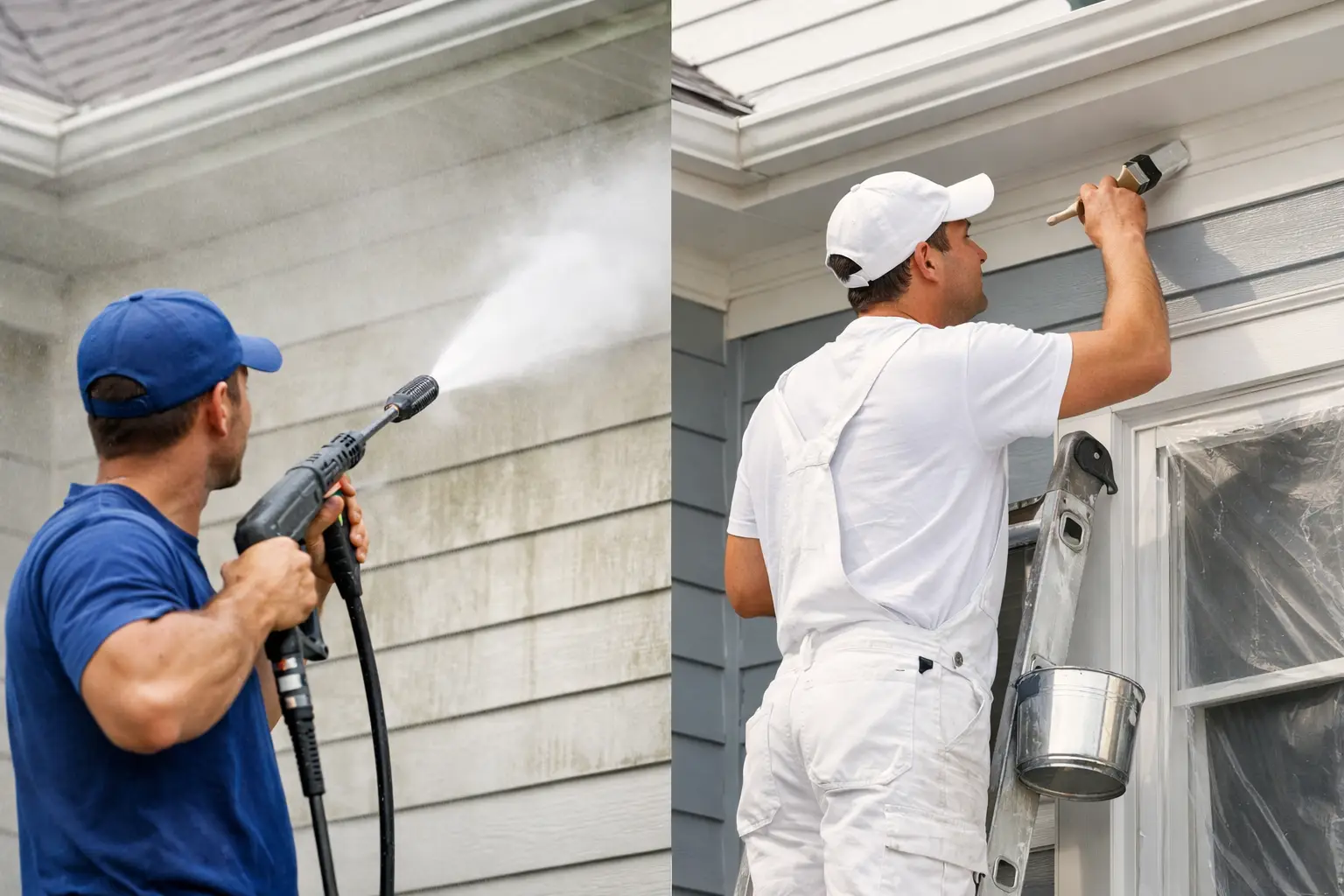
A faded wall with black mould spots can make repainting feel urgent. But when homeowners ask whether to tackle house washing or repainting first, the answer is usually clear: clean first, then paint. The condition of the existing paintwork, the type of surface and the painter’s preparation requirements can affect the exact process, but painting over dirt, chalky residue, algae or mould is rarely a good long-term fix.
A professional wash removes the contamination that can interfere with paint adhesion and spoil an otherwise excellent repaint. It also gives you a much clearer view of what the exterior actually needs, whether that is a full repaint, targeted repairs or simply a thorough clean.
Why house washing should come before repainting
Exterior paintwork is exposed to more than rain and dust. In Southeast Queensland, humid weather, shade, salt air in coastal areas and regular storms create ideal conditions for mould, mildew and algae to grow. Vehicle pollutants, cobwebs, insect marks and airborne grime also build up gradually on walls, eaves, fascias and gutters.
If a new coat of paint goes over this build-up, the surface beneath may not provide a stable base. Paint can struggle to bond properly to dusty or chalking areas, while mould and algae can continue to affect the appearance of the coating. You may end up with patchy colour, early peeling or dark marks returning sooner than expected.
Washing first removes this surface contamination and allows the painter to prepare sound, clean material. It is not a substitute for sanding, scraping, filling or priming where those steps are needed. It is the foundation that makes those preparation steps more effective.
Cleaning exposes the repairs you cannot see yet
One of the most practical reasons to wash before arranging a repaint is that grime can hide defects. After a proper exterior clean, it is easier to identify cracked paint, failed sealant, rust stains, water damage, rotten timber, loose render and damaged areas around windows or downpipes.
That matters because a painter can quote and prepare the job more accurately when the true condition of the building is visible. It also helps avoid the frustrating situation where a repaint begins, only for hidden problems to add time and cost once work is underway.
For property managers and body corporate representatives, washing can be a sensible inspection step before approving a larger maintenance programme. Clean walls and paths reveal where repairs are genuinely required, rather than where dirt has simply made an area look worse than it is.
Washing can sometimes avoid a full repaint
Not every tired-looking exterior needs painting straight away. Mould growth, traffic film and weather staining can make sound paintwork look dull, grey or badly aged. A careful soft wash may restore much of the original colour and presentation without the expense of repainting the entire property.
This is particularly relevant for pre-sale preparation, tenancy turnover and commercial premises that need to look clean and cared for. Once the surface is clean, you can make a better decision about whether repainting is necessary now or can be planned for later.
Soft washing versus high-pressure cleaning before painting
The goal is not to blast the house clean at maximum pressure. The wrong method can damage weatherboards, force water behind cladding, strip weak paint, roughen timber or affect delicate render. A surface that has been damaged during cleaning can create more preparation work for the painter.
For painted walls, render, eaves and other delicate exterior finishes, soft washing is often the safer approach. It combines low-pressure application with appropriate cleaning treatments to break down mould, algae and grime, followed by a controlled rinse. The treatment does much of the work, rather than relying on aggressive pressure.
High-pressure cleaning still has a place on hard-wearing surfaces such as concrete driveways, paved areas and some exterior paths. Even then, pressure needs to suit the material and its condition. A professional operator assesses the surface rather than using one setting for every part of the property.
Boost Exterior Cleaning uses surface-appropriate methods to remove organic growth and grime while helping protect the finishes you intend to keep. This is especially valuable on older homes, where paint may already be weathered or where materials need a gentler approach.
How long should you wait to paint after house washing?
The house must be completely dry before painting starts. The waiting time depends on the surface, weather and how much moisture the building has been exposed to. A warm, dry day can speed up drying, while shaded walls, high humidity, rain or porous materials can extend it.
As a general rule, allow at least 24 to 48 hours after washing before painting, then follow the paint manufacturer’s recommendations and your painter’s advice. Timber, render and heavily washed areas may need longer. A painter should check moisture levels where there is any doubt, particularly on timber cladding or areas with known water issues.
Do not rush this stage because a rain-free window has appeared. Applying paint to damp surfaces can trap moisture and compromise adhesion. It is better to schedule cleaning with enough time before the painter is due, rather than trying to wash the home the afternoon before painting begins.
Coordinate the cleaner and painter early
The smoothest jobs happen when washing and painting are planned together. Tell your exterior cleaner that the property is being repainted and tell your painter that it will be professionally washed first. This gives both trades a chance to flag any site-specific requirements.
For example, the painter may want certain loose coatings removed before washing, or may have a preferred drying period for a particular product. The cleaner may identify mould-heavy areas that need further treatment, access constraints or drainage considerations. Clear communication prevents unnecessary delays and helps protect gardens, windows, outdoor furniture and surrounding surfaces.
When repainting first may be necessary
There are a few exceptions, although they are usually linked to repair work rather than a standard repaint. If exterior surfaces have exposed bare timber, active rust, significant cracking or water damage, a painter may need to carry out urgent repairs, sealing or priming before a full wash of nearby areas. In those cases, the sequence should be guided by the painter and the condition of the substrate.
You may also need a light final clean after painting. This is not the same as a full pre-paint house wash. Builders’ dust, pollen, spider webs or marks from surrounding work can settle on the newly painted exterior, but fresh paint needs adequate curing time before any cleaning takes place. Avoid pressure washing new paint unless the paint manufacturer and painter confirm it is suitable.
If the house has recently been painted and only looks dirty, washing is generally the right answer. A properly selected soft wash can refresh painted surfaces without turning a maintenance issue into an unnecessary repaint.
A practical order for a longer-lasting result
For most homes and commercial buildings, the best process is straightforward. Arrange an exterior assessment, clean the building with the correct method, allow all surfaces to dry, complete repairs and paint preparation, then apply the coating system recommended for the surface.
Before work begins, move outdoor furniture, pot plants and loose items away from walls where possible. Keep windows closed, make sure pets are safely inside and advise the cleaning team about sensitive garden areas, water tanks or access issues. These small preparations help the job run efficiently and protect the rest of the property.
A clean exterior does more than improve kerb appeal for the day. It gives your painter the clear, sound starting point needed to deliver a finish that looks better and has a stronger chance of lasting as intended. If you are planning a repaint, book the wash early enough to let the building dry properly and let the quality of the preparation show in the final result.


