

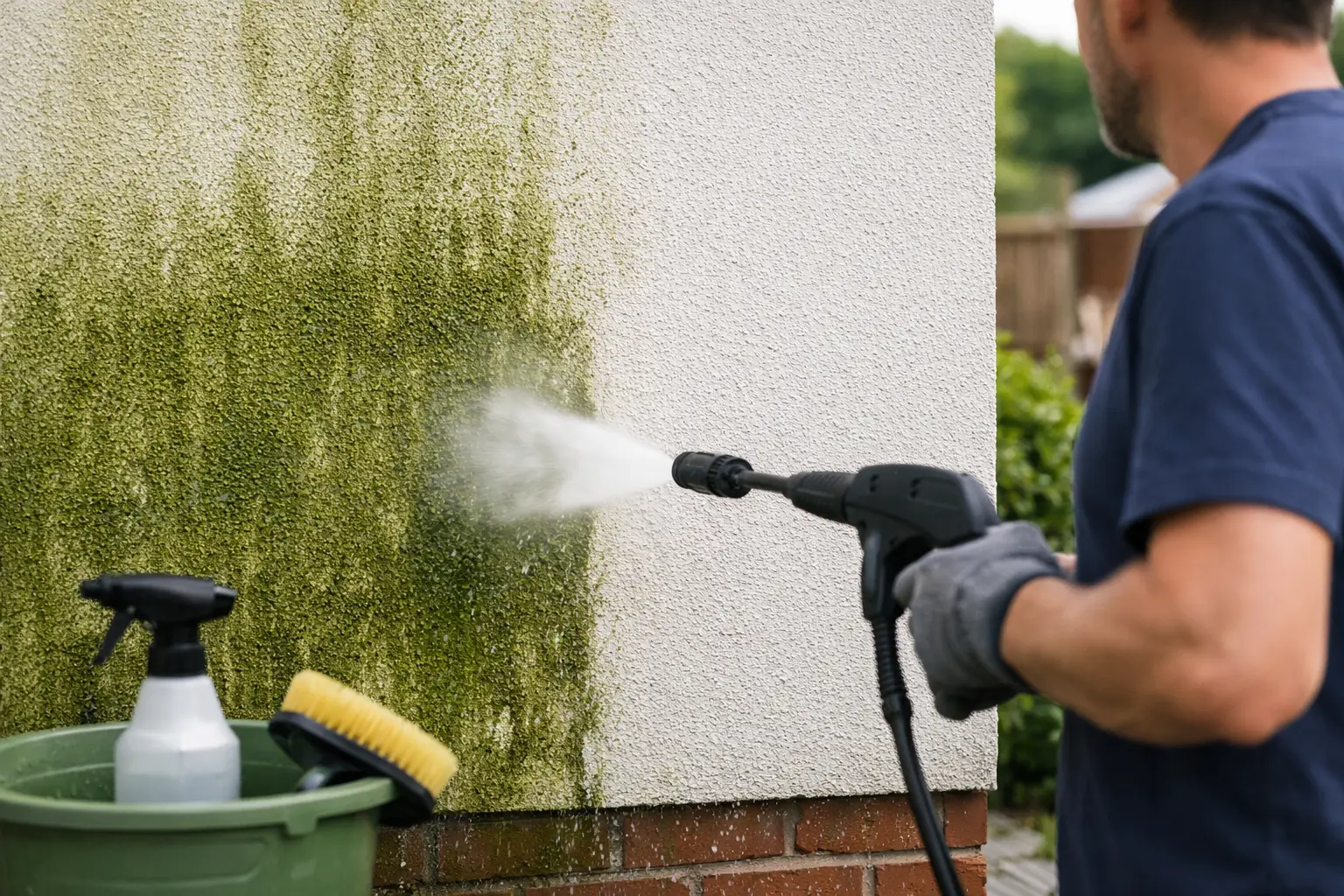
Green staining on rendered walls can make an otherwise well-kept home look damp, neglected and older than it is. Knowing how to remove algae from render without stripping paint, marking the surface or forcing water into cracks is the key. The right approach is usually a gentle chemical treatment and low-pressure rinse – not blasting the wall with a pressure cleaner.
In South East Queensland, algae growth is common on shaded elevations, walls near gardens, damp courtyards and properties surrounded by trees. It thrives where moisture lingers, especially through humid summers and wet weather. Left untreated, it can hold moisture against the finish, affect kerb appeal and make small render faults harder to spot.
Why algae needs a careful approach on render
Render is not the same as a concrete driveway. Even when it feels solid, a rendered wall may have fine surface texture, hairline cracks, ageing paint or sections that have started to sound hollow. High pressure can scar the finish, remove paint, expose sand in the render or push water behind the coating.
That is why soft washing is generally the safest method for algae-covered render. A suitable cleaning treatment does the main work by breaking down the organic growth. The wall is then rinsed gently at low pressure, leaving the surface clean without the unnecessary force that can cause damage.
The exact method depends on the wall’s condition. Freshly painted render, older chalky paintwork, unpainted cement render and walls with visible cracking all need a slightly different level of care. If you are unsure what coating is on the wall, test a small, inconspicuous area first.
How to remove algae from render step by step
Start by checking the wall for cracks, loose paint, open joints, damaged sealant and areas where water may enter the building. Cleaning will improve the appearance of a wall, but it will not fix a drainage issue or failing coating. Take photos of any existing damage before you begin.
Move outdoor furniture, pot plants and anything that could be affected by the cleaning solution. Wet down nearby garden beds and plants with clean water. Covering delicate plants can help during treatment, but they should still be rinsed thoroughly before and after cleaning.
Apply a purpose-made exterior cleaning solution suitable for algae and mould, following the product directions and dilution rates exactly. Do not assume a stronger mix will deliver a better result. Over-concentrated chemicals can affect paint, landscaping, metal fixtures and surrounding surfaces. Wear gloves, eye protection and enclosed footwear, and avoid cleaning on a windy day.
Allow the treatment enough dwell time to work. This is where many DIY jobs go wrong. Scrubbing or rinsing immediately can leave algae spores behind, which often means the green staining returns quickly. The wall should remain wet with the treatment, but the solution must not be allowed to dry on the surface.
Once the algae has released, rinse the render from top to bottom using low pressure and a broad fan setting. Keep the nozzle well back from the wall and avoid aiming directly into cracks, vents, weep holes, window frames or the underside of eaves. A garden hose may be enough for lightly affected walls after treatment. For more established growth, a low-pressure soft wash rinse gives better coverage and control.
Stubborn spots may need a second treatment rather than more pressure. This takes a little longer, but it is far safer than trying to blast staining off the wall.
What not to do when cleaning rendered walls
A pressure washer can be useful on hard surfaces such as concrete, but it is easy to cause visible damage when used aggressively on render. Avoid narrow spray tips, close-range cleaning and high-pressure turbo nozzles. If paint starts lifting, the wall feels gritty, or you can see exposed sand, stop immediately.
It is also best to avoid dry wire brushing. Heavy scrubbing can burnish textured render, scratch paint and create uneven patches that remain visible after the algae is gone. A soft brush can be used carefully on an isolated stubborn patch, but the cleaning solution should do most of the work.
Household bleach is another common shortcut that needs caution. It may kill organic growth, but an unsuitable mix or poor rinsing can discolour surfaces and harm gardens. Never mix cleaning chemicals, especially products containing bleach, acids or ammonia. The fumes can be dangerous and the reaction can damage nearby materials.
Why algae keeps coming back
Removing existing algae is only half the job. If the wall stays damp and shaded, spores can return within months. Look for the conditions feeding the problem: overhanging branches, blocked gutters, leaking downpipes, garden irrigation spraying the wall or poor airflow between a fence and the house.
Trimming vegetation back from the building allows more sun and air to reach the render. Make sure downpipes drain away properly and repair leaks promptly. If sprinklers wet the wall, adjust their direction and timing. These small maintenance changes often make a noticeable difference to how long the cleaned finish stays fresh.
Paint condition also matters. Quality exterior paint creates a protective finish, but weathered, porous or cracked paint can retain moisture and provide a better foothold for algae. If the coating is failing, cleaning may improve the look temporarily, yet repainting could be the longer-term solution once the wall is clean and dry.
When professional soft washing is the better option
DIY cleaning can suit a small, low wall with light algae staining. A professional service is the safer choice for two-storey homes, commercial buildings, heavily affected render, older paintwork and walls near pools, gardens or sensitive surfaces. Access is another consideration. Working from ladders while handling cleaning chemicals and hoses creates unnecessary risk.
Professional soft washing uses controlled chemical application, appropriate dilution and low-pressure equipment designed for exterior surfaces. The aim is not simply to make the wall look cleaner on the day. It is to remove the organic contamination while protecting paintwork, render texture, windows, gardens and adjacent surfaces.
For strata properties, schools, retail sites and managed buildings, regular exterior cleaning also helps maintain a consistent presentation. Green staining around entries, walkways and building façades can make a property appear poorly maintained, even when the rest of the site is in good order. Planned cleaning is usually more cost-effective than waiting for widespread growth to develop.
A realistic maintenance schedule for Queensland properties
There is no single timetable that suits every home. A sunny wall with good drainage may only need a professional wash every 12 to 24 months. A shaded property close to dense planting, however, may need attention annually or after a particularly wet season.
Walk around the property every few months and look at the southern and shaded sides first. Early algae growth is easier to treat and less likely to spread across large areas. Keeping gutters clear, vegetation trimmed and drainage working properly will reduce the need for frequent deep cleaning.
If the render is green, blackened or patchy, act before the growth becomes more established. A careful soft wash can restore the appearance of the wall without the damage associated with excessive pressure. For difficult or high-access work, Boost Exterior Cleaning can assess the surface and use the safest treatment for a cleaner, longer-lasting result.


