

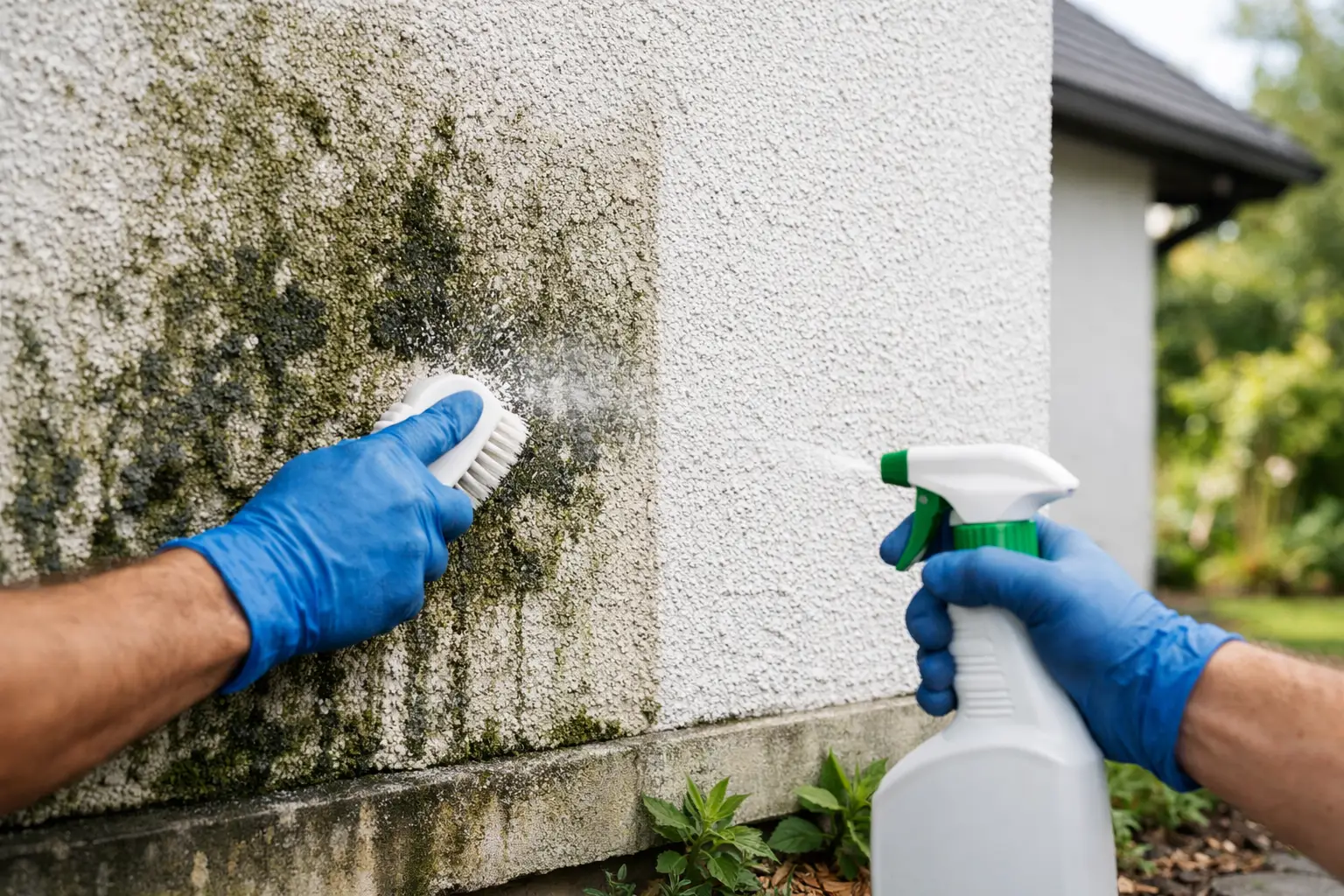
A green or black film on exterior walls can make an otherwise well-kept property look neglected surprisingly quickly. Effective mould removal from exterior walls is not simply about washing away the visible marks. It means treating the organic growth properly, using a surface-safe method, and addressing the conditions that allow it to return.
Across South East Queensland, warmth, humidity and regular rainfall create ideal conditions for mould, algae and mildew. Shaded walls, south-facing elevations, areas beneath eaves and surfaces near trees are often affected first. For homeowners, it can drag down kerb appeal and make paintwork look tired. For body corporate, school and commercial sites, it can affect presentation, tenant confidence and the ongoing condition of building surfaces.
Why mould grows on exterior walls
Exterior mould needs moisture, organic material and limited sunlight to establish itself. Dust, pollen, pollution and airborne spores settle on paint, rendered walls, cladding, brick and concrete. Once the surface stays damp long enough, mould and algae have a foothold.
Poor drainage can make the issue worse. Overflowing gutters, leaking downpipes, irrigation spray, air-conditioning runoff and garden beds built too close to the wall can all create repeated dampness. Dense vegetation is another common cause, particularly where branches keep a wall shaded and restrict airflow.
Not every dark mark is mould. Some staining may be algae, lichen, soot or accumulated grime, and a wall can have more than one issue at once. The distinction matters because a high-pressure rinse might shift loose dirt, but it will not necessarily kill the growth embedded in the surface. It can also leave a patchy result that returns sooner than expected.
Mould removal from exterior walls requires the right method
The cleaning method should be chosen for the wall material, its condition and the type of contamination present. This is where professional assessment makes a real difference. Painted render, weatherboards, older paint systems, cladding and delicate decorative finishes can be damaged by excessive pressure. Even brick and concrete can suffer if pressure is applied too closely or at the wrong angle.
For many exterior walls, soft washing is the preferred approach. Rather than relying on force alone, soft washing uses carefully selected cleaning treatments at low pressure to break down mould, algae and grime. The surface is then rinsed gently, leaving a cleaner and more even finish without the unnecessary risk of stripping paint, forcing water behind cladding or scarring render.
Pressure cleaning still has its place on tougher surfaces such as driveways, paths, some masonry and hardstand areas. It is not automatically the right answer for every wall. A good exterior cleaner understands the difference and adjusts the pressure, treatment and technique to suit the job.
The trade-off is simple: a fast, aggressive wash may look effective on the day, but it can create expensive surface damage or leave living spores behind. A properly treated soft wash takes a more considered approach and is usually the better option for preserving painted and delicate exterior finishes.
What a professional wall clean should include
A quality exterior wall clean starts before any equipment is switched on. The operator should inspect the wall for loose paint, cracked render, fragile seals, water damage, existing staining and areas where runoff needs to be managed. If there is a building leak or persistent moisture issue, cleaning alone will not be a permanent fix.
Nearby gardens, outdoor furniture, windows and fixtures need protection. Treatments must be applied carefully, with attention given to plants, pets, stormwater drainage and surrounding surfaces. This is particularly important on closely built residential properties, retirement villages, schools and retail sites where there are more people and materials to work around.
The wall is then treated at the appropriate strength and allowed enough contact time to work on the mould and algae. Rushing this stage is one reason some cleans deliver short-lived results. After treatment, the surface is rinsed using the right pressure for the material. Stubborn areas may need a second controlled application rather than turning up the pressure.
Finally, the cleaned surface should be checked for consistent results and any underlying maintenance concerns. On older properties, a clean can reveal faded paint, failed sealants or previously hidden cracking. That is useful information, not a cleaning failure. It allows the owner or manager to plan the next maintenance step before a small issue becomes more costly.
Why DIY mould cleaning can go wrong
Small, accessible patches on a sound surface may be manageable for a confident property owner using an appropriate exterior cleaner and the manufacturer’s directions. However, exterior wall cleaning becomes riskier when mould covers large areas, walls are high, paint is aged, or the surface is rendered, timber or cladding.
Household bleach is often used as a quick fix, but it is not a one-size-fits-all solution. It can discolour some finishes, harm nearby plants and fail to provide the even, controlled result needed across a full elevation. Mixing chemicals is particularly dangerous and should never be done.
Hiring a pressure washer can introduce another problem. A narrow, powerful stream can gouge timber, remove paint, scar softer masonry and push water into vents, gaps and window seals. Ladders add a separate safety risk, especially when surfaces are wet. If the mould is widespread or difficult to reach, professional equipment and trained operators are the safer, more cost-effective choice.
Stop mould returning as quickly
No exterior cleaning service can promise that mould will never return in Queensland conditions. Spores are always present in the environment. The goal is to remove the existing growth thoroughly and reduce the moisture and buildup that feed it.
Start by keeping gutters and downpipes clear so water is directed away from the building. Repair leaks promptly, check that irrigation is not soaking the wall, and keep garden beds, mulch and stored items away from the base of the house. Pruning back overhanging branches can improve sunlight and airflow without sacrificing the look of the garden.
Regular maintenance also matters. A wall does not need to be heavily stained before it is cleaned. Periodic exterior house washing removes the film of dirt and organic matter that mould uses as a food source. The right schedule depends on your location, tree cover, wall orientation and the amount of rainfall the property receives. Homes in shaded or coastal areas often benefit from more frequent attention than open, sunny sites.
For commercial properties, planned cleaning is easier to budget for and helps avoid the abrupt decline in presentation that can happen between reactive cleans. This is especially valuable for shopfronts, schools, offices, strata complexes and facilities where visitors form an impression before they walk through the door.
When to arrange professional mould removal
It is time to book an exterior wall clean when mould is spreading across paintwork, the wall stays green or black after rain, staining is visible from the street, or there are slippery growths on adjacent paths and entry areas. Early action is usually simpler than waiting until the contamination covers multiple surfaces.
It is also worth arranging an inspection before putting a home on the market, handing over a rental property, preparing a commercial tenancy or hosting an event. Clean exterior walls improve the whole property’s presentation, often making windows, gardens and architectural features look sharper without major renovation work.
For walls with peeling paint, soft timber, persistent internal dampness or clear signs of a leak, organise repairs alongside cleaning. Removing mould improves the surface, but the source of ongoing water needs attention if you want the result to last.
Boost Exterior Cleaning uses surface-appropriate soft washing and pressure cleaning methods to restore exterior walls without taking unnecessary risks with your paintwork or finishes. A professional clean can turn a stained elevation back into a property feature, while giving you a practical starting point for keeping it that way.


