

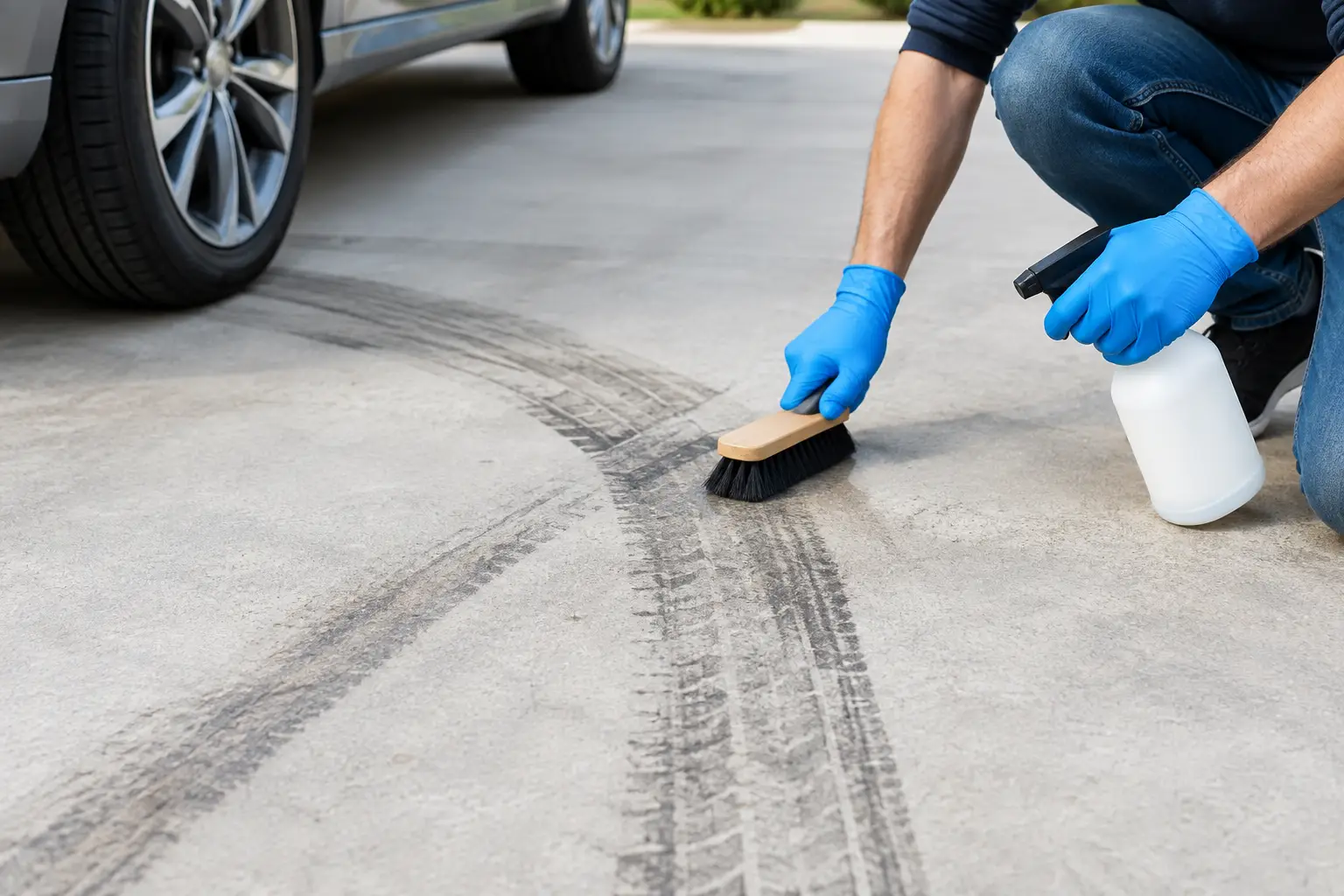
Fresh black arcs across a pale driveway can make an otherwise clean property look neglected. The good news is that you can often remove tyre marks from concrete without harsh chemicals or excessive pressure, provided you match the method to the surface and the severity of the marking. The wrong approach, however, can leave patchy concrete, strip sealer or drive rubber deeper into the pores.
Tyre marks are particularly common on driveways, car parks, warehouse entries and turning areas. They usually appear where vehicles brake, turn sharply or sit after a long drive on hot concrete. In Southeast Queensland, heat, UV exposure, rain and built-up road grime can make the marks more noticeable and more difficult to shift over time.
Why tyre marks stick to concrete
Tyre marks are not simply surface dirt. Warm tyres transfer a fine layer of rubber, oils and road residue onto the concrete. On smooth, sealed concrete, the mark generally sits closer to the surface and can be cleaned relatively easily. On older or porous concrete, the residue can work into tiny voids and hold on more firmly.
This is why a pressure washer alone does not always solve the problem. Water pressure may lighten the mark, but it can also create clean stripes around it or etch soft, weathered concrete if it is used too aggressively. The most effective result usually comes from a suitable pre-treatment, dwell time, agitation and controlled pressure cleaning.
Check the concrete before you start
Before applying any cleaner, work out whether the concrete is sealed, painted, coloured or plain. A driveway sealer can make cleaning easier, but strong degreasers, solvents and high pressure may dull or strip it. Decorative concrete, exposed aggregate and coloured finishes also need more care than a standard grey slab.
Look for signs of existing wear, including flaking sealer, loose aggregate, cracking, powdery concrete or old stains. If water quickly disappears into the surface, the concrete is likely porous and will need a gentler, more patient clean. If water beads on top, it may be sealed.
Always test your chosen cleaner in a small, inconspicuous area first. This quick step can prevent a larger, expensive repair.
How to remove tyre marks from concrete at home
For light to moderate tyre marks, start with the least aggressive method. Cleaning sooner is usually easier than trying to lift months of baked-on rubber and grime.
First, sweep away loose dirt, leaves and grit. This stops abrasive particles from scratching the surface while you scrub. Wet the marked area lightly, then apply a concrete-safe alkaline cleaner or degreaser according to its label directions. Avoid using a product just because it is strong – it still needs to be suitable for the type of concrete and any sealer present.
Allow the solution to dwell long enough to break down the residue, but do not let it dry on the surface. On a warm day, work in smaller sections and keep the area damp. Agitate the marks with a stiff nylon-bristle broom or scrubbing brush. A nylon brush is firm enough to lift residue without the unnecessary risk of metal bristles scratching the finish.
Rinse thoroughly with a garden hose. If a shadow remains, repeat the treatment before stepping up to pressure cleaning. Two controlled applications are often safer and more effective than one aggressive attempt.
Using a pressure cleaner carefully
A pressure cleaner can be useful after pre-treatment, especially across larger driveways or car park areas. The key is even, controlled cleaning rather than concentrating a narrow jet directly on the black mark.
Use a fan spray, keep the lance moving and maintain a consistent distance from the concrete. Start with lower pressure and increase only if necessary. On residential driveways, a surface cleaner attachment generally gives a more uniform finish than cleaning with a wand alone. It helps avoid zebra striping and obvious lap marks, which are common when one area receives more pressure than the next.
Do not assume maximum pressure is best. Excessive pressure can expose aggregate, roughen the concrete or damage a weakened surface. It may also remove sections of sealer unevenly, leaving the driveway looking blotchy once dry.
What not to use on tyre marks
Harsh acid cleaners are rarely the right answer for tyre marks. Acids are designed for mineral deposits, cement haze or rust-related issues, not rubber transfer. Used incorrectly, they can etch concrete, alter the surface colour and create a rougher finish that attracts more dirt later.
Petrol, thinners and strong solvents should also be avoided. Aside from being hazardous and unpleasant to use, they can spread the mark, affect sealers and send contaminated runoff into stormwater drains. Bleach is useful for mould and algae in the right application, but it is not a dedicated tyre-mark remover and will not reliably break down rubber residue.
Avoid wire brushes, sanding and abrasive grinding unless you are dealing with a surface restoration project and understand the finish you are trying to achieve. These methods can leave a visibly different patch that stands out more than the original mark.
When professional cleaning is the better option
Some marks need more than a quick weekend scrub. Professional pressure cleaning is worth considering when tyre marks cover a broad area, have been left for a long time, or sit on expensive sealed, coloured or decorative concrete. It is also a practical choice for commercial sites where presentation and safe access matter.
Shopping centre loading zones, school drop-off areas, strata car parks and industrial entries often have heavy traffic residue mixed with oil, grease and dirt. These surfaces need the correct chemical treatment, commercial equipment and proper runoff management. Cleaning one dark patch in isolation can also make the surrounding concrete look dirtier, so a full-area clean often produces the better visual result.
A trained exterior cleaner will assess the surface first, select the appropriate treatment and use pressure that suits the concrete rather than simply blasting it. At Boost Exterior Cleaning, this surface-first approach helps deliver a visible improvement while protecting driveways, paths and hard-wearing commercial areas from avoidable damage.
Protect concrete after the marks are gone
Once the concrete is clean, let it dry fully before deciding whether sealing is appropriate. A quality concrete sealer can reduce how deeply future tyre residue, oil and grime penetrate the surface. It also makes regular cleaning more straightforward, particularly on driveways with frequent vehicle movement.
Sealing is not a cure-all. Tyres can still leave marks on sealed concrete, especially during hot weather or tight turns, but the marks are usually easier to remove. The right sealer depends on the surface, its condition and the desired finish. A product that adds gloss may look great on some driveways but can highlight patchiness or become less suitable around pool areas where slip resistance is a priority.
Regular sweeping and occasional washing will also reduce the grit that makes a driveway look tired between professional cleans. If a vehicle regularly leaves heavy marks in one spot, encourage slower turns, avoid prolonged idling after a hard drive and clean fresh transfer before it becomes baked in.
A cleaner driveway starts with the right method
Tyre marks are frustrating, but they do not have to become a permanent feature of your concrete. Treat the residue early, use a concrete-safe cleaner, apply controlled pressure only where needed and take extra care with sealed or decorative finishes. When the marks are widespread or the surface is valuable, a professional clean can restore a more even, presentable result without gambling on damage.


