

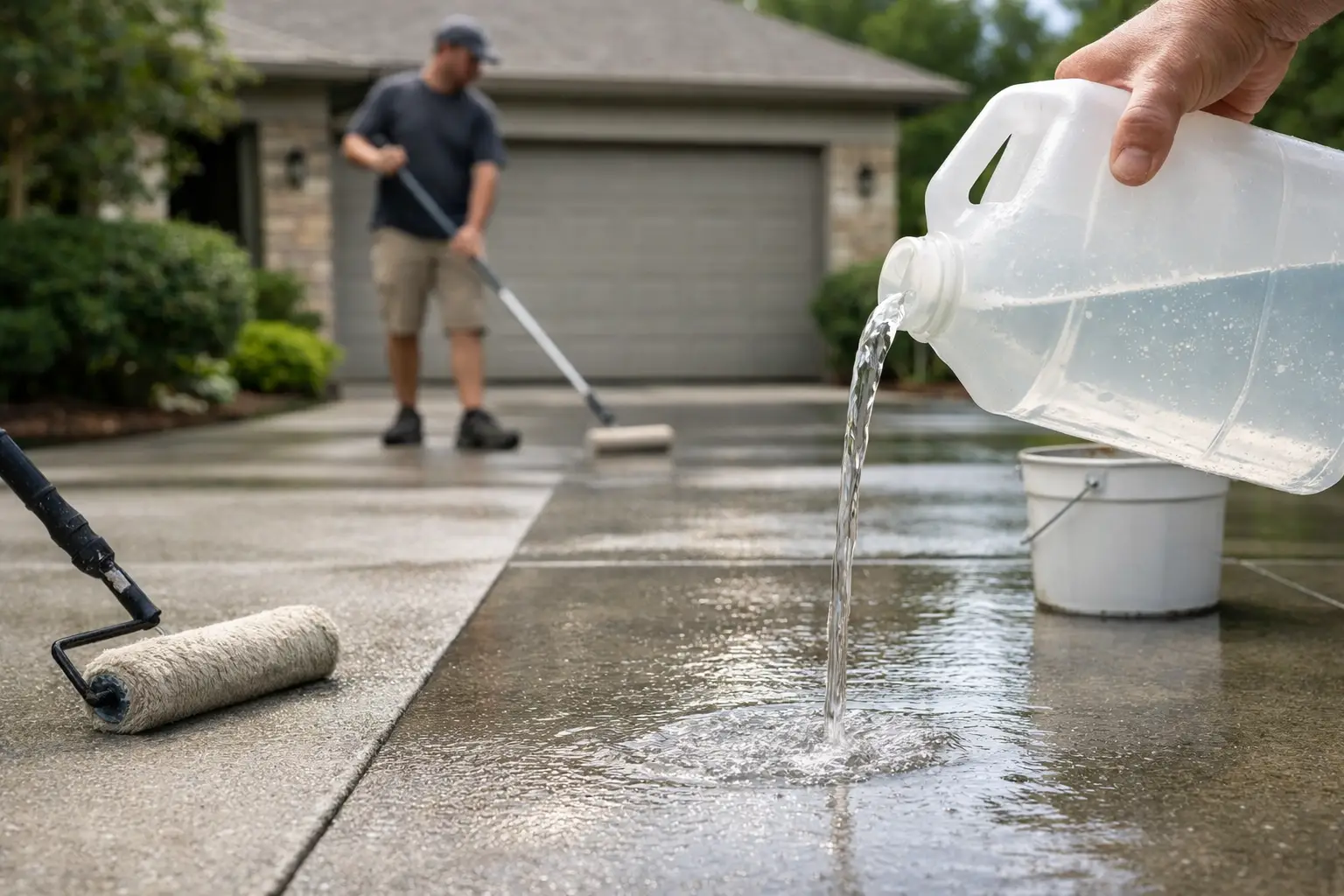
A driveway can look clean on Monday and tired by Friday if the surface is porous, weathered, or already holding old stains. Choosing the best concrete sealer for driveways is not just about getting a nice finish. It is about protecting the slab from water, oil, UV exposure, tyre marks, mould, and general wear so it stays cleaner for longer and costs less to maintain.
For most property owners, the real question is not which sealer sounds best on the label. It is which type suits the condition of the concrete, the level of traffic, and the look you want when the job is done. A good sealer can extend the life of a driveway. The wrong one can peel, go patchy, or create a slippery surface that becomes more trouble than it is worth.
What makes the best concrete sealer for driveways?
The best concrete sealer for driveways is the one that matches the surface and the use of the area. A suburban driveway in Brisbane dealing with rain, heat, and daily vehicle traffic has different needs from a decorative exposed aggregate driveway at a coastal property or a commercial entry with constant tyre movement.
A quality driveway sealer should do three things well. It should reduce water penetration, help resist staining, and hold up under UV and traffic exposure. Beyond that, appearance matters too. Some owners want a natural look with minimal change to the surface. Others prefer a richer colour and a slight sheen that lifts street appeal.
That is why there is no single product that suits every job. There are, however, clear front-runners depending on the result you need.
Penetrating vs film-forming sealers
This is the first decision that matters.
Penetrating sealers
Penetrating sealers soak into the concrete and react below the surface. They are usually the better option when you want a natural finish and long-term water resistance without changing the look too much. Because they sit inside the slab rather than on top of it, they are less likely to peel or flake over time.
For plain concrete driveways, penetrating sealers are often the most practical choice. They suit owners who care more about durability and lower maintenance than gloss. They also tend to offer better slip resistance because they do not leave a noticeable surface coating.
The trade-off is appearance. If you are hoping for a wet-look finish or stronger colour enhancement, a penetrating sealer will usually not give you that.
Film-forming sealers
Film-forming sealers create a protective layer on top of the concrete. These are commonly used when presentation is a priority, especially on decorative concrete, coloured concrete, and exposed aggregate. They can deepen colour, add sheen, and make a driveway look freshly restored.
They can also provide solid stain resistance, but they need to be chosen carefully. If the surface is not properly cleaned and prepared first, or if moisture is trapped underneath, they can whiten, bubble, or peel. In high-traffic areas, lower-grade film-forming products can wear unevenly and leave the driveway looking worse than before.
For many homes, they still make sense. You just need the right product and proper surface prep.
The main sealer types and where they work best
When comparing driveway sealers, most products fall into a few common categories.
Acrylic sealers
Acrylic sealers are popular because they are affordable, relatively easy to apply, and available in matte, satin, and gloss finishes. They are often used on decorative driveways because they can improve the look of the surface quickly.
They are a strong option if you want visual improvement and decent short-term protection. On the downside, they generally do not last as long as some higher-performance systems, especially in harsh sun and heavy traffic. Recoating may be needed more often.
Polyurethane sealers
Polyurethane sealers are tougher and more chemical resistant than standard acrylics. They are often chosen for driveways that need stronger protection against oil drips, tyre wear, and general abuse. They can deliver an attractive finish and good durability, but they are less forgiving during application.
This type of sealer usually suits surfaces that have been properly cleaned, dried, and prepared by a professional. On the wrong surface, or with poor application, the result can be uneven.
Epoxy sealers
Epoxy is known for hardness and strong protection, but it is not always ideal for outdoor driveways in Australian conditions. UV exposure can cause yellowing or breakdown unless it is part of a system designed for external use. It is more common in garages and covered areas than exposed driveways.
For most open residential driveways, epoxy is usually not the first recommendation.
Silane and siloxane sealers
These are penetrating sealers designed to repel water while keeping a natural finish. They work well on plain concrete and are often chosen where practical protection matters more than appearance. They are especially useful when the goal is to reduce water entry, mould growth, and premature surface wear without adding gloss.
If you want the driveway to look much the same, just better protected, this category is often a smart choice.
How to choose the right sealer for your driveway
Start with the surface itself. Plain broom-finished concrete, coloured concrete, honed concrete, and exposed aggregate all behave differently. The age and condition of the slab also matter. A newer driveway may take sealer evenly. An older slab with contamination, past coatings, or wear may need restoration work before sealing is even considered.
Then think about the finish you want. If you prefer a natural, low-maintenance result, a penetrating sealer is usually the better fit. If you want the driveway to stand out and present well for resale, tenancy turnover, or overall street appeal, a film-forming sealer may give the better visual result.
Traffic and weather matter too. In Southeast Queensland, driveways deal with strong UV, heavy rain, humidity, mould pressure, and hot tyre contact. That means the best product on paper is not always the best product in practice. A sealer needs to suit local conditions, not just the brochure.
Why preparation matters more than most people think
Even the best sealer will fail if it is applied over dirt, algae, old residue, or trapped moisture. This is where many sealing jobs go wrong.
A driveway should be properly cleaned first, often with the right pressure settings and surface treatment to remove built-up grime, organic growth, and staining without damaging the concrete. Some surfaces also need time to dry thoroughly before sealing. Rush that step, and you risk clouding, adhesion failure, or patchy curing.
This is one reason professional sealing tends to last longer. It is not only about the product. It is about understanding how to clean and prepare each surface correctly before the first coat goes down.
Common mistakes when picking a driveway sealer
One of the biggest mistakes is choosing based on shine alone. Gloss can look great at first, but if the surface becomes slippery when wet or starts wearing unevenly, the finish quickly loses its appeal.
Another common issue is using an indoor or low-grade coating outdoors. Driveways need UV stability and flexibility, not just surface hardness. A product that performs well in a garage may not last on an exposed front drive.
There is also the temptation to seal over existing issues. Oil staining, efflorescence, mould, and failing old coatings should be dealt with first. Sealer is not a cover-up. It is a protective layer, and it performs best on a clean, stable surface.
So, what is the best concrete sealer for driveways?
If you want the most dependable all-round answer, it depends on the finish and function of the driveway.
For plain concrete where safety, durability, and low maintenance come first, a quality penetrating sealer is often the best choice. It protects without dramatically changing the look and is less likely to peel.
For decorative concrete or exposed aggregate where presentation matters just as much as protection, a premium film-forming sealer such as an acrylic or polyurethane system can be the better option, provided the surface is professionally prepared and the product is suited to outdoor use.
That is usually the most honest answer. The best product is not always the most expensive or the glossiest. It is the one that fits the driveway, the conditions, and the level of upkeep you are prepared to manage.
At Boost Exterior Cleaning, we see the difference that proper cleaning and sealing makes to driveways across Southeast Queensland. When the surface is prepared correctly and matched with the right sealer, the result is not just a better-looking driveway. It is a surface that handles weather, traffic, and day-to-day use far more effectively.
If your driveway is looking porous, stained, faded, or harder to keep clean, the right sealer can make a genuine difference. Start with the condition of the concrete, not the label on the tin, and you will usually end up with a result that lasts.


