

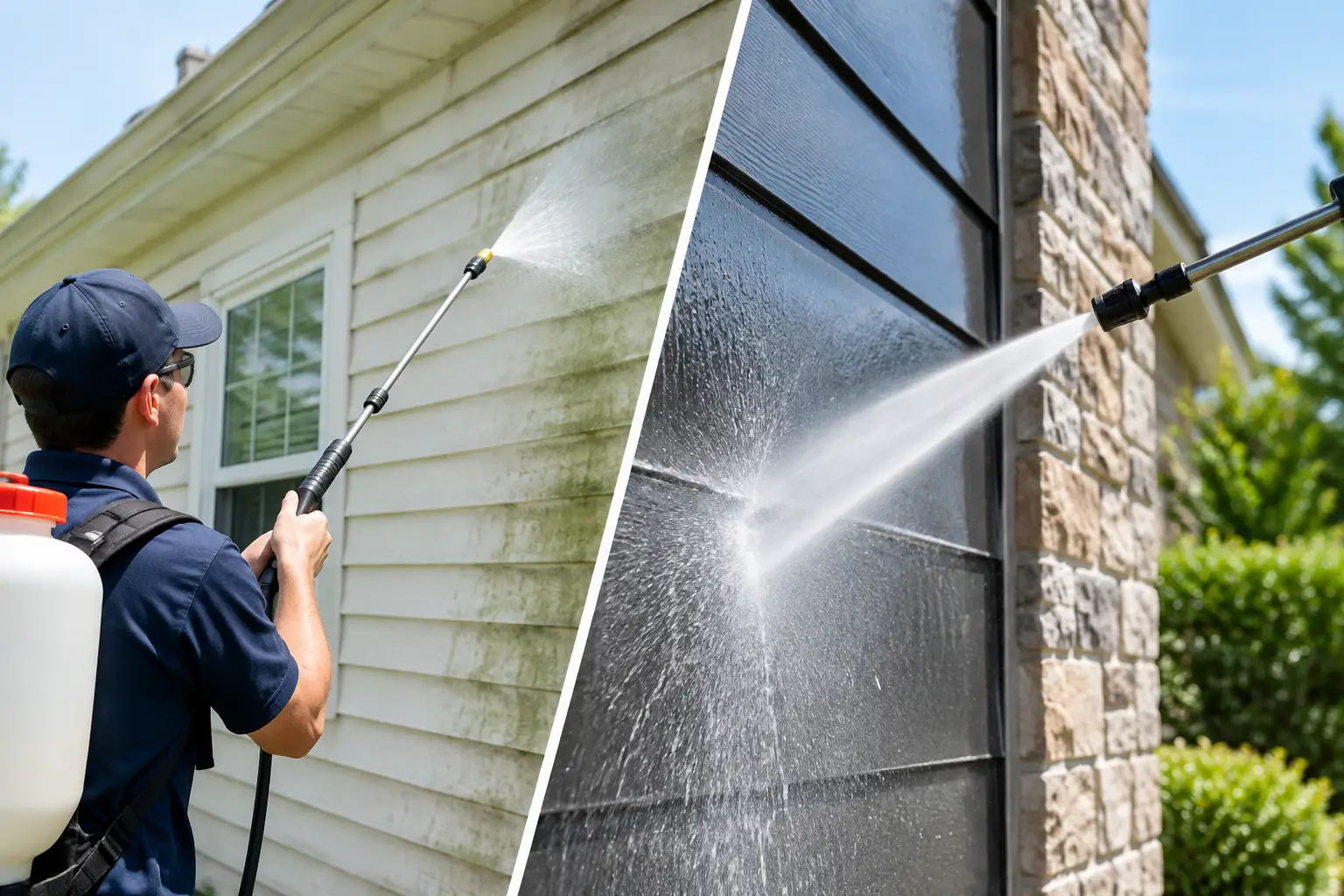
A green film on a painted wall, black mould under the eaves and a driveway stained by tyre marks may all look like jobs for one powerful machine. In practice, soft washing versus water blasting is not a choice about which method is stronger. It is about using the right treatment for the surface, the contamination and the result you want to protect.
The wrong approach can strip paint, disturb mortar, force water where it does not belong or leave living growth ready to return. The right approach restores the presentation of your property while helping preserve the materials that make up its exterior.
Soft Washing Versus Water Blasting: The Key Difference
Soft washing uses low-pressure water combined with purpose-selected cleaning solutions to treat organic growth and surface contamination. Rather than relying on force to remove mould, algae, lichen and grime, the treatment breaks down the growth at its source. The surface is then rinsed at a controlled pressure.
Water blasting, often called pressure cleaning, uses substantially higher water pressure to dislodge built-up dirt, mud, stains and loose surface debris. It is highly effective on durable hard surfaces that can handle the force, including concrete driveways, paths, car parks and some paved areas.
Neither method is automatically better. A concrete driveway with years of embedded grime needs a different process from a rendered façade, painted weatherboards or a tiled roof. Professional cleaning starts with an assessment, not with setting the machine to maximum pressure.
When Soft Washing Is the Safer Choice
Soft washing is generally the preferred method for exterior surfaces where high pressure could cause damage. This includes painted homes, render, cladding, eaves, gutters, fascia boards, fences, awnings and many delicate roof materials.
On these surfaces, mould and algae are more than a cosmetic issue. They hold moisture against the finish and can contribute to staining, paint deterioration and a tired appearance. High-pressure water may remove some visible growth, but it can also damage the coating beneath it. Soft washing treats the contamination while using a gentler rinse to protect the finish.
This matters particularly for older homes. Ageing paintwork, timber trims, weathered render and sealant joints may not respond well to aggressive pressure. A careful soft wash can make a significant visual difference without turning a maintenance job into a repair job.
Soft washing is also useful where growth has spread across broad areas. Think shaded sides of a house, pool surrounds, boundary walls or commercial façades affected by moisture and pollution. Because the cleaning solution treats the biological growth, the result is often more complete than simply blasting off the top layer.
Soft washing is not just low pressure water
A garden hose on low pressure is not the same as a professional soft wash. The process depends on matching the solution, dilution, dwell time and rinse method to the material being cleaned. Too little treatment may leave growth active. Too much, or the wrong product, can affect finishes, landscaping or nearby surfaces.
A trained operator protects surrounding plants, manages runoff and rinses thoroughly. Windows, electrical fittings, outdoor furniture and sensitive materials also need to be considered before work begins. This attention to detail is why soft washing is a surface-care method rather than a quick rinse.
When Water Blasting Delivers Better Results
Water blasting comes into its own on dense, hard-wearing surfaces. Concrete driveways, footpaths, parking areas, loading zones and heavily soiled paved spaces collect grime that often needs mechanical force to lift away. Oil residue, soil, tyre marks, leaf tannins and traffic grime can build up deep in the surface texture.
A properly adjusted pressure cleaner can restore the colour and definition of concrete and pavers far more effectively than a low-pressure wash alone. For commercial properties, this can improve street appeal and help maintain a cleaner, more professional presentation for tenants, customers and visitors.
It also has a practical safety benefit. Algae and mildew on paths, pool areas and outdoor common spaces can become slippery when wet. Pressure cleaning can remove the surface build-up that creates a slip risk, although the underlying cause, such as poor drainage or constant shade, may still need attention.
Water blasting needs care around pavers and joints. Excessive pressure can wash out jointing sand, disturb loose pavers, damage old concrete or create visible striping. A skilled operator adjusts pressure, nozzle type and technique for the condition of the surface. The goal is an even clean, not a patchy result that looks worse once dry.
What Happens When the Wrong Method Is Used?
Using high pressure on a painted wall can leave marks, remove flakes of loose paint and drive water behind cladding or into gaps around windows. On render, it can open small cracks or erode the surface. On some roof materials, pressure can dislodge coatings, crack tiles or push water into areas not designed to receive it.
Using soft washing alone on a deeply stained driveway can be equally disappointing. It may treat algae and mould but not have enough force to lift compacted dirt and ingrained marks from porous concrete. The property may look cleaner, but not properly restored.
There is also a difference between removing visible grime and treating the reason it formed. A wall that is blasted clean without appropriate treatment may show mould again sooner than expected. Conversely, a surface that is chemically treated but not rinsed or pressure cleaned where needed can retain dull residue and embedded soil.
Choosing the Right Method for Common Areas
For most homes, a combined approach produces the best whole-property result. Soft washing is suited to the house exterior and other painted or delicate finishes, while water blasting is used on durable ground-level areas.
A typical split looks like this: house walls, eaves, gutters, rendered features and painted fences are soft washed; concrete driveways, paths and hard-wearing paving are pressure cleaned. Pool surrounds require added judgement because materials vary. Natural stone, tiles, coping and nearby glass all respond differently, so the cleaning method should be tailored rather than assumed.
Roofs need particular caution. Cleaning requirements depend on whether the roof is tile, metal, coated or otherwise weathered. High pressure is not a one-size-fits-all roof solution. Any roof work should consider the material condition, drainage, surrounding gardens and safe access before cleaning starts.
For property managers, body corporates and facility operators, the same principle applies on a larger scale. Shopping centre entries, school walkways, car parks and building façades often need different methods within the same job. Treating each surface correctly helps maintain appearance without creating avoidable damage or disruption.
The Long-Term Value of Proper Exterior Cleaning
Exterior cleaning is often booked for a sale campaign, tenancy turnover or an approaching inspection. Those are good reasons to act, but regular maintenance offers a more lasting benefit. Removing mould, algae, pollutants and grime before they become heavily established can reduce the need for harsher cleaning later.
It also protects presentation. A clean driveway and façade make a property feel maintained before anyone steps through the door. For commercial and institutional sites, clean common areas signal care to customers, staff, students and visitors.
After water blasting, some porous hard surfaces may benefit from sealing. A quality seal can help reduce future staining and make routine maintenance easier, but only when the surface is properly cleaned, dry and suitable for the chosen product. Sealing over contamination simply locks in the problem.
Get the Method Matched to Your Property
The best result is rarely about choosing soft washing or water blasting across the entire property. It is about matching pressure, cleaning treatment and technique to every surface in front of you.
At Boost Exterior Cleaning, that means assessing what is causing the staining, what the surface can safely handle and what outcome you need, whether it is a fresher home exterior, a safer pool area or a driveway ready for sale. A professional clean should leave your property looking transformed while respecting the materials that protect it every day.


