

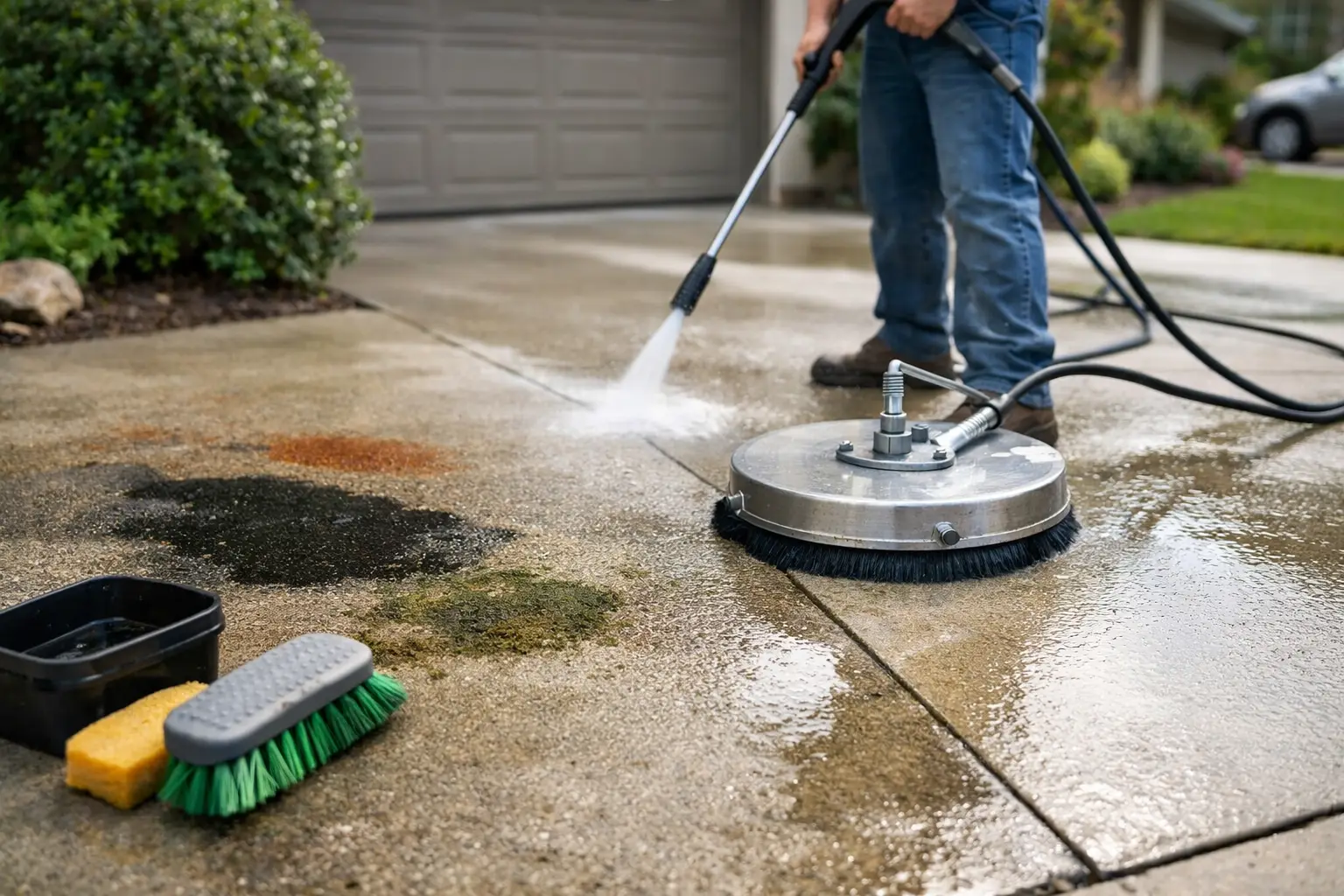
A fresh driveway can make the whole property look cared for. But oil drips, tyre marks, rust, mould and leaf tannins do not respond to one universal cleaner. The best methods for driveway stains start with identifying what caused the mark, then selecting a treatment that cleans effectively without etching concrete, stripping sealer or damaging nearby gardens.
For homes, unit complexes, schools and commercial sites across Southeast Queensland, regular driveway cleaning is more than a cosmetic job. Built-up organic growth can make surfaces slippery, while oil and grime can penetrate porous concrete and become harder to remove over time. A targeted clean protects presentation now and makes routine maintenance easier later.
Start with the driveway surface and stain type
Before reaching for a pressure cleaner or chemical product, check what the driveway is made from. Plain concrete, exposed aggregate, coloured concrete, pavers and natural stone all react differently to pressure and cleaning solutions. A method that works well on a hard concrete parking area may be too aggressive for older pavers, decorative finishes or a sealed surface.
Stain age matters as well. A fresh oil spill often lifts far more easily than one that has sat through a Queensland summer. Mould may look like surface dirt, but it needs an appropriate treatment to address the growth rather than simply blast away the visible layer. Rust marks, meanwhile, are a chemical stain and usually need a purpose-made rust treatment rather than more water pressure.
A quick test patch in a discreet area is a sensible first step, particularly on coloured, sealed or aged surfaces. It helps confirm that the chosen treatment is effective and that the finish will remain consistent.
Oil and grease: absorb first, then treat the residue
Oil stains are among the most common driveway problems. They may come from a leaking car, a ute parked in the same position, mower maintenance or a bin area. If the spill is fresh, absorb as much oil as possible before it spreads. An absorbent material can draw up the surface oil, giving the cleaner a better chance of reaching what remains in the pores.
The next step is a suitable degreaser. It should be worked into the affected area, allowed to dwell for the recommended time and agitated with a stiff brush where appropriate. Rinsing too quickly gives the product little chance to break down the oil. Leaving it too long can also create issues, especially in hot weather, so following the product directions matters.
A controlled pressure clean can then remove loosened grime and residue. The goal is not maximum pressure. Excessive pressure can leave visible lines, expose aggregate, damage paver joints or force contaminated runoff into garden beds and stormwater drains. Older, deeply embedded oil stains may improve significantly rather than disappear completely in one visit. In those cases, repeat treatment or a professional deep clean is often the most practical option.
Treat mould, algae and black organic marks properly
Dark patches on concrete are often mould, algae, lichen or a combination of organic growth and trapped dirt. Shaded driveways, areas beneath trees and surfaces with poor drainage are especially prone to it. Apart from looking untidy, growth can become slick when wet, creating a slip risk around garages, footpaths and pool-adjacent areas.
Pressure alone can make a driveway look cleaner for a short time, but it may not treat the underlying growth. A suitable exterior cleaning solution applied at the correct strength is generally more effective. After adequate dwell time, low to moderate pressure is used to rinse away the dead growth and surface grime.
Care is essential around plants, painted surfaces, metal fixtures and drainage. Nearby garden beds should be protected and thoroughly rinsed as required, and cleaning solutions should never be allowed to dry on sensitive finishes. For large driveways, body corporate sites or school grounds, professional equipment and trained operators make it easier to achieve even results while managing runoff responsibly.
Rust stains need a different approach
Rust often appears beneath metal furniture, leaking irrigation components, old tools or fertiliser spills. It can also run down a driveway from a corroding gate, fence or vehicle. These orange-brown marks can look stubborn because they bond with the mineral content in concrete.
The right answer is generally a concrete-safe rust remover, used carefully and tested first. Do not assume high pressure will solve it. Pressure may remove loose dirt around the stain, but it rarely removes the discolouration itself. Harsh acids are also not a shortcut. Used incorrectly, they can etch concrete, alter the colour of exposed aggregate and leave permanent patchiness.
If the rust source is still present, deal with that too. Otherwise, a clean driveway can develop the same streaks again after the next rain.
Remove tyre marks without scarring the concrete
Tyre marks are usually a mix of rubber transfer, heat and road grime. They are common near garage entrances, tight turning areas and commercial car parks. A quality degreaser with brushing can soften many marks before rinsing. For heavier build-up, a professional surface cleaner can produce a more even finish than using a pressure wand alone.
Avoid holding a narrow spray pattern close to one spot in an effort to erase the mark. This can leave a pale, etched patch that is more noticeable than the tyre mark was. The best result comes from treating the mark, then cleaning the broader surrounding area so the driveway dries to a consistent appearance.
Leaf stains, soil and general grime respond to a gentler clean
Leaves, seed pods and garden debris can leave brown tannin marks, especially on pale concrete and pavers. Mud, dust and general traffic grime can also settle into textured surfaces after rain. These stains are usually less demanding than oil or rust, but they still benefit from the right sequence: remove loose debris, apply a suitable cleaner where needed, agitate stubborn areas and rinse evenly.
For natural stone and delicate pavers, avoid acidic products and overly aggressive pressure. Stone can be porous and variable, and incorrect cleaning can create dull spots or damage the surface face. A surface-safe treatment is the better choice, even if it takes a little more time.
When pressure cleaning is the right tool
Pressure cleaning is highly effective for lifting widespread grime, rinsing treated stains and restoring the overall appearance of concrete driveways. It is particularly useful when the surface has become uniformly dark, slippery or marked by vehicle traffic. However, the machine is only one part of the job.
The pressure, nozzle, water flow and technique should suit the material. Too little pressure may leave uneven results. Too much can damage joints, strip loose coatings, expose aggregate or create permanent wand marks. Professional operators also use surface cleaners for broad areas, which helps prevent the zebra-striping that can occur with inconsistent wand passes.
Soft washing may be the better option around delicate finishes, painted areas or surfaces where chemical treatment is doing most of the cleaning work. The right method depends on the driveway, not on using the strongest setting available.
The best methods for driveway stains include prevention
A clean driveway stays presentable longer when the causes of staining are managed. Fix vehicle leaks promptly, keep gutters and downpipes directing water away from the slab, sweep away leaf litter and improve drainage where puddles regularly form. Trim back dense vegetation that keeps the driveway damp and shaded.
Sealing can also help on suitable concrete, pavers and natural stone. A properly selected sealer reduces the surface’s ability to absorb oil, moisture and dirt, making future stains easier to clean. It is not a licence to ignore spills, and it will eventually need maintenance, but it can be a worthwhile layer of protection for high-use driveways and commercial entry areas.
For best results, arrange cleaning before stains become deeply set and organic growth turns into a safety issue. A professional driveway clean can restore the look of the property while using the right pressure, treatment and care for the surface in front of you.


