

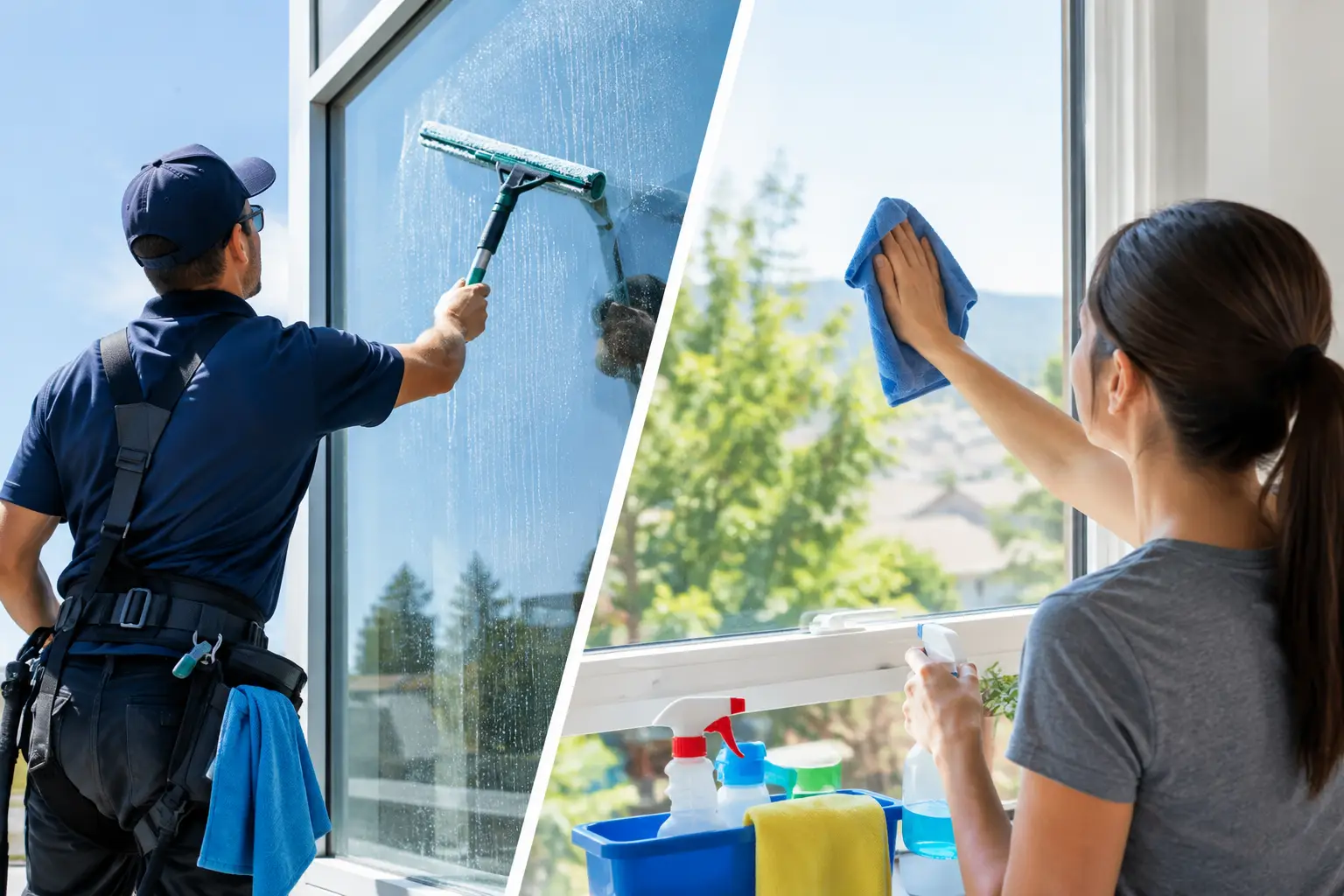
A streak across a front window can make an otherwise tidy property look neglected. When weighing up professional versus DIY window cleaning, the real question is not simply who can make glass look clear. It is whether the job can be done safely, thoroughly and without creating extra work, damage or risk around your property.
For easy-to-reach windows and a small amount of regular upkeep, DIY cleaning can be worthwhile. For two-storey homes, difficult access, heavily soiled glass or commercial premises, professional cleaning is often the safer and more practical choice. The right option depends on the condition of the windows, the building layout and the standard of finish you need.
What DIY Window Cleaning Can Do Well
DIY window cleaning works best when the glass is accessible from ground level and only needs a routine refresh. A quality squeegee, clean microfibre cloths, a suitable bucket and fresh water can produce a respectable result on internal glass, sliding doors and low exterior windows.
It also gives homeowners control over timing. If you are preparing for visitors, inspecting a property before sale or keeping on top of fingerprints around pool doors, a quick clean can lift the appearance of the space straight away. Regular light cleaning can prevent dust, salt spray and everyday grime from building up.
The limits usually appear outdoors. Window glass collects more than dust. Rainwater marks, cobwebs, pollen, vehicle pollution, hard-water deposits and airborne grime can cling to frames, tracks and screens. Cleaning the pane alone may leave the whole window looking unfinished.
DIY is also less economical when the job becomes repetitive. A large home with many windows, glass balustrades, upper-level panes and security screens can take most of a weekend. By the time you have purchased equipment, worked around weather and re-cleaned streaks, the apparent saving may be smaller than expected.
The Hidden Risks of Cleaning Windows Yourself
The main concern with DIY window cleaning is access. Ladders, wet surfaces and awkward reaching positions are a poor combination. Many falls happen during small household jobs, particularly when people lean sideways from a ladder, work near uneven garden beds or try to reach above patios and roofs.
Windows can also be damaged by the wrong method. Abrasive pads may scratch glass, especially when grit is trapped on the surface. Harsh products can affect powder-coated frames, seals, timber finishes and surrounding paintwork. Excess water forced into tracks can create mess inside the property or encourage mould where drainage is poor.
There is a further risk with older windows and delicate surfaces. A loose flyscreen, brittle seal, corroded frame or ageing putty can fail under pressure or rough handling. The glass may be sound, but the components around it need care.
For commercial sites, DIY cleaning can create additional responsibilities. A slippery entry, unsecured ladder or blocked footpath is not just inconvenient. It can affect staff, customers, residents or visitors. Property managers and facility operators need a method that protects both presentation and site safety.
Professional Versus DIY Window Cleaning: The Key Differences
Professional window cleaning is not only about having longer poles or stronger products. A trained exterior cleaner assesses the glass, frames, access points and surrounding surfaces before starting. That helps determine the right equipment and cleaning approach for the property.
The most noticeable difference is consistency. Professionals use techniques designed to remove grime without leaving smears, lint or excess water behind. They can clean windows, frames, sills, tracks and screens as required, rather than leaving a sharp contrast between clean glass and dirty edges.
Access is another major advantage. Water-fed poles and appropriate safety procedures allow many elevated windows to be cleaned from the ground. Where elevated work is necessary, professionals can plan the job around access, roof lines, landscaping and public areas instead of relying on a ladder and guesswork.
A professional service is particularly useful when windows are affected by mould or algae on nearby surfaces. The source of the mess may be a dirty wall, eave, gutter line, screen or patio roof rather than the glass itself. Cleaning only the window may improve the view briefly, while the surrounding contamination continues to wash back onto the pane.
When a Professional Clean Is Worth the Cost
Professional cleaning is usually worth considering when one or more windows are above ground level, difficult to reach or exposed to heavy weather. Coastal properties, busy roadside homes and buildings near construction activity often need more than a quick wipe. Salt, fine dust and pollutants can leave persistent marks that become harder to remove over time.
It is also a smart choice before a property sale, open home, tenancy handover or important inspection. Clean windows improve natural light and make rooms feel better maintained. From the street, clear glass and clean frames can noticeably improve kerb appeal alongside a freshly washed exterior, driveway or pool area.
For body corporate and commercial properties, scheduled cleaning provides a predictable maintenance routine. Retail shopfronts, offices, schools and common areas need to look presentable without placing staff on ladders or asking maintenance teams to spend hours on specialised work. A regular service can help maintain a clean, professional appearance between major exterior cleans.
The value is not limited to appearance. Removing built-up grime early can reduce the chance of staining around frames and tracks. It also makes it easier to spot cracked glass, deteriorating seals, damaged screens or drainage issues before they become larger maintenance jobs.
Cost, Time and Results: A Practical Comparison
DIY cleaning has the lowest upfront cost if you already own the right gear and your windows are easy to access. It suits routine touch-ups and small homes where time is not a concern. The trade-off is that the result relies on your technique, the weather and how much preparation you can put into the job.
Professional cleaning has a service cost, but it can save time and reduce risk. It is generally the better value option when the property has multiple levels, extensive glazing or windows that have not been cleaned for some time. It can also be combined with other exterior maintenance, which is useful when walls, paths, pool surrounds or driveway surfaces need attention at the same time.
Neither option is always right. A homeowner who cleans accessible glass every few weeks may only need professional help for upper-level windows or an annual detailed clean. A large commercial building may need regular professional servicing because its presentation, access requirements and safety obligations make DIY impractical.
How to Prepare for a Window Cleaning Service
A little preparation helps the job run smoothly. Move fragile items away from windows, unlock gates where access is required and let the cleaner know about pets, difficult parking or any areas of concern. If there are leaks, cracked panes, loose screens or recently painted surfaces, mention them before work begins.
For businesses and managed properties, it helps to identify busy periods, loading zones and public access points. Cleaning can then be organised to minimise disruption and keep entrances clear. A clear scope also matters. Confirm whether the service includes exterior glass only or frames, tracks, screens, internal glass and high-access windows as well.
Choose the Method That Protects Your Property
The best window-cleaning decision should leave your glass clear without compromising safety, finishes or your weekend. DIY has a place for simple, low-level maintenance, but it is not a substitute for the right equipment and experienced access planning when the job becomes more complex.
Boost Exterior Cleaning approaches window cleaning as part of the bigger picture of property care. If your windows are surrounded by mould, grime or weathered exterior surfaces, addressing the cause as well as the glass can produce a cleaner, longer-lasting result. A well-timed professional clean is a practical way to keep your property bright, presentable and ready for whatever comes next.


