

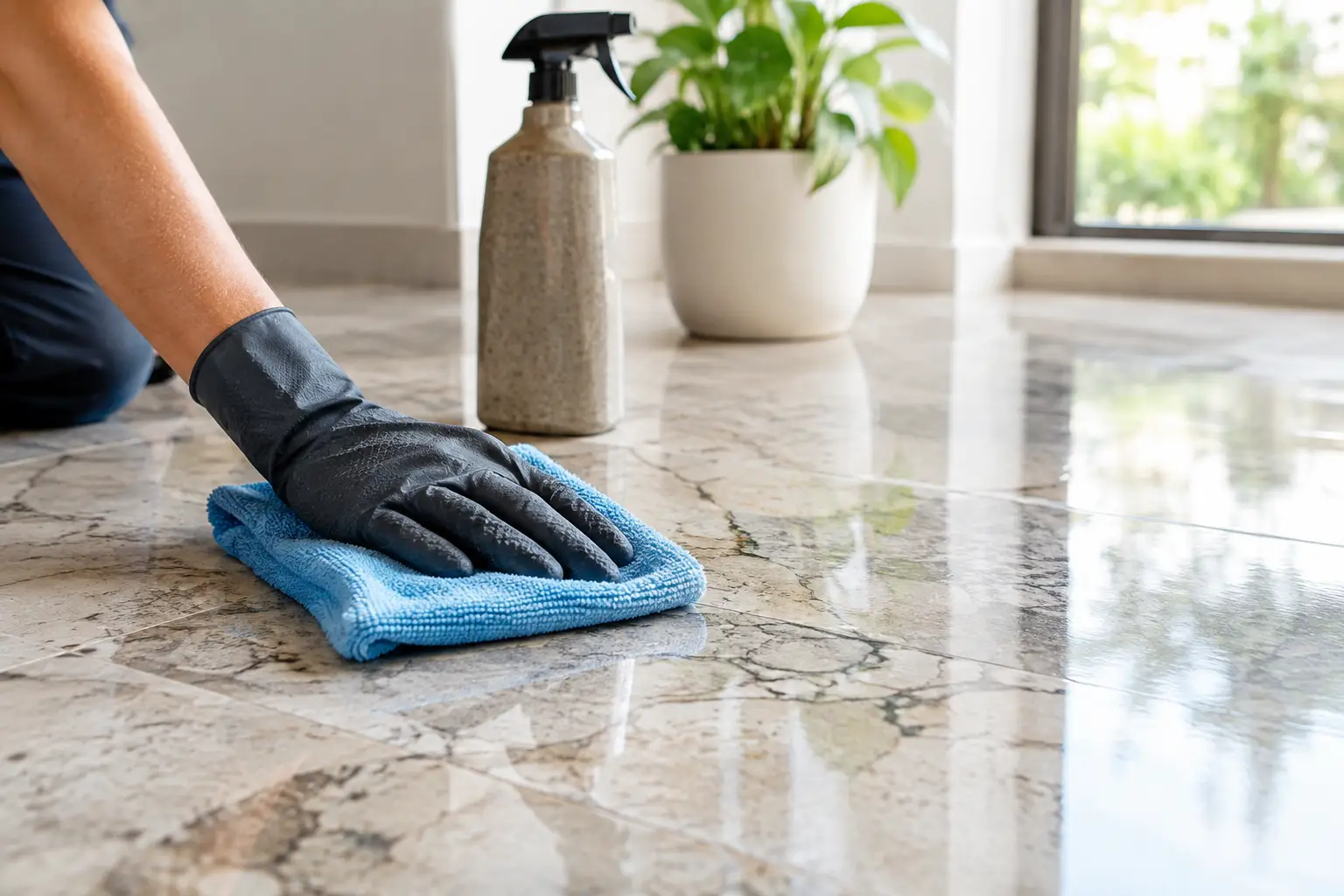
A stone driveway, pool surround or courtyard can look premium when it is clean. Once mould, algae, leaf tannins and built-up grime take hold, however, the same surface can appear tired, slippery and poorly maintained. A professional natural stone cleaning service is designed to restore that appearance without using cleaning methods that may etch, scar or loosen the stone.
At Boost Exterior Cleaning, the focus is not simply on making a surface look lighter for a day or two. It is about selecting the right treatment, pressure and technique for the stone in front of us, then removing the organic growth and contaminants that contribute to staining and surface deterioration.
Why natural stone needs a different cleaning approach
Natural stone is not one single material. Travertine, sandstone, bluestone, limestone, granite and slate each have different densities, finishes and levels of porosity. Some can tolerate a more direct rinse, while others require a much gentler process to avoid surface damage.
That distinction matters. Excessive pressure can strip softer stone, open up its pores, disrupt grout or jointing sand, and leave visible lines across the surface. The wrong chemical can cause discolouration, dull the finish or react with minerals in the stone. A result may initially look clean but create a bigger maintenance issue later.
Professional cleaning starts with assessing the surface. We consider the stone type, age, condition, existing sealer, level of contamination and surrounding areas such as gardens, painted walls, glass fencing and pool equipment. From there, the cleaning method is matched to the job rather than treating every paved area like plain concrete.
What is building up on your stone?
In Southeast Queensland, warm temperatures, humidity and regular rain create ideal conditions for mould, mildew and algae. Shaded paths, southern-facing areas, pool surrounds and spaces beneath trees are especially prone to green or black growth.
These contaminants do more than affect kerb appeal. Algae and mould can make walking surfaces slippery, particularly when wet. Organic matter can also hold moisture against porous stone, while fallen leaves, berries and garden debris may leave stubborn tannin marks. Near driveways and outdoor kitchens, oil, food residue and airborne pollutants add another layer of grime.
A quality natural stone cleaning service deals with the cause of the staining, not only the visible dirt. Where appropriate, a surface-safe treatment is applied to break down organic growth before controlled rinsing removes it. This produces a more consistent clean and can help slow the return of mould and algae compared with pressure alone.
The right method depends on the surface
There is no one pressure setting or chemical treatment that suits every stone area. A polished stone entry, for example, needs very different care from rough-cut sandstone pavers around a garden. Pool areas also require careful management to protect nearby water, tiles, coping and landscaping.
Soft washing for delicate stone and surrounding finishes
Soft washing uses low pressure alongside a suitable cleaning solution to treat mould, algae and biological staining. It is often the preferred approach where stone is soft, weathered, sealed, near paintwork, or surrounded by delicate finishes.
The solution does the cleaning work, while low-pressure rinsing helps lift away residue without aggressively blasting the surface. This is particularly valuable for older homes and established outdoor areas where preserving the condition of the material matters as much as improving its appearance.
Controlled pressure cleaning where it is suitable
Some harder, more resilient stone surfaces can benefit from controlled pressure cleaning after treatment. The key word is controlled. Professional equipment allows the operator to adjust pressure, flow, nozzle selection and working distance to suit the surface rather than relying on maximum force.
This can be effective for deeply soiled pavers, stone pathways and high-traffic outdoor zones. Even then, the process should be measured. Cleaning too aggressively may expose uneven colour, disturb joints or leave a finish that attracts dirt more readily.
Signs it is time to book stone cleaning
Stone does not need to look completely black or neglected before it deserves attention. Early cleaning is often easier and can reduce the need for more intensive treatment later.
Consider booking a professional clean when walking areas feel slippery, dark patches are spreading after rain, the stone has lost its natural colour, or mould is returning faster than expected. It is also worthwhile before putting a home on the market, welcoming tenants, holding an event or reopening a commercial outdoor area after a wet season.
For body corporate managers, schools and commercial property operators, regular stone maintenance helps keep entrances, courtyards, walkways and common areas presentable. It also supports a safer environment for residents, staff, visitors and students by addressing slick organic growth before it becomes a hazard.
Cleaning and sealing work best as a maintenance plan
Cleaning removes built-up contamination, but it does not make natural stone maintenance-free. Porous materials can absorb water, grime and spills, especially in exposed locations. Once a surface has been professionally cleaned and allowed to dry properly, sealing may be worth considering.
A suitable sealer can help reduce moisture absorption and make future cleaning easier. Depending on the product and stone type, it may preserve the existing natural look or enhance the colour slightly. The right choice depends on whether the stone is near a pool, exposed to vehicle traffic, used as a footpath or positioned in a covered entertaining area.
Sealing is not always necessary, and it is not a substitute for correct cleaning. Applying sealer over embedded grime or active organic growth can lock in the problem. The best results come from cleaning first, allowing adequate drying time and then choosing a compatible sealer for the material and its use.
Why DIY cleaning can create expensive problems
Hiring a pressure cleaner may seem like a quick weekend fix, but stone is unforgiving when the wrong approach is used. A narrow spray pattern held too close can leave permanent marks. Strong acid-based products can etch certain stones, while household cleaners may leave residues or worsen staining.
There is also the practical risk of pushing dirty water into pools, garden beds, doorways and drains. On larger areas, inconsistent technique can create patchy results that are more noticeable than the original dirt.
This does not mean every small mark requires a professional visit. Promptly sweeping leaves, rinsing spills and keeping drainage clear can make a real difference. For widespread mould, slippery surfaces, stubborn stains or valuable stone finishes, professional assessment is the safer option.
What to expect from a professional stone clean
A reliable service should begin with clear communication about the surface and the outcome you want. If possible, point out known stains, previous sealers, damaged areas and places where mould returns most often. This helps ensure the treatment is appropriate from the start.
Before cleaning begins, nearby surfaces and sensitive areas are considered and protected as needed. The stone is then treated using the selected cleaning method, followed by a careful rinse and a check of the finished result. On heavily contaminated surfaces, some staining may be permanent or require specialised spot treatment, but the goal is always a noticeable improvement without compromising the stone.
For homes, this can transform a front path, patio or pool area into a cleaner, more inviting space. For commercial sites and shared properties, it helps maintain the professional presentation people notice before they walk through the door.
Natural stone is an investment in the look and function of your property. Keeping it clean with the right method protects that investment, improves safety underfoot and lets the natural character of the surface show through again. If your stone is looking dark, slippery or weathered, a tailored inspection and quote is the practical place to start.


