

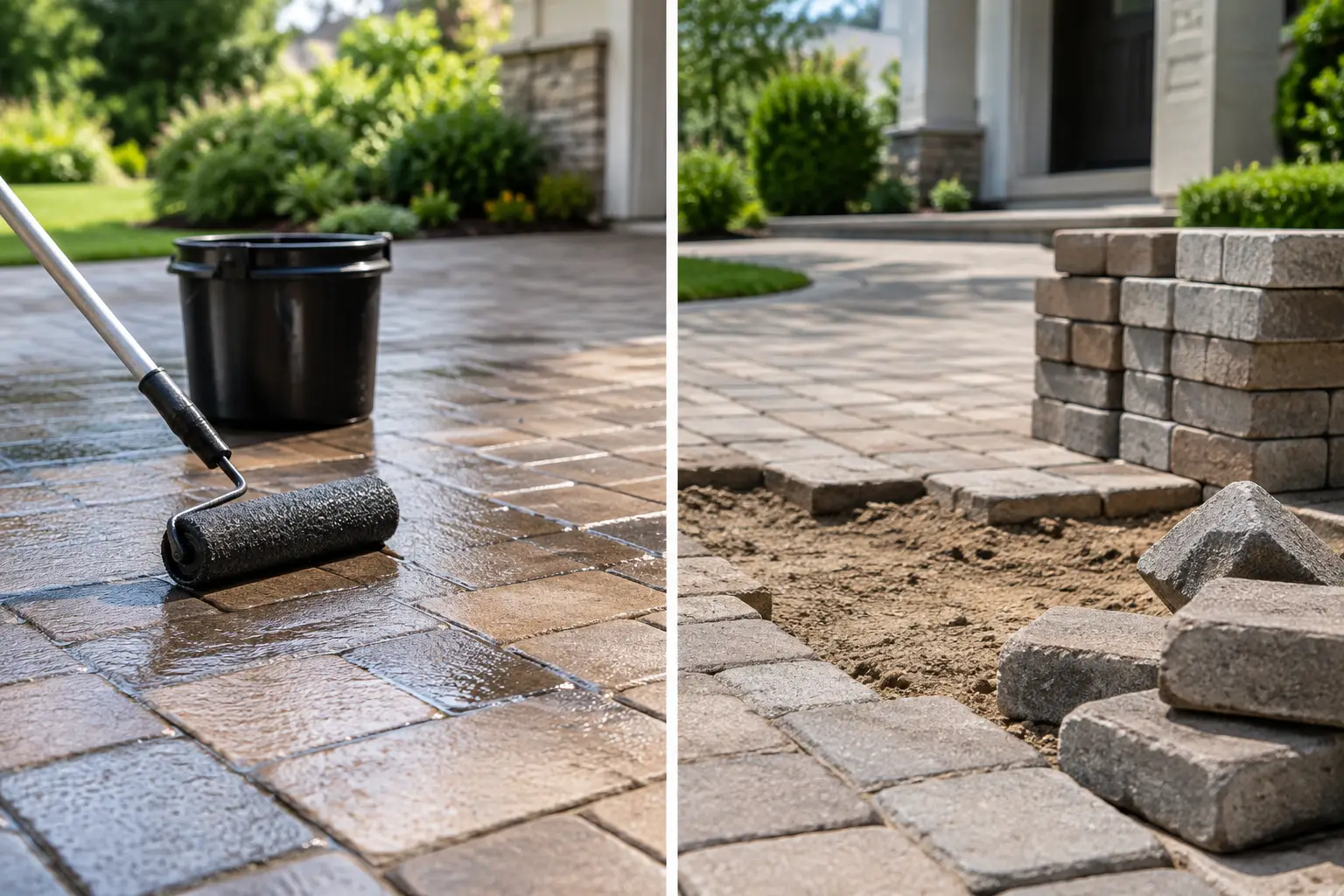
A driveway can look tired long before it is beyond saving. Faded colour, white residue, black mould and loose sand often lead owners to assume the whole area needs to be pulled up. In many cases, paver sealing versus replacement costs come down to one practical question: are the pavers structurally sound, or has the base beneath them failed?
For homes, strata properties and commercial sites across South East Queensland, early maintenance is usually the more economical path. Professional cleaning and sealing can restore presentation, reduce moisture absorption and help protect a serviceable surface from further wear. Replacement has its place, but it should solve a genuine problem – not simply cover one that a proper restoration could address.
What paver sealing actually does
Paver sealing is not a shortcut for damaged paving. It is a protective treatment applied after the surface has been thoroughly cleaned, stains treated where appropriate, and joints assessed or re-sanded if needed. The right sealer can help reduce water penetration, make routine cleaning easier and improve the appearance of faded pavers.
On driveways and paths, sealing can also assist with keeping jointing sand in place. This matters in Queensland conditions, where heavy rain, moisture, leaf litter and regular vehicle traffic can gradually wash out joints and encourage weed growth. A well-prepared, sealed surface is generally easier to maintain and looks more consistent from the street.
The result depends on preparation. Sealing over dirt, mould, efflorescence or trapped moisture can leave a patchy finish and may lock problems into the surface. Cleaning at the correct pressure, using suitable treatments and allowing adequate drying time are just as important as the sealer itself.
Paver sealing versus replacement costs: the real comparison
Sealing is normally a maintenance investment. Replacement is a construction project. That difference affects not only the upfront price, but also disruption, preparation work and the risk of additional costs once the old paving is lifted.
A sealing job commonly involves surface cleaning, mould and algae treatment, stain preparation, minor joint repairs, re-sanding and application of the selected sealer. The cost is influenced by the area size, paver type, access, condition, drainage and whether there are stubborn stains or loose sections requiring attention first.
Replacement generally involves lifting and disposing of old pavers, excavating if needed, repairing or rebuilding the base, correcting drainage, supplying new materials, laying the new pavers and compacting the completed area. If the driveway base has moved, tree roots have lifted sections or water is pooling against the home, those underlying issues need to be fixed before new pavers go down.
That is why replacement can cost several times more than restoration for a surface that is still stable. It also takes longer and may limit access to garages, entry paths, loading areas or parking bays while works are underway.
When sealing offers better value
Sealing is often the sensible choice when the pavers are intact and reasonably level, even if they look heavily weathered. Common signs include faded colour, surface grime, light oil marks, mould staining, minor weeds between joints and sand loss that has not caused widespread movement.
For a homeowner preparing to sell, a cleaned and sealed driveway can make a significant difference to first impressions without the cost of a full relaying project. For property managers and body corporate representatives, regular maintenance can help keep common paths and entry areas presentable while avoiding reactive, high-cost repairs.
It is also worth considering the lifecycle cost. A sealed surface still needs regular cleaning, but it is less likely to absorb grime and moisture as quickly as an untreated porous surface. Maintaining it before deterioration becomes severe can extend the useful life of the existing paving.
When replacement is the right call
There are situations where sealing would be poor value because it cannot correct structural faults. If pavers rock underfoot, have sunk significantly, are badly cracked, or sit over a failing base, the problem is below the surface. Applying sealer will not level the paving or prevent continued movement.
Replacement or relaying should be considered when there is widespread subsidence, major drainage failure, extensive root damage or persistent pooling that creates a slip hazard. The same applies where the pavers have deteriorated beyond cleaning, such as severe spalling, crumbling edges or deep stains that cannot be safely treated.
Sometimes a partial repair is enough. A contractor may be able to lift a localised section, repair the base, relay matching pavers and then clean and seal the wider area for a more even finish. This can be a strong middle ground when only one part of a driveway or courtyard has failed.
The hidden costs owners should factor in
The cheapest quote is not always the lowest-cost outcome. With sealing, the main risk is inadequate preparation. A surface that is not cleaned correctly may need another treatment sooner than expected, while an unsuitable sealer can create an uneven sheen, whitening or poor adhesion.
With replacement, hidden costs often arise after lifting begins. Weak bedding sand, a damaged base, poor falls or drainage problems may not be visible from the top. Disposal, new edge restraints and matching existing pavers can also add to the final scope.
Access matters too. A narrow side gate, steep block, limited visitor parking or a busy commercial entrance can affect labour and scheduling. For commercial properties, consider the operational cost of closing parking spaces or pedestrian routes while replacement is carried out. A staged clean and seal may keep more of the site usable.
How Queensland weather changes the decision
South East Queensland paving deals with strong sun, humidity, summer downpours and frequent organic growth. Shaded areas around pools, garden beds and south-facing paths can develop mould and algae quickly. Besides affecting presentation, slippery growth can make walkways less safe.
Sealing can provide a useful layer of protection, but it does not remove the need for ongoing care. Leaves, soil and standing water should be addressed promptly. Gutters and drainage outlets should direct water away from paved areas, particularly near driveways and building entrances.
Choose a sealer and finish appropriate to the location. A high-gloss look may suit some decorative areas, but traction should be carefully considered around pools, outdoor steps and frequently wet paths. The best finish is one that balances appearance, surface protection and safe use.
A practical way to decide before spending
Start with a close inspection after rain or after washing the area. Look for movement, puddling, open joints, broken edges and sections that have dropped below surrounding paving. Check whether staining is surface-level or whether the paver material is breaking down.
Next, separate cosmetic issues from structural ones. Cosmetic problems can often be improved through professional cleaning, targeted treatment and sealing. Structural problems need repair before any protective coating is applied.
Finally, compare quotes based on scope rather than just a square-metre rate. Ask what preparation is included, whether joints will be re-sanded, what type of sealer is proposed, how long the area needs to remain clear, and whether any loose or sunken pavers require separate repair. Clear answers help prevent surprises and make the paver sealing versus replacement costs comparison meaningful.
Get the surface assessed before it gets worse
A clean, stable paved area is easier to protect than to rebuild. Boost Exterior Cleaning can assess whether professional cleaning and sealing are likely to deliver the result your property needs, or whether damaged sections should be repaired first. Acting while the issue is still cosmetic can preserve the look, safety and value of the area without committing to replacement before it is necessary.


