

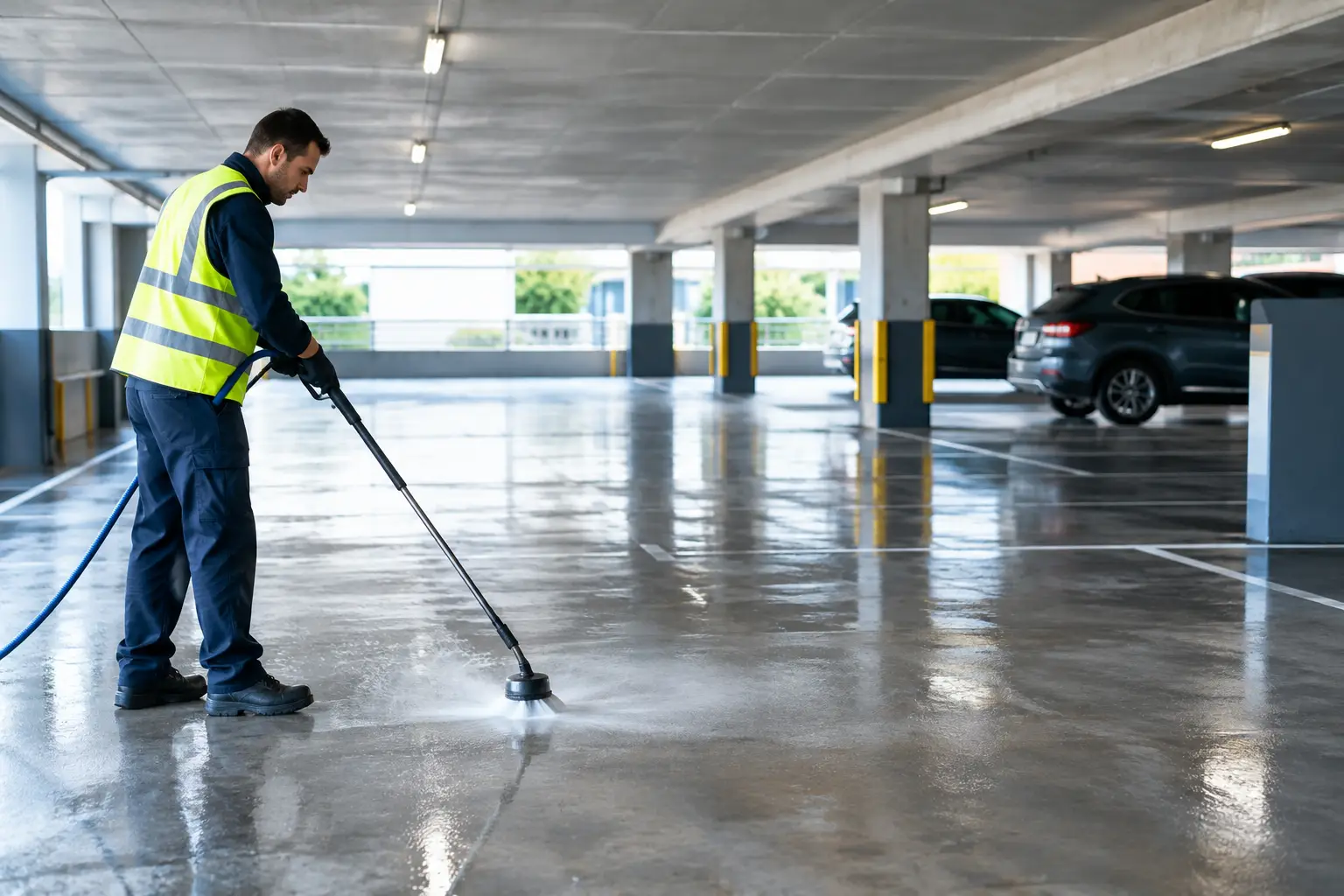
A car park tells visitors a great deal before they reach the front door. Oil marks, leaf litter, slippery algae and overflowing bins can make an otherwise well-managed site feel neglected. This guide to car park cleaning explains how property managers, body corporates and facility operators can keep parking areas safer, cleaner and easier to maintain without causing avoidable damage to surfaces or drainage systems.
Car parks work hard. They collect vehicle fluids, tyre residue, dust, organic matter, drink spills and pollution every day. In Southeast Queensland, warmth, humidity and heavy rain also create ideal conditions for mould and algae, particularly in shaded bays, ramps, walkways and areas near gardens. Leaving these contaminants in place affects presentation, but it can also increase slip risks, stain concrete and accelerate surface deterioration.
Start with a site inspection
Effective car park cleaning begins well before a pressure cleaner is switched on. Walk the area and identify what is actually on the surface, where it is collecting and what needs protecting. A retail centre car park with heavy customer traffic needs a different approach from a small office complex, school drop-off zone or residential basement.
Pay close attention to entry points, disabled parking bays, pedestrian crossings, loading areas, bin surrounds, stairwells, ramps and stormwater drains. These are often the places where grime builds up fastest and where safety matters most. Note cracks, loose line marking, damaged concrete, exposed aggregate, pavers and any previously sealed surfaces. A cleaning method that is right for sound concrete may not suit aged pavers or a worn protective coating.
The inspection should also identify operational needs. Ask when the site is busiest, whether cleaning can be completed after hours, and how traffic and pedestrians will be managed. For larger sites, cleaning in sections often keeps disruption low while ensuring every area receives proper attention.
Match the cleaning method to the surface and soil
There is no single setting or chemical that suits every car park. The best result comes from matching the treatment to the contamination and the material beneath it.
General dust, dirt and tyre marks on concrete may respond well to controlled pressure cleaning with the correct detergent and water flow. Heavier oil staining usually needs a targeted degreasing treatment first. The product needs time to work into the stain before rinsing, and deeply absorbed oil may require more than one treatment. Promising a perfect result on old, untreated oil stains is not realistic, but professional treatment can make a major visible improvement.
Mould and algae need more than a quick blast of water. Pressure alone can remove the top growth while leaving spores behind, allowing the problem to return sooner. A suitable treatment, applied at the right strength and allowed adequate dwell time, helps address the organic growth before the surface is rinsed clean.
Pressure must be adjusted carefully around painted bollards, signage, line marking, expansion joints, wheel stops and older concrete. Excessive pressure can etch a surface, strip paint or force water into weak joints. On delicate painted finishes and adjoining building surfaces, soft washing or low-pressure chemical treatment is often the safer choice.
Protect drains, gardens and surrounding areas
Car park cleaning is not simply about moving dirt from one place to another. Run-off management is a central part of doing the job properly. Detergent, oil residue, leaf matter and dirty water should not be allowed to flow unchecked into stormwater drains or nearby garden beds.
Before work begins, locate drainage points and clear loose debris by hand or with suitable collection equipment. Drain covers, sediment traps and surrounding channels should be checked so water can move as intended once cleaning begins. In areas with oil contamination, the cleaning process may need containment and collection rather than a straightforward rinse-down.
Protect nearby landscaping, glass, painted walls and vehicles from overspray. This is particularly relevant in strata complexes and shopping centres where garden beds and parked cars sit close to cleaning zones. Good preparation reduces complaints, avoids damage and helps the work run efficiently.
Plan cleaning around use, weather and safety
A clean car park is of little value if the cleaning process creates unnecessary hazards. Wet surfaces, hoses and equipment can affect pedestrians and vehicles, so clear signage, barriers and traffic control are essential. Where possible, schedule work during quieter periods such as evenings, weekends or school holidays, depending on the site.
Weather matters too. Cleaning immediately before heavy rain can reduce the effectiveness of treatments and make water management harder. Extremely hot conditions can cause some products to dry too quickly, while humid shaded areas may need extra attention because they remain damp long after the rest of the site has dried.
For active commercial sites, a staged plan usually works best. Close a defined section, clean it thoroughly, allow it to dry, then reopen it before moving to the next area. This approach takes coordination, but it is usually safer and more practical than trying to clean around constant traffic.
Build a realistic car park cleaning schedule
How often a car park needs cleaning depends on traffic, shade, nearby trees, drainage and the type of users on site. A busy shopping centre, medical facility or school may need frequent spot cleaning and regular deep cleans. A smaller office car park may only require a detailed professional clean once or twice a year, with routine housekeeping in between.
A practical maintenance plan usually includes regular litter removal and drain checks, prompt treatment of fresh oil spills, periodic cleaning of high-traffic areas, and a scheduled full clean for the entire car park. Ramps, pedestrian paths and shaded corners should not be left until the annual clean if algae is developing, as these locations can become slippery quickly.
Line marking should also be considered. Cleaning can make faded markings more obvious, which is useful when planning maintenance. If line marking is already worn, schedule repainting after the surface has been cleaned and fully dried. This creates a sharper result and helps drivers move safely through the site.
Common mistakes that increase costs later
The most common mistake is treating every stain with maximum pressure. It may seem faster, but it can leave etched concrete, damaged joints and inconsistent results. Another is ignoring drainage until a major downpour exposes blocked pits or channels.
Using the wrong chemical can also create problems. Strong products may damage surrounding surfaces, harm plants or leave residues if not applied and rinsed correctly. Equally, using too little treatment on mould or oil often means the contamination returns quickly, creating a false saving.
Finally, avoid viewing car park cleaning as purely cosmetic. Grime hides trip hazards, organic growth creates slippery patches, and oil contamination can work deeper into porous concrete over time. Regular cleaning helps preserve the surface and gives maintenance teams a clearer view of repairs that need attention.
When professional car park cleaning makes sense
Smaller, lightly soiled areas may be manageable for an onsite team with the right equipment and procedures. However, professional cleaning is generally the better option where there are large areas, heavy staining, public foot traffic, difficult access, significant mould growth or drainage concerns.
A professional team can assess surface condition, select the appropriate pressure and treatment, manage work zones and deliver a consistent finish across the site. For property managers, this also removes the burden of sourcing equipment, training staff and dealing with the mess after an ineffective clean. Boost Exterior Cleaning works with commercial and strata clients across Southeast Queensland to tailor cleaning around the condition and operating hours of each property.
The best time to organise car park cleaning is before stains become permanent, algae creates a safety issue or a key inspection is approaching. A well-planned clean protects more than presentation – it helps keep the arrival experience safe, professional and ready for the people who use the site every day.


