

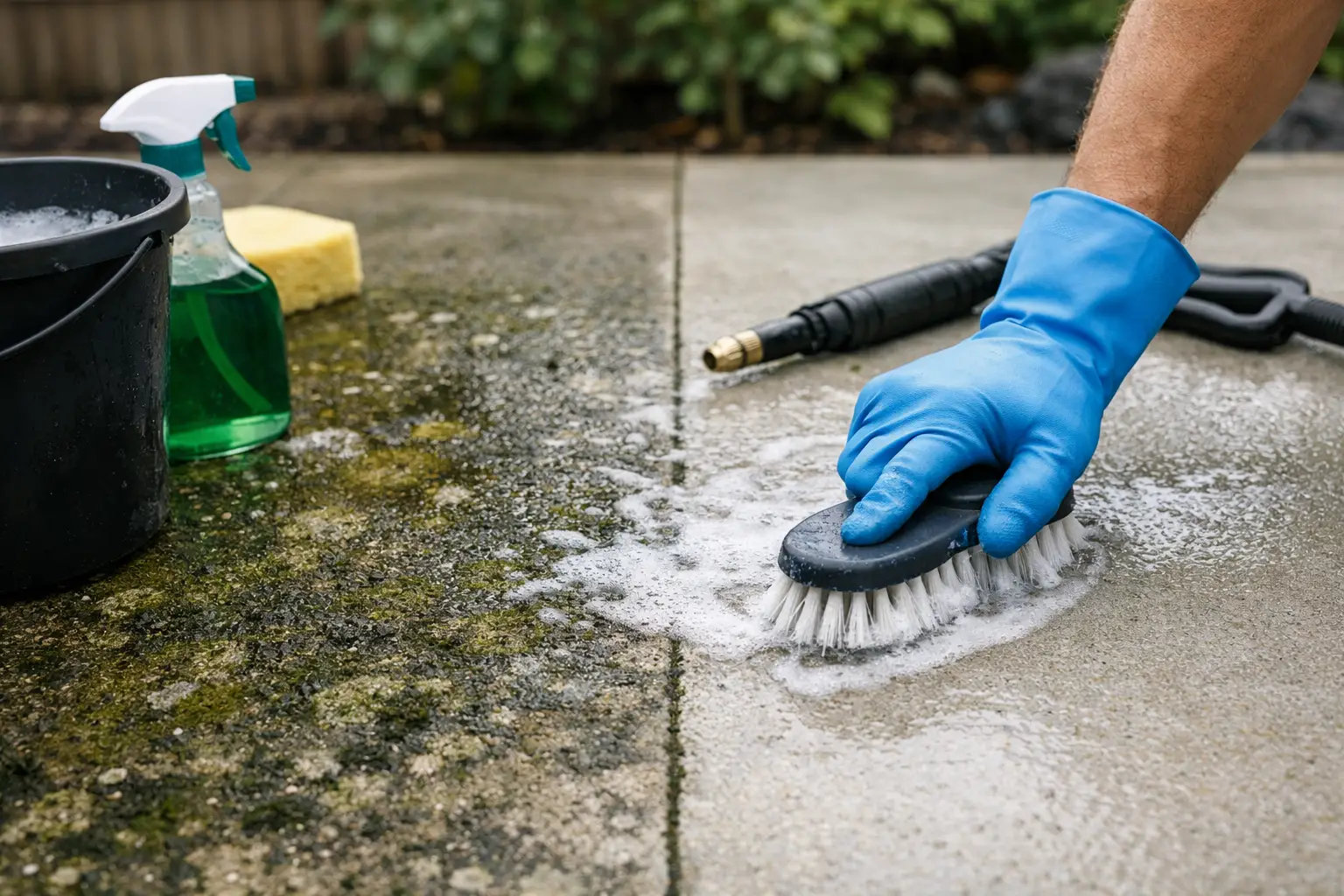
Concrete usually starts looking worse long before people do anything about it. A driveway gets darker after rain, the path near the side gate turns green, or the pool surround becomes slick underfoot. If you’re wondering how to clean mouldy concrete, the goal is not just to improve the look of it. It’s also to remove a slip hazard, slow surface deterioration and stop the growth from spreading further.
Mould on concrete is common across Southeast Queensland, especially in shaded areas with poor drainage or limited sun. It often shows up alongside algae, mildew and built-up grime, which is why the surface can look patchy rather than uniformly stained. The right cleaning method depends on where the concrete is, how badly affected it is and whether nearby surfaces need a gentler approach.
Why mould grows on concrete
Concrete might seem tough and low-maintenance, but it is porous. That means it holds moisture, traps organic matter and gives mould and algae a place to establish themselves. Add shade, humidity and a bit of leaf litter, and growth can build up quickly.
This is especially common on driveways, footpaths, courtyards, pool areas and commercial walkways. In high-traffic spaces, mouldy concrete is more than a cosmetic issue. It can create a slippery surface that becomes a genuine safety concern for residents, visitors, staff or customers.
How to clean mouldy concrete without causing damage
A lot of people jump straight to maximum pressure. Sometimes that works, but not always. High pressure can leave visible wand marks, etch the surface, disturb weak joints and drive contamination deeper into porous areas if no treatment is used first.
The better approach is usually a combination of chemical treatment and controlled pressure. That is the same principle behind professional exterior cleaning – match the method to the surface, rather than treating every stain the same way.
Step 1: Clear the area first
Start by removing furniture, pots, bins and anything else sitting on the concrete. Sweep away loose dirt, leaves and built-up debris. This gives you a clear view of how far the mould has spread and stops extra organic material from getting in the way.
If you’re cleaning near a garden bed, lawn edge or painted surface, wet surrounding areas first. That helps reduce the chance of cleaning solution drying onto nearby materials.
Step 2: Apply a suitable mould treatment
If you want a proper result, don’t rely on water alone. Mould needs to be treated, not just blasted off the top. A cleaning solution designed for exterior biological growth will help break down mould, algae and grime so the concrete can be cleaned more evenly.
The exact product matters. Some off-the-shelf cleaners are too weak for established growth, while stronger products need to be handled carefully around landscaping, metals and sealed surfaces. Always follow the label directions, use gloves and eye protection, and never mix chemicals.
Let the treatment dwell for the recommended time so it can do its job. If it dries too quickly in warm weather, the result can be patchy.
Step 3: Use pressure carefully
After the treatment has had time to work, rinse and clean the surface with appropriate pressure. For some concrete, a pressure cleaner will lift the remaining growth and surface staining effectively. For older, softer or already weathered concrete, too much pressure can do more harm than good.
Use a consistent motion and avoid holding the nozzle too close to one spot. If you’re using a narrow spray tip, be especially careful, because concentrated pressure can leave lines or gouging. On larger flat areas, a surface cleaner often gives a more even finish than a wand alone.
Step 4: Rinse thoroughly
Once the mould and residue have been lifted, rinse the area well. This removes leftover cleaning solution, loosened spores and grime. Pay attention to edges, joints and low spots where dirty water tends to collect.
If the concrete still looks blotchy, it may not mean the mould is still active. Sometimes old staining remains after the biological growth has been removed. In other cases, a second treatment is needed because the mould was deeply established.
What not to do when cleaning mouldy concrete
Plenty of concrete is damaged by well-meaning DIY cleaning. The most common mistake is using too much pressure too early. It can make the area look cleaner at first, but it may rough up the surface and leave it more likely to hold dirt and moisture later.
Another mistake is using household bleach as the whole solution. Bleach can lighten staining temporarily, but it does not always penetrate porous surfaces well enough to deal with the growth below. It can also affect nearby plants and create problems on surrounding materials if overspray is not controlled.
Acid-based products are another risk. Unless you’re dealing with a specific issue and know exactly what the surface can handle, acid cleaners are generally not the answer for mould. They can react unpredictably and may damage the finish.
When DIY works and when it doesn’t
For a small patch on a backyard path, a careful DIY clean can be enough. If you have the right treatment, a decent pressure cleaner and enough room to work safely, you may be able to restore the surface well.
It becomes a different job when you’re dealing with a long driveway, a shared accessway, pool surrounds, school grounds or heavily affected commercial concrete. Larger areas need consistent results, proper runoff control and a method that won’t leave obvious striping or surface damage. If the concrete is near painted walls, timber, natural stone or sensitive landscaping, the job needs more care again.
That is usually where professional cleaning makes more sense. A trained operator can assess whether the surface needs soft wash treatment, pressure cleaning or a combination of both. At Boost Exterior Cleaning, that surface-by-surface approach is a big part of getting strong results without creating avoidable damage.
How to keep mould from coming back
Cleaning matters, but prevention is what saves time and money over the long run. Mould comes back fastest where moisture hangs around, so reducing those conditions makes a real difference.
Start with the obvious issues. Trim back overhanging plants, clear drains, remove leaf build-up and keep shaded corners from staying damp all day. If sprinklers regularly hit the same concrete area, adjust them. If water pools after rain, look at drainage before assuming more cleaning is the answer.
For driveways, paths and outdoor entertaining areas, regular maintenance cleaning helps stop heavy growth from taking hold. Sealing can also help in some cases by reducing porosity and making future cleaning easier, although it depends on the type and condition of the concrete. Not every surface should be sealed straight away, especially if it still has moisture issues that need to be addressed first.
How to clean mouldy concrete in different areas
The location changes the best method. A front driveway can usually handle more aggressive cleaning than a decorative pool area or a concrete section bordering painted walls. Pool surrounds need extra attention because slip resistance matters, but so does avoiding damage to nearby surfaces.
Commercial premises bring another layer. Entryways, parking areas, bin wash zones and pedestrian paths often need to be cleaned with safety, presentation and downtime in mind. For schools, body corporates and facility managers, the priority is usually straightforward – remove the hazard, improve the appearance and keep the site operational.
That is why there is no single answer to how to clean mouldy concrete. The right process depends on the age of the concrete, the type of growth, the surrounding materials and the result you’re trying to achieve.
Signs it’s time to call a professional
If the concrete feels slippery even when it does not look heavily stained, if the growth keeps returning quickly, or if previous pressure cleaning has left marks, it is worth getting expert help. The same applies if the area is large, visible or important to how the property presents.
For homeowners, that might mean a driveway before sale, a mouldy path near the entry or a pool area that no longer looks clean no matter how much scrubbing you do. For commercial properties, it often means cleaning that needs to be done efficiently, safely and to a standard that reflects well on the site.
Good concrete cleaning is not about using the most force. It is about using the right treatment, the right pressure and the right level of care for the surface in front of you.
If your concrete has gone past a quick rinse and a weekend clean-up, dealing with it properly now is usually the cheaper option than leaving it to become a bigger maintenance problem later.


