

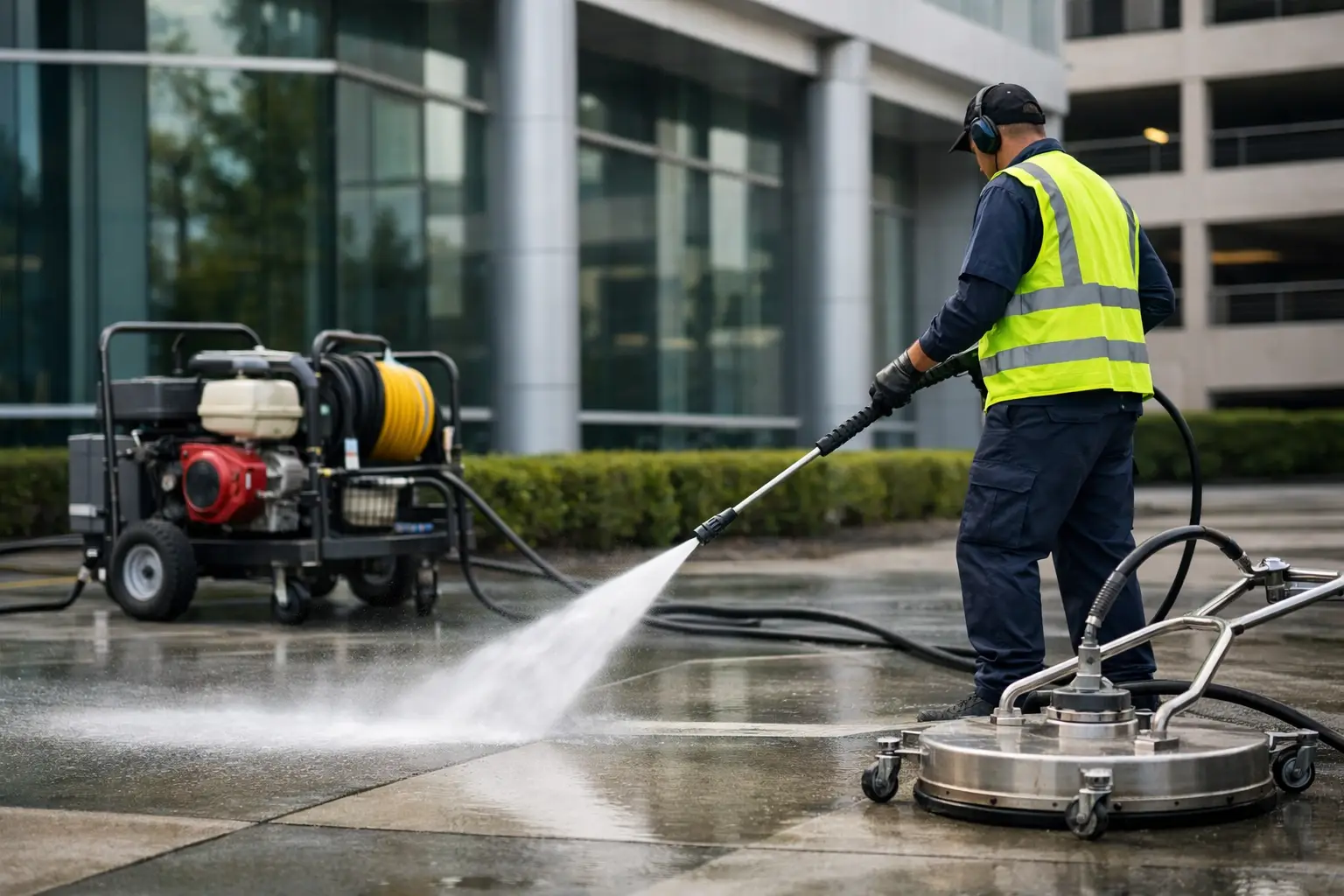
A stained shopfront, slippery walkway or grubby car park says a lot before anyone steps through the door. For owners, managers and facility teams, this guide to commercial pressure cleaning is about more than appearance. It is about safety, presentation, asset care and choosing the right method for each surface so you get a clean result without causing damage.
What commercial pressure cleaning actually covers
Commercial pressure cleaning is the cleaning of external hard surfaces and building exteriors across workplaces, schools, retail sites, strata properties and public-facing facilities. That can include footpaths, loading areas, bin surrounds, car parks, building facades, awnings, outdoor eating areas, pool surrounds and high-traffic entry points.
The key point is that not every job should be treated with the same pressure. Concrete in a service yard can handle a very different approach from painted render, signage, sealed surfaces or older masonry. A good contractor looks at the material first, then the contamination, then the safest and most effective cleaning method.
That matters because commercial sites collect more than dust. They deal with algae, mould, tyre marks, food grease, pollution fallout, chewing gum, bird droppings and general grime from constant use. If the wrong pressure is used, you can etch concrete, lift paint, damage mortar joints or force water where it should not go.
Why the right guide to commercial pressure cleaning matters
On busy sites, exterior cleaning often gets pushed down the list until the property starts looking neglected or a safety issue appears. By then, the clean usually takes longer, the staining is more stubborn and the surface may already be deteriorating.
Regular cleaning helps prevent that build-up. It reduces slip risks caused by algae and mould, improves presentation for customers and tenants, and can extend the life of painted and sealed surfaces. For schools and commercial facilities, it also supports a cleaner, more professional environment for staff, visitors and the public.
There is also a practical maintenance angle. A clean exterior makes it easier to spot cracks, failed sealants, drainage issues and surface wear before they become more expensive problems. For body corporate managers and commercial property owners, that can make routine upkeep far easier to manage.
Pressure cleaning vs soft washing
This is where many commercial jobs go wrong. Pressure cleaning is excellent for the right surfaces, but high pressure is not a cure-all. Some materials need a lower-pressure process combined with the correct treatment to break down organic growth and surface contamination.
Soft washing is often the better option for painted walls, rendered exteriors, delicate finishes, weatherboards, some roofing materials and older surfaces that can be marked or stripped by aggressive washing. The aim is not just to blast dirt away. It is to treat the growth properly, rinse safely and leave the surface cleaner without shortening its lifespan.
On many commercial sites, the best result comes from a combination of both methods. You might use pressure cleaning on concrete paths and parking areas, then soft washing on the building exterior and signage. That balanced approach is safer and usually produces a more even finish.
How a professional site assessment should work
Before any equipment starts, the contractor should assess the site in detail. That means identifying the surface type, the level of build-up, access requirements, drainage points, nearby landscaping, pedestrian traffic and any sensitive areas such as electrical fittings, painted surfaces or glass.
Timing matters too. A shopping centre entry, school drop-off zone or medical site needs a different plan from a warehouse yard. In many cases, early morning, after-hours or staged cleaning is the best option so business operations can continue with minimal disruption.
A proper assessment should also consider water run-off and chemical use. On commercial properties, this is not just about getting a good visual result. It is about working responsibly, protecting surrounding areas and making sure the cleaning process is suitable for the site.
Common commercial areas that benefit most
Some areas show the value of professional cleaning almost immediately. Entryways and footpaths are high on that list because they affect first impressions and safety at the same time. Algae growth on shaded paths is common across Southeast Queensland, especially in humid conditions, and it does not take much for a walkway to become slick.
Car parks and loading zones also benefit from regular cleaning. Oil stains, tyre marks, built-up grime and rubbish residue can make a site look poorly maintained even when the building itself is in good shape. While not every deep stain can be removed completely, professional treatment can improve the appearance significantly.
Building exteriors, awnings and facades are another priority. Traffic pollution, cobwebs, mildew and general grime can make a commercial property look older than it is. Cleaning these surfaces with the right method helps restore presentation without damaging paintwork or finishes.
Bin areas, food service zones and outdoor common areas are worth attention as well. These spots often collect odours, grease and bacteria-prone residue, so they need more than a quick rinse. They need targeted treatment and a method that suits the surface.
What affects the cost
Commercial pressure cleaning quotes vary because no two sites are the same. Size is a major factor, but access, staining severity, surface type and the level of detail required all play a part.
A flat, open concrete area is generally simpler to clean than a multi-surface property with tight access, active foot traffic and delicate finishes. Frequency also affects cost. A site cleaned on a regular schedule is usually easier and faster to maintain than one left for years between services.
It is also worth asking what is included. Some jobs involve pre-treatment for mould or algae, spot treatment for heavy staining, gum removal, or post-clean recommendations such as sealing. The cheapest quote is not always the best value if it relies on excessive pressure, skips proper treatment or leaves you with patchy results.
What to look for in a contractor
If you are comparing providers, experience with mixed commercial surfaces is essential. A contractor should be able to explain why one area needs pressure cleaning and another needs soft washing. If every problem gets the same answer, that is usually a red flag.
Look for clear communication, a fast quoting process and a practical understanding of how to work around tenants, customers, students or staff. Commercial cleaning needs to be efficient, but it also needs to be planned properly.
It helps to choose a team that understands long-term surface care, not just short-term appearance. That means using suitable pressure, the right treatment products and methods that protect paint, seals and finishes where possible. Boost Exterior Cleaning takes this approach because the best clean is the one that improves presentation without creating avoidable wear.
How often should commercial sites be cleaned?
There is no single answer because usage and environment make a big difference. A busy retail frontage or school walkway may need attention far more often than a low-traffic office exterior. Sites near main roads, coastal areas, food outlets or heavily shaded sections generally build up grime faster.
For many commercial properties, scheduled maintenance works better than one-off reactive cleaning. Regular servicing keeps the site presentable, reduces stubborn build-up and spreads maintenance costs more evenly across the year. It also means fewer surprises before inspections, leasing campaigns or major events.
If you are unsure, start with the areas that affect safety and presentation first. Entry points, paths, car parks and visible facades usually offer the quickest return.
The result you should expect
A good commercial clean should leave the property looking noticeably fresher, safer and better cared for. It should not leave etched surfaces, stripe marks, damaged paint or a mess pushed from one area to another.
You should also expect honest advice. Some stains are permanent, some surfaces are already worn, and some areas need a gentler method than clients first assume. The right contractor will explain those trade-offs clearly and recommend the most suitable approach for your site, not just the fastest one.
When commercial pressure cleaning is done properly, it lifts presentation, supports safety and helps protect the surfaces you have already invested in. If your property is starting to look tired, the best time to act is before grime, algae and staining turn a straightforward maintenance job into a bigger repair bill.


