

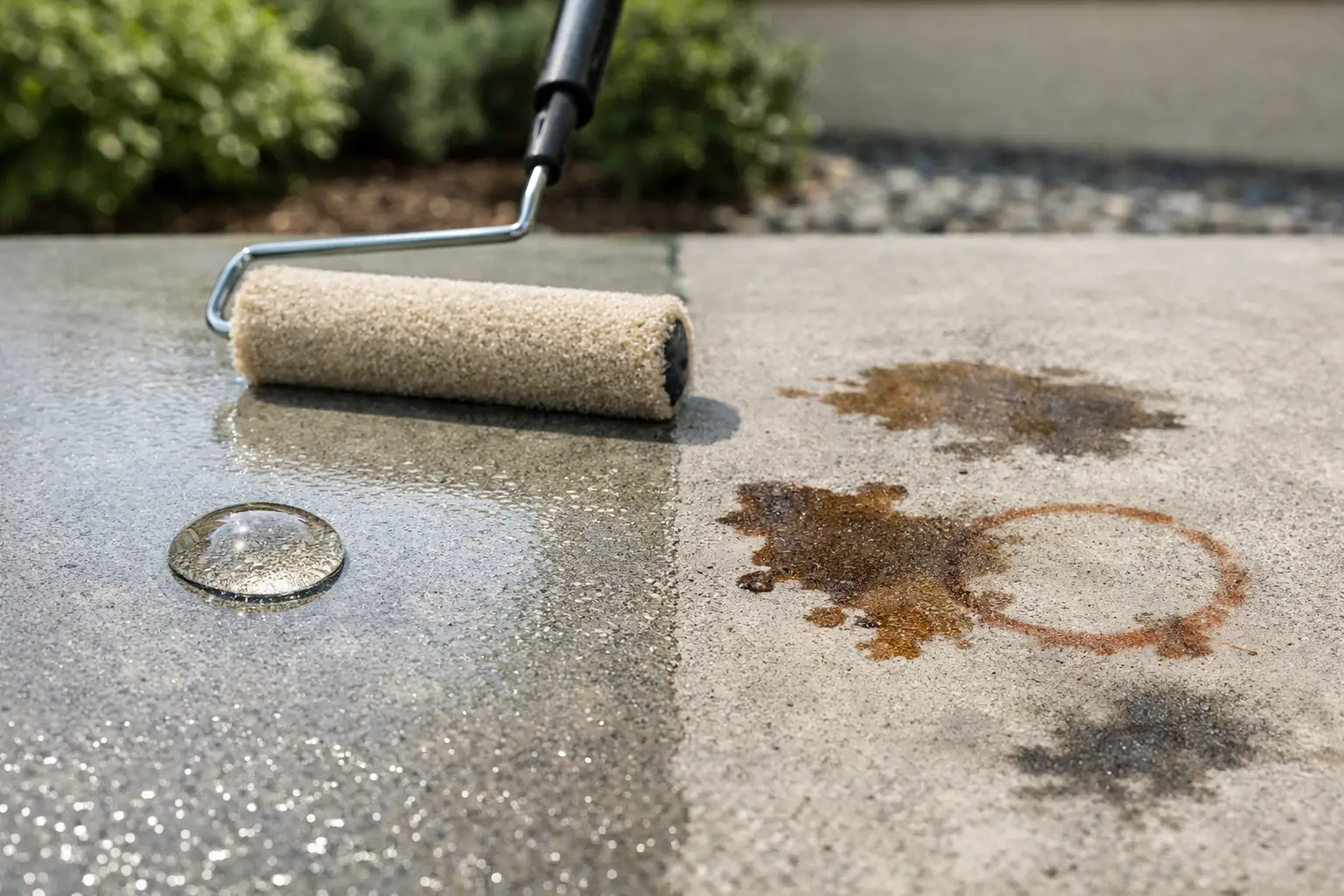
Spilled oil on a driveway, rust marks under a pot, leaf tannins on a pool surround – these are the stains most property owners notice straight away, and they are usually the reason people ask, does concrete sealing prevent stains? The short answer is yes, sealing can make a big difference, but it is not a magic shield. A quality sealer helps concrete resist staining by slowing absorption and making clean-up easier, though the result depends on the type of stain, the condition of the surface, and how well the concrete was cleaned before sealing.
How concrete stains in the first place
Concrete might look solid, but it is naturally porous. That means liquids, dirt, grease, organic matter and minerals can work their way into the surface. Once they soak in, they are much harder to remove than a simple surface spill.
On homes and commercial sites across Southeast Queensland, we commonly see staining from oil, food, tyre marks, leaf litter, algae, mould, rust, fertiliser and drink spills. Around pool areas and entertaining spaces, sunscreen, barbeque grease and wet organic debris are also common. On driveways and car parks, vehicle leaks and general traffic grime are often the main problem.
This is why cleaning alone is sometimes not enough as a long-term solution. If the surface stays open and absorbent, new staining can return quickly.
Does concrete sealing prevent stains or just reduce them?
This is where expectations matter. If you are asking whether concrete sealing prevents stains completely, the honest answer is no. If you are asking whether it reduces the chance of stains and gives you more time to clean them before they set in, the answer is absolutely yes.
A proper sealer creates a protective barrier, or in some cases penetrates the surface and lines the pores, so liquids do not soak in as fast. That delay is valuable. It gives you a better chance to wash away oil, food, dirt or leaf matter before it leaves a permanent mark.
Some stains can still occur, especially if a spill sits too long, if the wrong sealer was used, or if the concrete was already worn and contaminated before sealing. Sealing is best seen as a protective maintenance step, not a stain-proof guarantee.
The type of sealer makes a big difference
Not all sealers perform the same way. The right product depends on the surface, how it is used, and what kind of staining you are trying to limit.
Penetrating sealers are designed to soak into the concrete and protect from within. These are often a good option when you want a more natural finish and protection against water and moisture-related staining. They can help reduce mould and algae issues by limiting moisture absorption, but they may offer less defence against heavy oil or grease than some film-forming products.
Topical sealers sit closer to the surface and create more of a barrier layer. These can be very effective for resisting oil, food and general grime, and they can also improve the appearance of decorative concrete. The trade-off is that they may need more regular maintenance in high-traffic areas and can wear unevenly if the surface is not prepared properly.
For driveways, paths, pool surrounds and commercial hardstands, the best result usually comes from matching the sealer to the surface and the site conditions rather than choosing a one-size-fits-all product.
Why cleaning before sealing matters
One of the biggest mistakes is sealing over dirty or contaminated concrete. If oil, mould, rust, black spotting or embedded grime is still in the surface, the sealer can lock that staining in rather than solve it.
That is why proper preparation matters. Professional pressure cleaning, and where needed the right chemical treatment, removes built-up contamination so the sealer can bond properly and protect a clean surface. This is especially important on older concrete, exposed aggregate, and areas with long-term organic growth.
At Boost Exterior Cleaning, this is a big part of the approach – use the right pressure and treatment for the surface first, then apply protection where it will actually perform. It is a safer and more effective way to get lasting results than rushing straight to sealing.
What sealing helps protect against
Sealing is particularly useful for everyday staining risks that affect presentation and maintenance. It can help reduce absorption from oil drips, food spills, muddy foot traffic, leaf tannins, dirt, light rust staining and general moisture exposure. It also makes routine washing easier because grime tends to sit closer to the surface instead of working deep into the pores.
For homeowners, that usually means a cleaner-looking driveway, patio or pool area with less effort between professional cleans. For body corporates, schools and commercial facilities, it can mean lower maintenance pressure on high-visibility areas and a better overall presentation for residents, visitors, staff and customers.
It can also support surface longevity. When water penetration is reduced, you are helping limit the conditions that contribute to mould, algae and gradual surface deterioration.
Where sealing has limits
Even the best sealer has limits, and this is where honest advice matters. If petrol, oil, grease or harsh chemicals are left sitting for too long, they may still mark the surface. Rust can also be stubborn, especially if it comes from metal furniture, irrigation, or repeated water exposure. Likewise, battery acid, paint and strong solvent spills can damage or stain sealed concrete.
Wear and tear is another factor. Driveways, parking areas and heavily used commercial entries lose protection faster than a low-traffic alfresco area. UV exposure, rainfall and regular washing all affect how long a sealer holds up.
There is also the issue of existing damage. Cracked, pitted or heavily etched concrete may still stain unevenly even after sealing because the surface is no longer uniform. In those cases, sealing still helps, but expectations need to be realistic.
How long stain protection lasts
This depends on the sealer type, traffic levels and site conditions. Some surfaces may hold protection well for a few years, while others need resealing sooner. A shaded path with low traffic will usually last longer than a busy driveway exposed to sun, rain and vehicle use every day.
The practical way to think about it is not as a set-and-forget product. Sealing is part of an ongoing maintenance cycle. If you want concrete to stay cleaner, look better and resist staining over time, it should be inspected and maintained before the protection fully wears away.
A good sign the surface may need attention is when water stops beading and starts soaking in quickly. Another is when new stains become harder to lift during routine cleaning.
Is sealing worth it for every concrete surface?
Not always, but often. On plain concrete in low-use areas, some owners are happy to clean as needed and accept that the surface will weather naturally. On the other hand, sealing is usually worth strong consideration for driveways, exposed aggregate, pool surrounds, entertaining areas, entryways and commercial spaces where presentation matters.
It is especially worthwhile if the area has already been professionally cleaned and restored. Once a surface is looking fresh again, sealing helps protect that result rather than letting the same staining cycle return too quickly.
For pre-sale preparation, tenancy turnover, body corporate upkeep and routine facility maintenance, sealing can also be a smart value decision. A protected surface tends to need less aggressive cleaning and can hold a cleaner appearance for longer.
The best way to get the result you want
If your main goal is stain prevention, the best approach is simple. Start with a thorough clean. Remove mould, algae, oil, dirt and embedded contamination properly. Then choose a sealer that suits the surface and the way the area is used.
After that, deal with spills early. Sealing gives you a buffer, not a free pass to leave mess sitting for weeks. Regular washing and timely resealing are what keep the protection working.
So, does concrete sealing prevent stains? It prevents many stains from becoming deep, permanent problems, and it makes maintenance much easier. But the real result comes from the full process – correct cleaning, correct product selection, and ongoing care.
If you want your concrete to stay cleaner, present better and stand up to everyday use, sealing is one of the most practical steps you can take. The key is doing it properly, before the next stain has a chance to settle in.


