

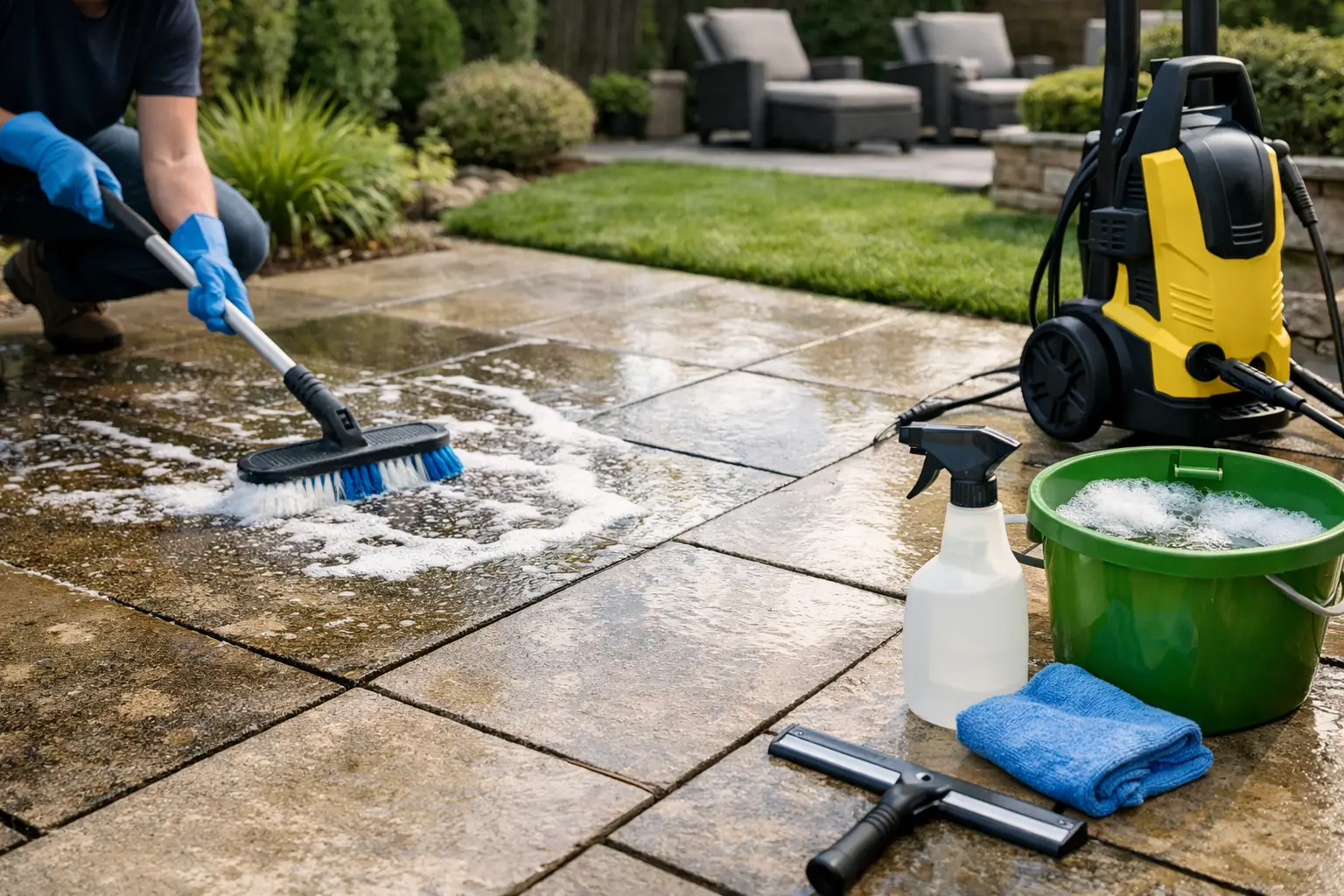
A green, slippery tile area is more than an eyesore. Around pools, entryways and patios, mould and algae can make a surface unsafe underfoot, while built-up grime gradually dulls the finish and stains grout. The best way to clean outdoor tiles depends on what the tiles are made from, how heavily soiled they are and whether the problem is dirt alone or active organic growth.
For most outdoor tiled areas, the safest approach is to treat the mould and algae first, allow the treatment time to work, then rinse at a controlled pressure. Blasting straight into the surface with a high-pressure cleaner may look satisfying, but it can damage grout, force water beneath loose tiles and leave delicate stone looking patchy.
Start by identifying the outdoor tile surface
Not all tiles should be cleaned the same way. Porcelain and ceramic tiles are generally hard-wearing and tolerate a careful pressure clean well. Textured tiles often hold more dirt in their surface, so they may need a suitable detergent and a thorough rinse rather than extra pressure.
Natural stone needs more caution. Travertine, limestone, sandstone and some slate products can be porous or chemically sensitive. A harsh acidic cleaner can etch the surface, strip its natural character or cause permanent colour variation. Concrete-look pavers and tiles may also lose their finish if they are cleaned too aggressively.
Before cleaning, check for cracked tiles, lifting grout, loose coping and damaged sealant. Cleaning will not fix those issues, and directing water into weak points can make them worse. If you are unsure of the material, test a small, discreet area first.
Why mould and algae keep returning
Outdoor tiles in Southeast Queensland cope with heat, humidity, rain and shaded conditions. That combination gives mould, mildew and algae an easy place to grow, especially around pools, under eaves, beside gardens and on south-facing paths.
A pressure cleaner can remove the visible layer, but pressure alone does not always treat the spores sitting in pores, grout lines and textured finishes. That is why a patio can look clean for a short time, then turn green again after the next wet spell. A proper cleaning process addresses the growth first, then removes the dead material and remaining grime.
Run-off also matters. Soil from garden beds, leaf tannins, pool overspray, cooking grease and airborne pollution can all contribute to staining. The right solution is often a combination of treatment, controlled washing and ongoing maintenance rather than one heavy blast of water.
The best way to clean outdoor tiles step by step
Clear the area and protect nearby surfaces
Move furniture, pots, toys and loose items off the tiled area. Sweep away leaves, dirt and rubbish so the cleaning solution can reach the surface evenly. Cover or wet down sensitive plants if required, and keep pets and children away until the area has been fully rinsed and is dry.
If the tiles sit beside a pool, take extra care to prevent cleaning products and dirty run-off entering the water. Pool surrounds also have slip risks, so plan the job for a dry day where possible and allow enough time for the surface to dry afterwards.
Apply the right treatment for the contamination
For light surface dirt, a tile-safe outdoor detergent may be all that is needed. For black mould, green algae and ingrained organic staining, use a cleaning treatment designed for exterior surfaces and follow the product instructions carefully. Do not assume that a stronger mix will deliver a better result.
The treatment needs dwell time to break down the growth. If it dries too quickly in hot weather, it may not work evenly. Work in manageable sections, particularly on large patios or pool areas, and avoid applying chemicals in direct midday sun where possible.
Avoid acidic products unless you know the tile is acid-safe. Acid can be useful for certain mineral deposits on appropriate surfaces, but it is not a general-purpose outdoor tile cleaner. On natural stone, the wrong chemical can cause more damage than the original stain.
Rinse with controlled pressure, not maximum pressure
Once the treatment has done its job, rinse the surface with a pressure cleaner set appropriately for the material. Keep the nozzle moving, maintain a consistent distance from the tile and avoid concentrating the spray on grout joints, edges and cracked areas.
For ceramic, porcelain and durable concrete tiles, a professional surface cleaner can produce an even finish across larger areas. It reduces striping and prevents the tiger-stripe effect that often appears when a wand is held too close. On softer stone, older grout or delicate tiles, a lower-pressure rinse or soft washing method is often the safer choice.
The goal is clean, even tiles – not the highest possible pressure. A surface that has been etched, stripped or loosened is far more expensive to repair than it is to clean correctly in the first place.
Deal with grout lines and stubborn spots carefully
Grout is usually more porous than the tile itself, which is why it often looks darker first. If staining remains after treatment and rinsing, use a suitable grout-safe cleaner and a stiff nylon brush. Avoid wire brushes, as they can scratch tiles and damage coatings.
Rust marks, leaf stains, efflorescence and grease need different treatments. A generic cleaner may not shift them, while the wrong product can set the stain further or affect the tile finish. This is one of the clearest signs that professional advice is worthwhile, particularly on expensive stone, tiled balconies or large commercial areas.
Common mistakes that damage outdoor tiles
The most common mistake is using too much pressure too close to the surface. It can scar softer tiles, blow out grout and drive water into joints. The damage may not be obvious until tiles begin to loosen or staining appears beneath the surface.
Another issue is using chlorine or strong chemical products without dilution, dwell-time control or proper rinsing. These products can affect surrounding plants, corrode nearby metals and leave uneven results if applied poorly. They must be handled with the right safety equipment and never mixed with other cleaning chemicals.
Leaving dirty water to dry is also counterproductive. As water evaporates, it can leave behind residue, mineral marks and fine dirt in grout lines. Rinse thoroughly and manage run-off so debris is not simply washed onto the lawn, into garden beds or back across the clean area.
When professional tile cleaning is the better option
DIY cleaning can work well for a small, lightly soiled patio with sound tiles and grout. However, it is worth bringing in a professional when the area is large, slippery, heavily stained or made from natural stone. The same applies to pool decks, strata common areas, school grounds, retail entries and high-traffic walkways where safety and presentation matter every day.
A professional exterior cleaner can assess the surface, choose the correct chemical treatment and use the right pressure for the job. Soft washing is particularly useful where mould needs treating but the surface, paintwork, grout or surrounding finishes should not be exposed to harsh pressure. For hard-wearing tiles and pavers, professional pressure cleaning equipment can restore a consistent finish without the patchiness common with an unsuitable DIY setup.
At Boost Exterior Cleaning, the focus is on matching the method to the material – from gentle soft washing through to controlled pressure cleaning for durable surfaces. That approach helps remove the cause of staining while protecting the surface you have invested in.
Keep outdoor tiles cleaner for longer
Regular sweeping makes a real difference because leaves, soil and moisture feed organic growth. Trim back dense vegetation that keeps tiled areas shaded and damp, keep gutters and downpipes flowing away from paths, and rinse pool overspray from surrounding tiles when needed.
For many homes, an annual professional clean is enough to keep patios, paths and pool surrounds presentable. Shaded areas or properties close to trees may need attention more often. Sealing can also be a smart next step for suitable porous tiles, grout and natural stone, as it can reduce water absorption and make future cleaning easier. It is not suitable for every surface, though, so the tile type and existing finish should always be checked first.
Clean tiles make an outdoor area feel cared for, but the bigger benefit is safer footing and less chance of long-term surface deterioration. Treat growth early, use pressure with care and choose a method that suits the tile rather than forcing every surface through the same cleaning process.


