

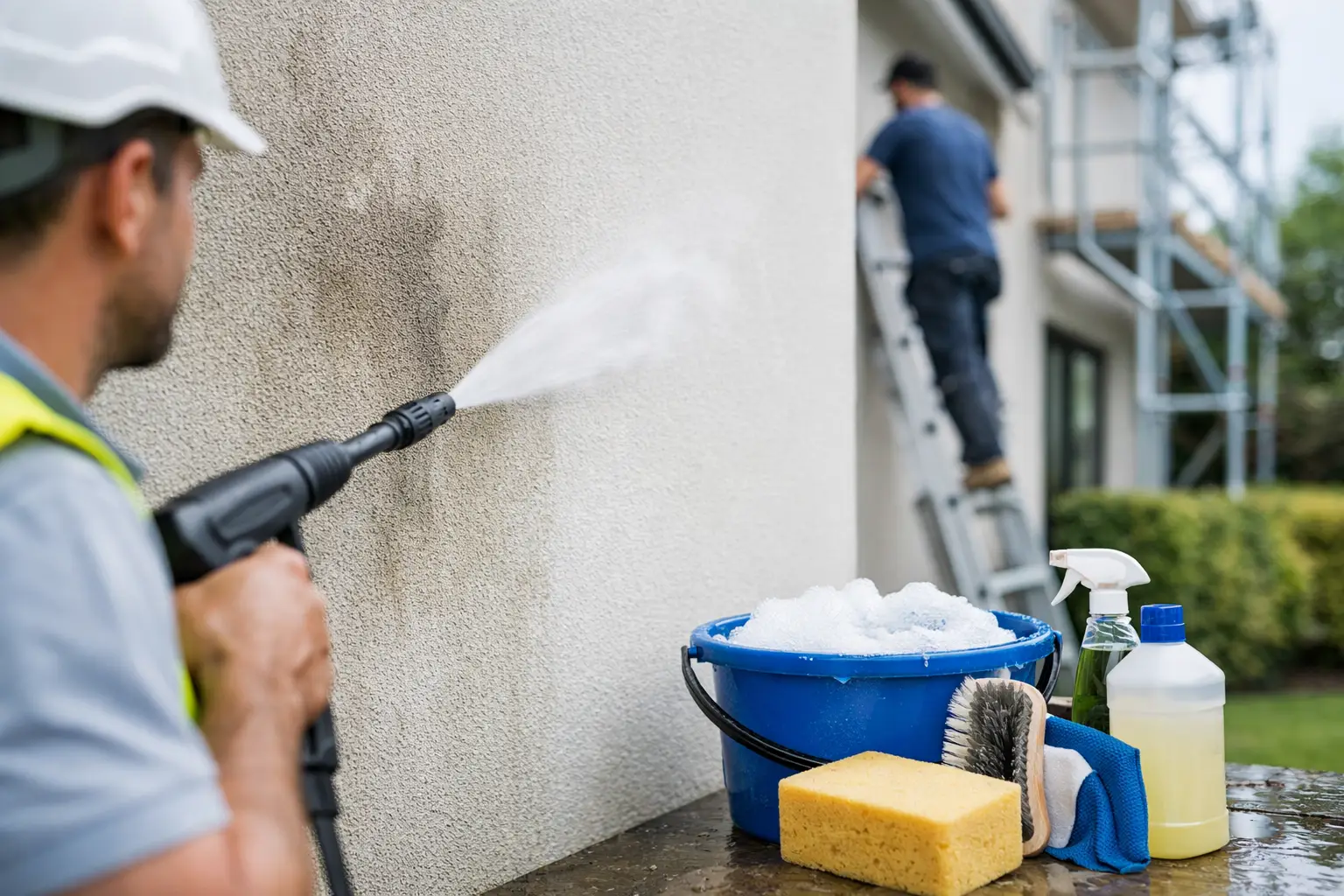
Render can make a home or commercial building look sharp one season and tired the next. In Southeast Queensland, moisture, humidity, traffic grime and airborne pollutants all leave their mark quickly, which is why property owners often start searching for the best ways to clean render before stains become a bigger maintenance issue.
The catch is that render is not a surface you can treat casually. Go too hard with pressure, use the wrong chemical mix, or scrub at the wrong angle, and you can strip paint, etch the finish, or drive water where it should not go. Good render cleaning is less about brute force and more about using the right method for the type of build-up, the age of the surface and whether the render is painted or unpainted.
What makes render tricky to clean
Render holds onto contamination more than many people expect. Dust settles into the texture, mould and algae feed off damp areas, and rust or tannin stains can soak in rather than sit neatly on top. Lighter colours show every mark, while older render can become more porous over time, which means it stains faster and cleans more unevenly.
Painted render adds another layer of risk. A finish that looks solid from the ground can still be chalky, weathered or poorly bonded. That is why the best result usually comes from cleaning that is tailored to the wall itself, not just the stain you want gone.
The best ways to clean render without damaging it
There is no single method that suits every property. The best ways to clean render depend on what is growing or staining the wall, how delicate the coating is, and how long the build-up has been sitting there.
1. Soft washing for mould, algae and general grime
For most homes and buildings, soft washing is the safest and most effective approach. This method uses low pressure combined with purpose-made cleaning treatments to break down mould, algae, bacteria and dirt without hammering the surface.
That matters because organic growth is often the real problem on render, not just surface dust. If you only rinse the wall, it may look better for a short time but the spores remain active. Soft washing treats the growth at its source, which usually gives a cleaner finish and a longer-lasting result.
This is also the better option for painted render, acrylic render and older surfaces where high pressure could cause flaking or water intrusion.
2. Low-pressure rinsing after treatment
Once the treatment has done its job, a careful low-pressure rinse helps remove loosened grime and residue. The pressure should be controlled to suit the surface. Too much force can leave visible lines, blow out weak points, or damage joints and trims around windows and doors.
A proper rinse is especially important on textured render because dirt can sit in pits and grooves. The goal is to wash contaminants away evenly, not chase them around the wall with a concentrated jet.
3. Spot treatment for stubborn stains
Not every stain on render is organic. Some marks come from rusting fixtures, overflowing gutters, leaf tannins, sprinkler overspray or mineral deposits. These stains often need a specific treatment rather than a general house wash mix.
This is where many DIY attempts go wrong. A cleaner that works on mould may do very little for rust. A product strong enough to shift mineral staining may affect paint if left on too long. Spot treatment can be very effective, but only when the cause of the stain is identified first.
4. Gentle agitation on heavily textured areas
Some rendered surfaces trap grime in a way that chemistry alone cannot fully release. In those cases, gentle agitation with a soft brush may be needed after pre-treatment. The key word is gentle. Hard scrubbing can burnish painted finishes, leave scuff marks or roughen the texture.
This method tends to work best on isolated problem areas rather than full walls. It is useful around entryways, beneath windows and near downpipes where dirt tends to build up more heavily.
5. Steam or hot water in specific situations
In certain commercial settings or on greasy external residues, heat can improve cleaning performance. Hot water can help break down oily grime faster than cold water alone. Still, this is not the default choice for every rendered wall.
On delicate or older render, heat and pressure together can create more problems than they solve. Used selectively and with the right settings, it can be helpful. Used carelessly, it can shorten the life of the finish.
6. Protective cleaning before repainting or sale
Sometimes the aim is not just maintenance. It is presentation. If a property is being prepared for sale, lease turnover or repainting, render cleaning can lift the whole exterior and expose any repairs that need attention.
This kind of clean should still be surface-safe. Aggressive washing may create fresh defects just before painting or inspection. A controlled clean gives a more accurate picture of the render condition and improves street appeal without adding avoidable repair work.
7. Professional assessment for aged or damaged render
If the render is cracked, drummy, flaking, heavily stained or patched in different finishes, the best move is often to have it assessed before any washing starts. Cleaning will not fix structural issues, and the wrong method can make weak areas fail sooner.
For older homes and larger sites, a professional approach is often the difference between a clean, even finish and a patchy result that draws more attention to the problem areas.
Methods that can do more harm than good
A common mistake is blasting render with a pressure cleaner on a setting better suited to concrete. That may remove some dirt quickly, but it can also scar the coating, force moisture behind the surface and leave obvious clean streaks. On painted render, it can strip or lift the coating entirely.
Household bleach is another one to treat with caution. It can kill organic growth, but using the wrong strength or applying it without proper rinsing can affect surrounding plants, leave uneven fading and fail to address the full cause of the staining. Render cleaning is not just about what works fast. It is about what works safely and lasts.
How often should render be cleaned?
That depends on the location and exposure. Homes near busy roads, coastal conditions or shaded damp areas usually need more frequent attention. Commercial buildings and schools also tend to show grime faster because of foot traffic, pollution and constant public use.
As a general guide, an annual or biennial clean keeps most rendered exteriors in better condition and stops heavy build-up from taking hold. Waiting until walls are visibly blackened or green often means the clean is more involved and the results may take longer to restore evenly.
DIY or professional render cleaning?
Light dusting off lower walls may be manageable for some property owners, but full render cleaning is one of those jobs where technique matters. Access, chemical handling, runoff control and pressure selection all affect the outcome. If the building is multi-storey, painted, older or heavily stained, it makes sense to bring in a team that cleans exterior surfaces every day.
That is especially true when appearance matters commercially. Body corporates, schools and facility managers do not just need the walls washed. They need the site to stay safe, the finish to be protected and the result to look consistent across the whole property.
At Boost Exterior Cleaning, this is why soft washing is such a big part of the process. The right treatment and pressure for the surface gets better long-term results than trying to force dirt off with unnecessary power.
Choosing the right approach for your property
The best ways to clean render come down to matching the method to the surface. Soft washing suits most rendered walls, especially where mould, algae and general grime are the main issue. Spot treatments help with specific stains. Low pressure and careful rinsing protect the finish. And when the render is older or already compromised, caution matters more than speed.
A clean rendered exterior does more than improve appearance. It helps preserve paintwork, slows down surface deterioration and keeps the property looking cared for year-round. If your render is starting to show the usual signs of Queensland weather, the smartest step is to deal with it early – before a simple clean turns into a bigger repair job.


