

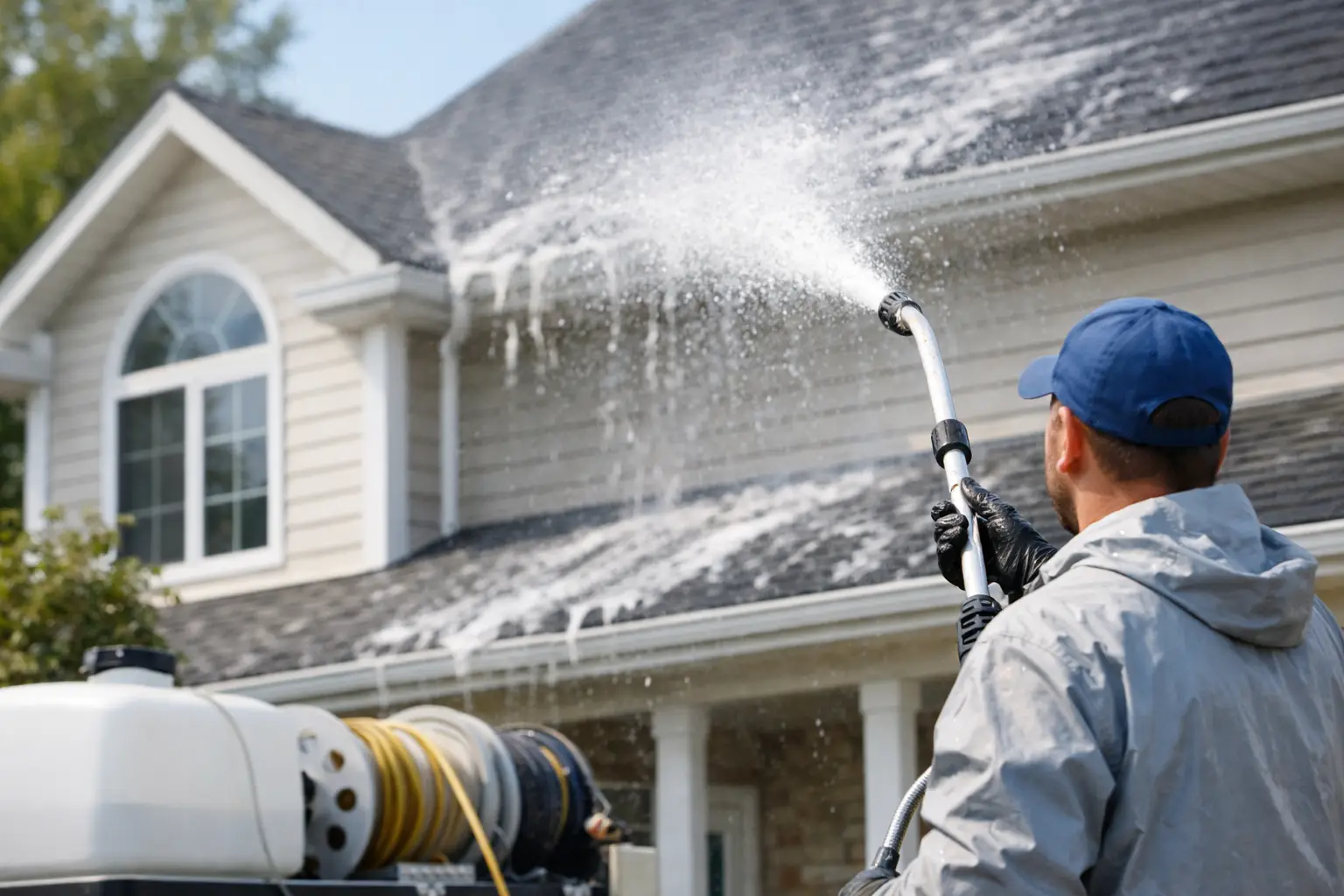
If your home looks tired even after a quick hose-down, the issue usually is not just dirt. In Southeast Queensland, exterior walls often collect mould, algae, lichen, cobwebs and airborne grime that cling to paint, render and trims. That is exactly where a guide to soft washing homes becomes useful – because the right method does more than rinse the surface. It treats the growth at the source and cleans the exterior without the unnecessary pressure that can do more harm than good.
What soft washing actually means
Soft washing is a low-pressure exterior cleaning method that uses purpose-made cleaning solutions to break down organic growth, dirt and staining before rinsing the surface clean. It is not the same as standard pressure cleaning. The pressure is kept low, while the cleaning agents do the heavy lifting.
That difference matters. High pressure can be effective on hard surfaces such as some concrete areas, but it is often too aggressive for painted exteriors, weatherboards, render, eaves, gutters and other more delicate finishes. Soft washing is designed for surfaces that need a thorough clean without the risk of blasting away paint, forcing water into gaps or roughing up the material.
For most homeowners, the goal is simple. You want the home to look fresh, well-kept and free of mould and grime, without creating a repair bill in the process.
Why this guide to soft washing homes matters
A lot of exterior staining is alive. Mould, algae and lichen are not just sitting on the surface like loose dust. They grow into porous materials and hold moisture against the exterior of the home. If they are not treated properly, they tend to come back quickly.
This is why soft washing gets better long-term results than a basic pressure rinse on many house exteriors. Instead of relying on force alone, it targets the organic growth itself. That means a cleaner finish, a better chance of slowing regrowth, and less stress on painted and coated surfaces.
It also helps protect presentation. Whether you are keeping up with annual maintenance, getting the property ready for sale, or preparing for new tenants, a clean exterior changes how the whole place feels. Windows look brighter, paintwork appears newer, and the home presents as looked-after rather than neglected.
Where soft washing works best
Soft washing is ideal for many parts of a home, but not every surface should be treated exactly the same way. A good operator adjusts both the chemical mix and the pressure to suit the material.
Painted walls are one of the most common applications. Soft washing lifts grime and biological growth without the harsh impact that can strip or weaken paint. Render also responds well when cleaned correctly, especially where mould and algae have settled into the texture.
Weatherboards, cladding, eaves, fascias, gutters and soffits are also strong candidates for soft washing. These areas often collect cobwebs, dust, mildew and run-off stains, and they need a gentler approach than a concrete driveway.
Even then, there is always a bit of judgement involved. Some older homes have fragile paintwork or aged surfaces that need extra care. In those cases, the best outcome comes from a slower, more controlled treatment rather than trying to chase a fast result.
When pressure cleaning is the wrong tool
Pressure cleaning has its place, but using it on the wrong part of the property can create avoidable damage. We often see homeowners assume that more pressure means a better clean. In reality, more pressure usually means more risk.
On house exteriors, excessive pressure can etch soft materials, peel flaking paint, scar timber, damage seals around windows and push water where it should not go. That last point is a big one. Water forced behind cladding or into small gaps can lead to moisture issues that are not obvious straight away.
This is why surface-safe cleaning matters. Different materials need different methods. A driveway, pool surround and painted wall should not all be cleaned the same way, even if they are all visibly dirty.
How a professional soft wash is done
A proper soft wash starts before any cleaning begins. The operator checks the surface type, the level of contamination, nearby plants, access points, drainage and any sensitive areas around doors, lights or electrical fittings. This step is not just caution – it is what separates a professional result from a rushed one.
The cleaning solution is then applied at a controlled rate so it can dwell on the surface and start breaking down mould, algae and built-up grime. After that dwell time, the area is rinsed with low pressure. On some surfaces, a second treatment may be needed if growth is heavy or staining has been there for a long time.
Good soft washing is not about hammering the surface until it looks clean from the street. It is about using the right treatment, the right dilution and the right rinse method so the result lasts and the material stays in good condition.
Common problems soft washing helps solve
Most homeowners call for exterior cleaning because the house has started looking green, grey or patchy. That is often caused by a mix of mould, algae, dust and pollution settling over time. In shaded areas, especially on the southern side of the property or around trees, growth can build up quickly.
Soft washing is particularly effective for black spotting under eaves, green staining on render, mould on painted walls and grime build-up around trims and gutters. It also improves the overall brightness of the property, which can make a surprising difference if the home is being photographed for sale or inspection.
That said, not every mark will disappear completely. Some older stains, oxidised paint or permanent discolouration may improve but not fully lift. A reputable cleaner should be upfront about that. The goal is the best safe result, not a promise that every surface will come up like brand new.
How often should you soft wash a house?
For many homes, an annual wash is a sensible starting point. In coastal areas, high-humidity zones and heavily shaded blocks, more frequent cleaning may be worth considering. Homes surrounded by trees or exposed to constant moisture usually show regrowth sooner.
If the property is well exposed to sun and kept in good condition, you may be able to stretch the interval. It depends on the environment, the surface type and how quickly organic growth returns. The main thing is not to wait until staining becomes deeply established. Regular maintenance is usually cheaper and easier than leaving it for years.
Property managers and body corporate teams often benefit from scheduled cleaning because it keeps presentation consistent and reduces the chance of surfaces deteriorating before action is taken.
Choosing the right provider
If you are comparing quotes, ask how the company decides between soft washing and pressure cleaning. That question tells you a lot. A quality provider will talk about surface type, pressure control, chemical treatment and the condition of the material, not just square metres and turnaround time.
You also want clear communication about what is included, what results are realistic and whether surrounding areas such as paths, windows or outdoor furniture need protection. Fast quoting is helpful, but the method matters more than speed if you are trying to protect paintwork and avoid damage.
For homeowners across Brisbane, Logan, the Gold Coast, Buderim and the Sunshine Coast, that local experience makes a difference. Conditions vary from suburb to suburb, and so does the kind of growth that builds up on homes. A team that knows what Southeast Queensland properties are up against will usually recommend a more suitable cleaning plan.
The value goes beyond appearance
A freshly washed home looks better straight away, but the real value is in preservation. Removing mould, algae and grime helps reduce long-term wear on painted surfaces and exterior finishes. It can also make routine maintenance easier because problems are easier to spot when the surface is clean.
That matters if you are planning to repaint, list the property, hand it over to tenants or simply stay ahead of upkeep. Exterior cleaning is one of those jobs that pays off visually and practically at the same time.
At Boost Exterior Cleaning, we see soft washing as the smarter option for many homes because it delivers a strong visual result without treating every surface like a hardstand. When the method matches the material, you get a cleaner home and a better chance of keeping it that way.
If your walls, eaves or exterior finishes are showing mould, algae or weather staining, the best next step is not more pressure. It is choosing a method that cleans thoroughly while looking after the home you have invested in.


