

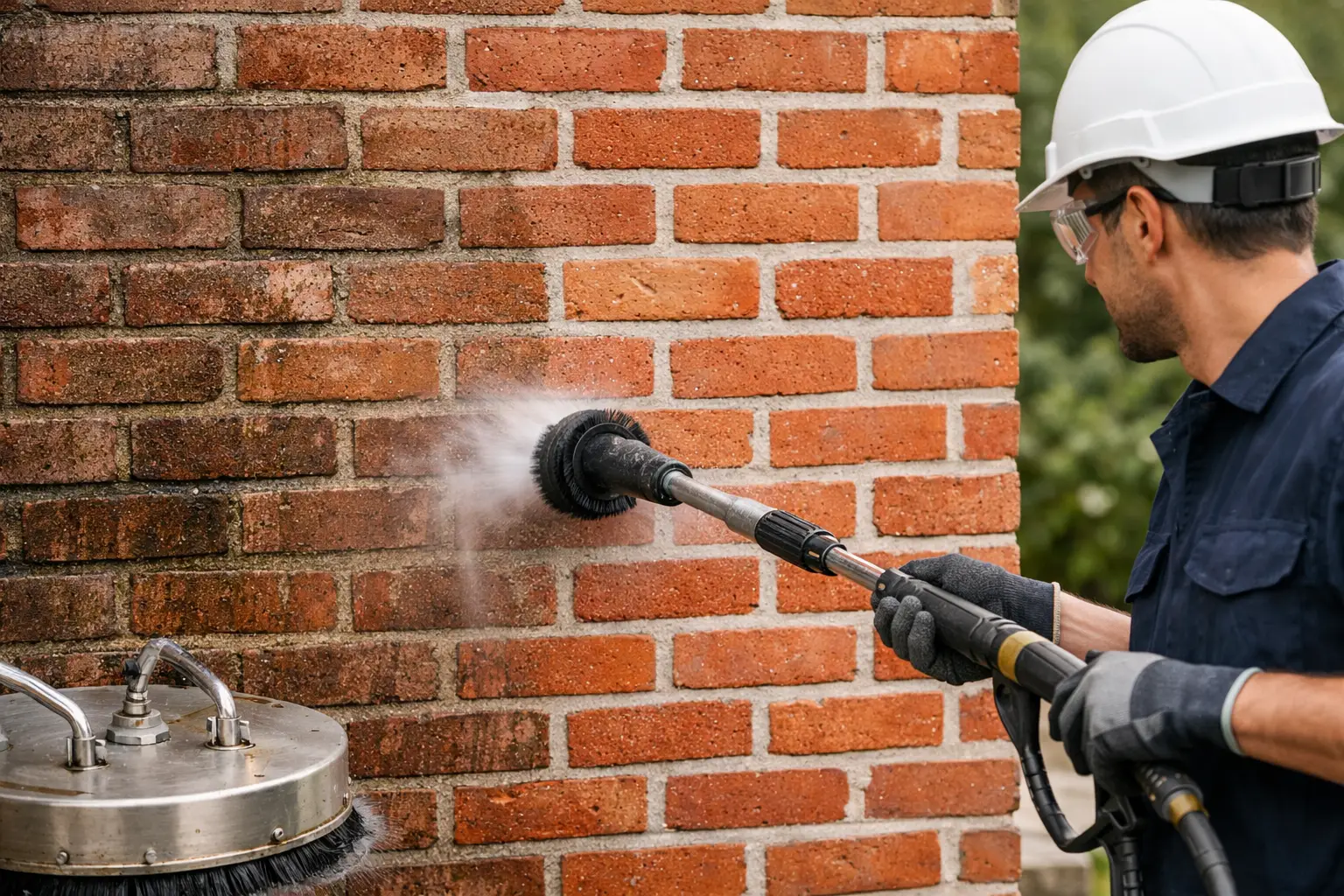
A brick wall can look permanently stained when it is really carrying a build-up of airborne pollution, red dust, algae, mould or mineral salts. The wrong cleaning approach can make that problem worse by scarring the brick face, eroding mortar joints or driving water deeper into the wall. Effective brick wall cleaning methods start with identifying what is on the surface and how sound the masonry is before any equipment is switched on.
For homes, strata properties and commercial sites across South East Queensland, this matters. Our humid conditions encourage organic growth, while rain, irrigation overspray and coastal air can leave brickwork looking tired far sooner than expected. A careful clean restores presentation, but it also helps prevent moisture-related deterioration from being ignored.
Start with the cause of the staining
Not all dark marks are mould, and not every white deposit needs the same treatment. Cleaning blindly is where avoidable damage happens.
Green, black or grey growth is usually algae, mould or mildew. It often appears on shaded walls, around garden beds, beneath air-conditioning outlets, near downpipes and on southern-facing areas that stay damp. These organisms need to be treated, not simply blasted away. If the root growth remains in pores and mortar, the wall may look clean briefly before the staining returns.
White, powdery marks are commonly efflorescence. This occurs when moisture moves through brick or mortar, carrying natural salts to the surface as it evaporates. It can be a normal feature of newer masonry, but repeated or heavy efflorescence can point to excess moisture, poor drainage, leaking plumbing, failed flashings or water entering from behind the wall.
Rust streaks, paint overspray, oil, soot and hard water marks each require their own approach. A strong chemical that works on mineral staining may be unsuitable for a wall with delicate mortar or nearby landscaping. That is why a proper inspection is more useful than a one-size-fits-all pressure clean.
Brick wall cleaning methods that suit the surface
The best method depends on the type of brick, the age and condition of the mortar, the contaminant and the surrounding area. Face brick, heritage masonry, rendered brick and painted brickwork should never be treated as though they are the same surface.
Soft washing for mould, algae and general grime
Soft washing uses a purpose-selected cleaning solution at low pressure. It is often the preferred option for brick walls affected by organic growth, surface grime and weather staining because the treatment does the main cleaning work rather than high-pressure water.
After a suitable dwell time, the wall is rinsed gently. This approach is particularly useful where the brickwork is older, the mortar is sandy or recessed, or there are painted sections, windows, garden beds and other sensitive surfaces nearby. It can provide a noticeable before-and-after result without the aggressive force that can mark masonry.
The trade-off is that soft washing is not a shortcut for every stain. Dense mineral deposits, paint or heavy rust may need specialist spot treatment. The chemical strength, dwell time and rinsing process must also be matched to the brick and managed carefully around plants, stormwater drains and adjacent materials.
Controlled low-pressure rinsing
Low-pressure water can be effective for removing loose dirt, cobwebs and cleaning residue after treatment. It is also a sensible choice where a wall is generally sound but does not need a deep restorative clean.
The key word is controlled. Water pressure that feels moderate at the machine can still be damaging if the nozzle is held too close or aimed directly into mortar joints, cracks, weep holes or damaged areas. A trained operator adjusts the pressure, nozzle, distance and angle based on the wall in front of them, not on a fixed setting.
Higher-pressure cleaning, used selectively
Pressure cleaning can have a place on robust, sound brickwork with stubborn external grime. It should be used selectively and with the right technique, not as a default setting for every brick wall.
Excess pressure can strip the fired outer face from softer bricks, leaving them more porous and prone to future staining. It can gouge mortar, expose weak joints and force moisture into cavities. These risks are greater with old bricks, poorly maintained mortar, handmade brick, heritage walls and walls that already show cracking or spalling.
If a wall needs pressure, it should be preceded by a condition check and, where appropriate, a small test area. The clean should lift contamination without changing the texture or appearance of the brick itself.
Specialist treatment for efflorescence and stubborn stains
Efflorescence should be approached with patience. Light deposits can sometimes be brushed away dry once the wall has fully dried. Washing a salt-affected wall too early can dissolve salts and draw them back into the surface.
Persistent efflorescence may require a masonry-safe cleaner, careful neutralisation and a thorough rinse. However, cleaning only treats the visible symptom. If the salts keep returning, investigate the moisture source. Check drainage, garden levels, sprinklers, roof plumbing, wall caps, flashing and any signs of water ingress.
Stains from rust, paint, mortar smears or graffiti may need a specialised product and targeted application. These jobs are not ideal for DIY experimentation, particularly where acids or solvents are involved. The wrong product can bleach or permanently alter the brick colour, damage metal fixtures or harm surrounding surfaces.
What to avoid when cleaning brickwork
Brick is tough, but its surface and mortar can be surprisingly vulnerable. Avoid using a zero-degree pressure nozzle, wire brushes, undiluted acidic cleaners or household bleach without understanding the material and runoff requirements. These methods can leave streaks, surface etching, weakened mortar and stressed plants.
Avoid sealing over a dirty or damp wall as well. A sealer is not a cure for active moisture problems, and trapping water within masonry can create a larger issue. Any sealing decision should follow a clean, dry wall and a clear understanding of why the staining occurred.
It is also worth being cautious with DIY hire machines. They are useful on some hard exterior surfaces, but brickwork gives very little warning before damage occurs. A faint lighter patch after cleaning may be a sign that the brick face has been removed, not that the wall is cleaner.
A practical process for a safer result
Professional cleaning is most reliable when it follows a simple sequence: inspect the wall, identify the staining, protect nearby areas, apply the appropriate treatment, rinse at the correct pressure and review the finish once dry. The final check matters because some marks fade as the wall dries, while hidden issues such as cracking, failed mortar or recurring salt deposits become easier to see.
For larger properties, access and runoff planning are also part of the job. Schools, shopping centres, body corporate sites and commercial buildings may have pedestrian areas, vehicles, landscaping and operating hours to consider. Cleaning should improve presentation without creating slip hazards, disrupting tenants or sending dirty water where it should not go.
When to call a professional
A professional assessment is worthwhile when brickwork is old, painted, heritage-listed, visibly damaged or heavily affected by mould or efflorescence. It is also the safer choice for high walls, multi-storey buildings and sites where runoff needs to be managed responsibly.
Boost Exterior Cleaning uses surface-appropriate soft washing and controlled pressure cleaning to restore exterior masonry without treating every wall the same way. The goal is a clean, even result that respects the condition of the brick, mortar and surrounding property.
If staining returns quickly, treat that as useful information rather than a cleaning failure. It may be time to look beyond the wall surface and fix the moisture, shade or drainage condition that is feeding the problem.


