

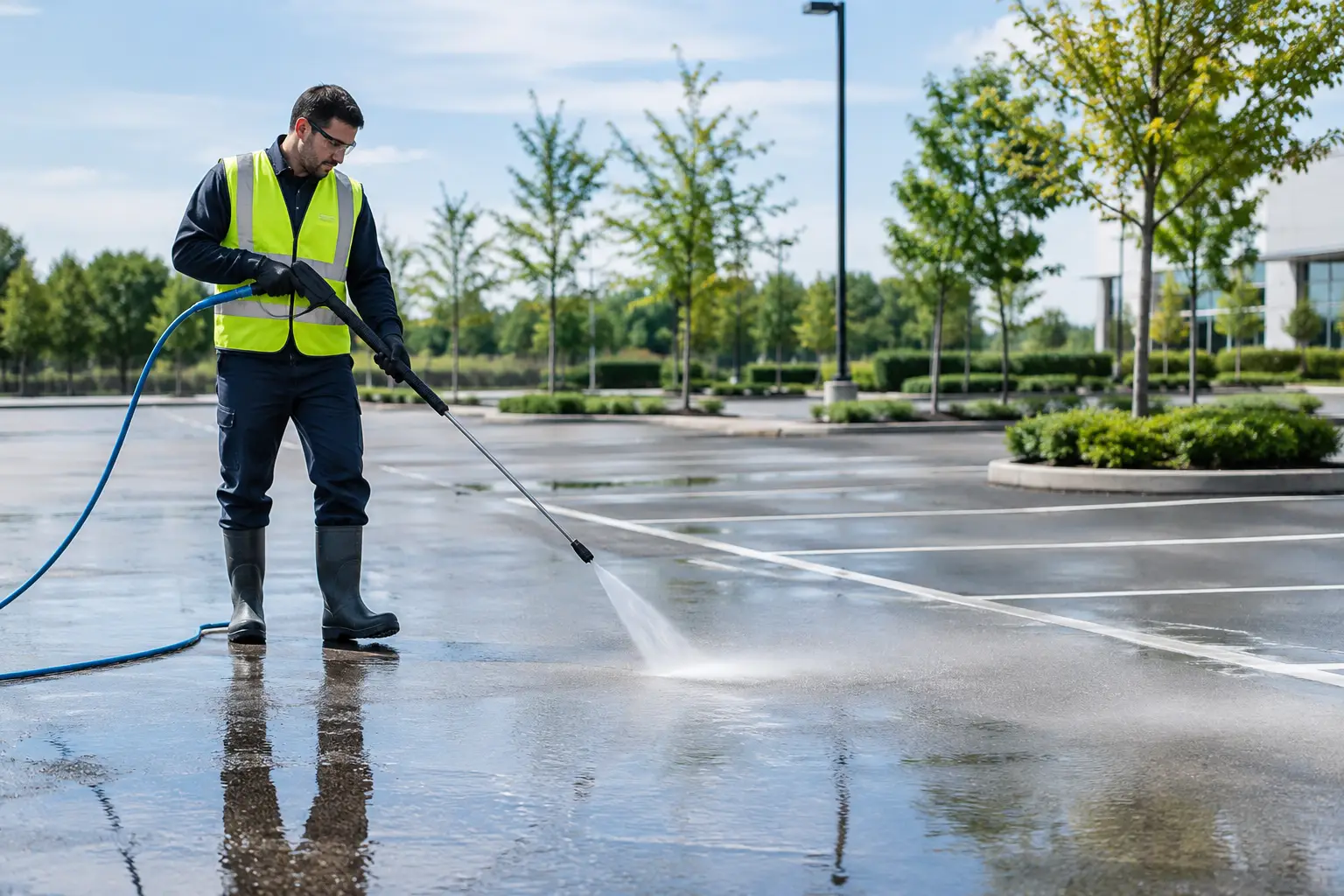
A car park can look worn out long before the building beside it does. Tyre marks, oil spots, leaf tannins, algae and windblown grime build up gradually, then suddenly become the first thing tenants, customers, staff and visitors notice. Professional car park cleaning results do more than brighten concrete or bitumen – they help create a safer, better-presented site and support the long-term condition of the surface.
For strata managers, retail operators, schools and commercial property owners, the best result is not simply a lighter-coloured driveway. It is a clean, consistent finish achieved without damaging the surface, disrupting site access unnecessarily or leaving residue behind.
What Good Car Park Cleaning Results Look Like
A properly cleaned car park should look cared for from the entry point through to the parking bays, kerbs, walkways and bin areas. Built-up grime is removed, algae staining is treated, and the surface regains a more even appearance. Line markings, directional arrows and accessible parking symbols are often easier to see once the surrounding dirt has been cleared.
Safety is another visible outcome. Algae, moss and greasy contamination can make pedestrian areas slippery, particularly around shaded bays, stair entries, ramps and walkways. Removing this growth helps reduce slip risks, although cleaning cannot correct damaged concrete, poor drainage or worn anti-slip coatings. Those issues may need separate attention.
The strongest results also preserve the material beneath. Concrete, pavers, exposed aggregate and coated surfaces all respond differently to pressure, water volume and cleaning treatments. A high-pressure approach may be effective in one section and too aggressive in another. That is why the cleaning method matters as much as the equipment.
Why Car Parks Become Stained So Quickly
Car parks collect more than ordinary outdoor dirt. Vehicles bring in tyre residue, brake dust, oil and fluid leaks. Rain carries soil and organic matter into low points, while nearby trees leave leaves, sap and tannin stains. In Southeast Queensland’s humid conditions, shaded and damp areas can quickly develop mould, algae and mildew.
Some staining sits on top of the surface and responds well to a suitable detergent and controlled pressure cleaning. Other marks have penetrated porous concrete or have been left in place for years. Oil, rust and tyre marks may improve dramatically but cannot always disappear completely in one service. A reliable contractor will set realistic expectations before work begins rather than promising a uniform finish that the surface condition cannot deliver.
Drainage also makes a major difference. If water regularly pools near a kerb, under a stairwell or at the base of a ramp, algae will return sooner. Cleaning improves the immediate presentation, but resolving ongoing water flow issues can help extend the time between services.
The Right Method Delivers Better Results
There is no single setting that suits every car park. The appropriate approach depends on the surface type, the level of contamination, the age of the site and whether the work includes pedestrian zones, walls, wheel stops or painted markings.
For concrete parking areas, professional pressure cleaning can lift embedded dirt and surface grime using the right combination of pressure, flow rate and treatment. The aim is to clean evenly without leaving visible wand lines or unnecessarily roughening the concrete. Hot water may be useful for heavier grease in some circumstances, while targeted degreasers can assist with oil-affected bays.
Soft washing is often the better option for surrounding painted walls, rendered surfaces, signage, awnings and delicate finishes. It uses lower pressure and an appropriate cleaning solution to treat organic growth without blasting the surface. This is particularly valuable where a car park adjoins a commercial building, school or residential complex with painted finishes that need care.
Pavers and exposed aggregate need extra attention because dirt and organic material settle into textured surfaces. These areas can produce a major before-and-after change, but they also require measured pressure to avoid disturbing jointing material or creating an uneven appearance. Natural stone and sealed surfaces should always be assessed separately, as the wrong chemical or pressure can affect the finish.
Results Depend on Preparation, Not Just Washing
The work that happens before cleaning has a direct effect on the finished result. Vehicles need to be moved from the treatment area where possible, and access should be planned around customers, residents, staff or school operations. For large sites, cleaning can often be scheduled in stages or outside peak trading hours to minimise interruption.
Loose rubbish, leaves and sediment should be cleared first. This prevents debris from spreading across the site and allows the cleaning treatment to reach the surface properly. Areas around stormwater drains need particular care. Run-off management is part of responsible exterior cleaning, especially where detergents, oil residue or heavy sediment are involved.
Traffic control is also practical rather than optional. Wet surfaces, hoses and active equipment create temporary hazards. Clear communication and a sensible work plan help protect pedestrians while allowing the cleaning team to work efficiently.
Common Areas That Are Easy to Miss
The parking bays get most of the attention, but the edges of a car park can quickly undermine an otherwise clean result. Wheel stops, kerbs, bollards, loading zones, bin areas, ramps, pedestrian crossings and entry paths all collect grime in different ways. Cleaning these details gives the whole site a more consistent appearance.
Bin enclosures are a common example. Leaks, organic residue and windblown rubbish can create odours and staining that ordinary hosing will not fix. A targeted clean can improve presentation for tenants and visitors, while helping site managers keep the area more manageable between scheduled services.
Entry points deserve the same consideration. The first few metres of driveway, gate surrounds and footpaths set expectations before anyone parks. When these zones are clean, the property feels maintained from the moment a vehicle arrives.
How Long Do the Results Last?
It depends on the car park’s environment and use. A covered office car park with low traffic may stay presentable for a long period after cleaning. An open retail site beneath trees, or a school drop-off area exposed to rain, leaf litter and constant vehicle movement, may need attention sooner.
As a general maintenance approach, many commercial properties benefit from a scheduled clean every 6 to 12 months. High-traffic sites, food-adjacent areas, shaded ramps and sites with ongoing algae growth may need more frequent treatment. Rather than choosing a schedule based on appearance alone, consider the areas that become slippery, stained or difficult to maintain first.
Regular cleaning is usually more cost-effective than allowing heavy contamination to build up for several years. Fresh staining is easier to treat, and ongoing care can reduce the need for more intensive restoration work later.
Choosing a Contractor for Consistent Results
Ask how the contractor will treat oil stains, algae, delicate finishes and drainage areas. The answer should reflect the condition of your site, not a one-size-fits-all method. You should also expect clear advice on access, timing, exclusions and any marks that may remain due to permanent staining or surface wear.
Boost Exterior Cleaning uses surface-appropriate pressure cleaning and soft washing methods to restore car parks without taking unnecessary risks with nearby finishes. For a larger site, a clear scope and staged work plan can make the difference between a disruptive clean and a straightforward maintenance job.
A clean car park sends a practical message: this is a property that is looked after. Start with the areas people see and walk through every day, then build a maintenance plan around the conditions that cause grime to return.


