

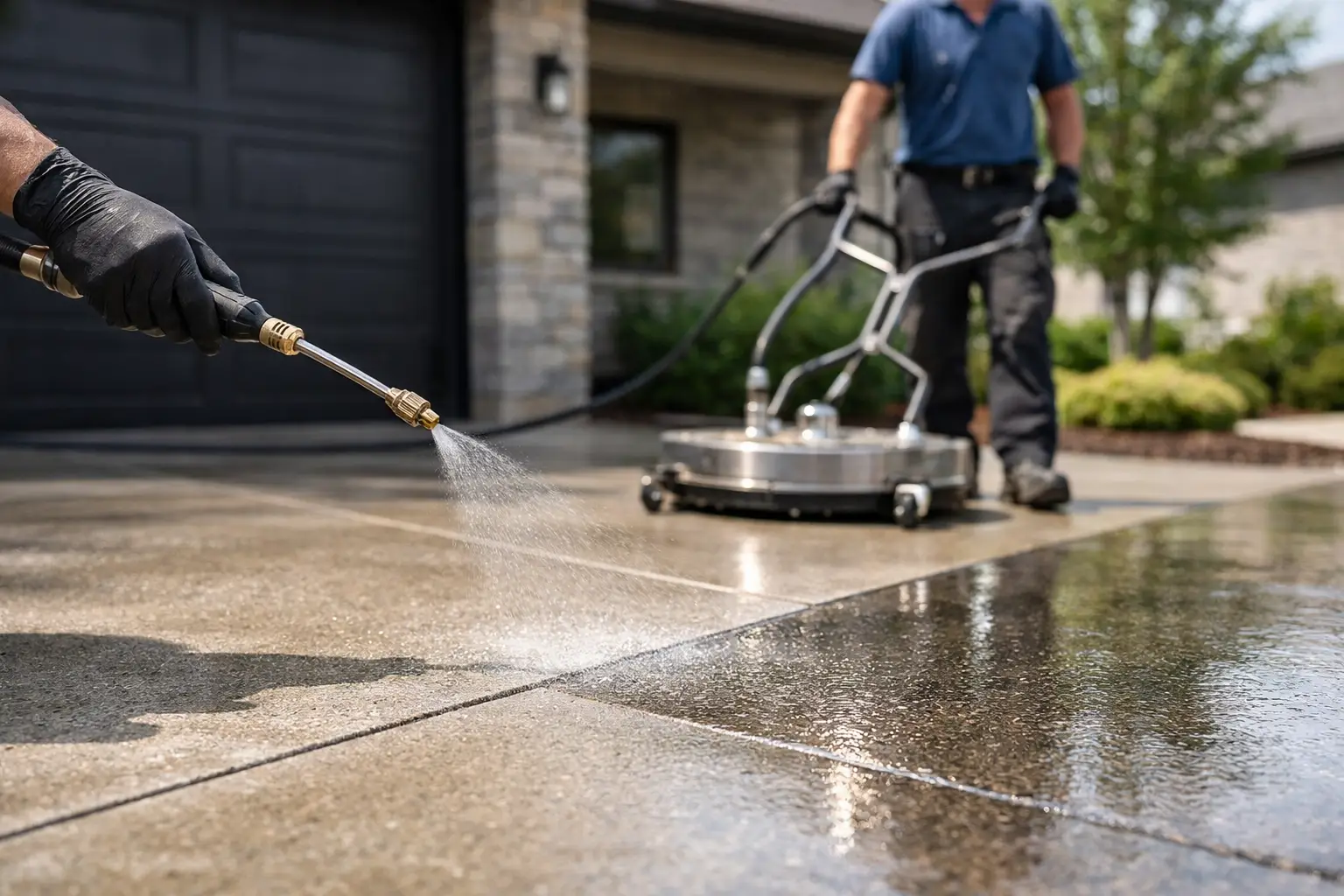
A driveway can look clean on Monday and tired by the end of summer. Between UV, rain, tyre marks, leaf stain, algae and general wear, bare concrete in Southeast Queensland takes a beating. That is why a professional concrete sealing service is not just about appearance. It is a practical way to protect the surface, slow down deterioration and make ongoing maintenance far easier.
For homeowners, that often means a neater front entry, better street appeal and less grime working its way into the slab. For property managers, schools and commercial sites, it means a surface that presents well under regular foot traffic and is easier to keep under control. Sealing does not make concrete indestructible, but it does add a protective layer that can make a real difference when the job is done properly.
What a concrete sealing service actually does
Concrete is porous. Even when it looks solid and dense, it has tiny spaces that absorb water, oils, dirt and organic matter. Once those contaminants sink in, cleaning becomes harder and staining becomes more permanent. Sealing helps reduce that absorption.
A quality sealer forms a barrier at or near the surface. Depending on the product, that barrier can help resist moisture, staining, UV exposure and general weathering. On some finishes, it can also enhance colour and improve the overall look of the concrete without making it appear overly glossy or artificial.
That said, not every slab needs the same treatment. A decorative driveway, an exposed aggregate path and a commercial hardstand all behave differently. The right approach depends on the concrete type, its age, current condition, traffic levels and how the area is used day to day.
Why sealing matters in Queensland conditions
Concrete in Brisbane, Logan, the Gold Coast and the Sunshine Coast deals with strong sun, heavy rainfall and humidity for much of the year. Those conditions encourage fading, patchy weathering, mould growth and algae build-up, especially in shaded or damp areas. If the surface is left unsealed, water and contaminants can penetrate more easily and create long-term issues.
On residential properties, this often shows up as dark staining, uneven colour and that tired chalky look that makes an otherwise tidy home feel neglected. Around pools, paths and patios, moisture can also encourage biological growth that affects both presentation and safety.
On commercial and institutional sites, poor presentation is only part of the issue. Surfaces that trap grime and moisture are harder to maintain consistently. Over time, that can mean more frequent cleaning, shorter surface life and a property that never quite looks cared for, even after a wash.
Concrete sealing service for driveways, paths and larger sites
The most common request is driveway sealing, and for good reason. Driveways wear the brunt of vehicle traffic, oil drips, tyre scuffs and weather exposure. A sealed driveway is generally easier to wash down and better protected against the everyday marks that come with regular use.
Paths, courtyards and entertaining areas also benefit, particularly where leaves, garden runoff and foot traffic create stubborn staining. In body corporate settings, sealed walkways and common areas can help keep presentation standards up across the whole property.
For schools, retail sites and commercial facilities, sealing can be part of a broader exterior maintenance plan. It works best when paired with proper pressure cleaning or soft washing where needed, so the surface is treated according to its material and condition rather than with a one-size-fits-all method.
The process matters as much as the product
A sealer is only as good as the preparation underneath it. If dirt, algae, old residue or trapped moisture are left in the surface, sealing over the top can lock problems in rather than fix them. That is one of the main reasons DIY sealing jobs often fail early.
A professional job usually starts with a close inspection. The surface needs to be checked for existing coatings, contamination, cracks, efflorescence and signs of wear. From there, the concrete is properly cleaned using the right pressure and treatment for the surface. This step is critical. Too little cleaning and the sealer will not bond well. Too much pressure and the surface can be damaged.
Once cleaned, the slab must dry fully before sealing. In Queensland conditions, timing matters. Humidity, overnight moisture and recent rain can all affect application. After that, the chosen sealer is applied evenly and at the correct coverage rate. Rushing this part can leave lap marks, patchiness or inconsistent protection.
Choosing the right finish
Not every customer wants the same look, and not every site suits the same type of sealer. Some prefer a natural finish that keeps the original appearance of the concrete while adding protection. Others want a richer, darker look that lifts decorative or exposed aggregate surfaces.
There is always a trade-off. Higher sheen finishes can create more visual impact, but they may also show wear sooner in high-traffic areas. Natural-look finishes are often more understated and practical, but they will not give that wet-look effect some owners want. The best option comes down to the surface, the maintenance expectations and the result you want from the area.
Slip resistance should also be considered, especially around pool surrounds, sloped driveways and commercial walkways. A finish that looks sharp is not much use if it creates avoidable risk. This is where product choice and site-specific advice really matter.
When to reseal concrete
Sealing is not a forever job. Over time, traffic, weather and cleaning wear the protective layer down. How long it lasts depends on the type of sealer, how exposed the area is and how heavily it is used.
A front path with light foot traffic may hold up well for longer than a driveway that cops daily vehicle use and full afternoon sun. Pool areas and shaded sections may need closer attention because moisture and organic growth can affect performance. If water stops beading, staining becomes more noticeable or the finish looks patchy, it may be time for inspection and resealing.
Regular maintenance helps extend the life of the sealer. Keeping the surface clean, addressing stains early and avoiding unnecessarily harsh treatment can all help protect the coating for longer.
Why professional application saves money later
It can be tempting to treat sealing as a quick add-on job from the hardware shop. Sometimes that works on a small, low-risk area, but on driveways, shared properties and commercial surfaces, poor application tends to show up fast. Uneven finish, peeling, whitening and premature wear are common problems when prep or product selection is off.
A professional team brings more than equipment. They understand how different surfaces respond to pressure cleaning, what contaminants need to be removed before sealing, and which products suit different environments. That means the result is more likely to last and more likely to look right from day one.
For clients managing presentation standards, that reliability matters. You do not want a driveway, entry area or common path looking worse three months after it was treated. You want a finish that supports the rest of the property and reduces the maintenance burden, not one that creates another issue to sort out.
A practical maintenance decision, not just a cosmetic one
Concrete sealing sits in that useful space between presentation and protection. Yes, it can make a property look cleaner, sharper and more cared for. But the stronger reason to do it is that it helps preserve the surface and makes cleaning more manageable over time.
That is especially true for properties that are being prepared for sale, tenancy turnover or routine upkeep. A sealed driveway or path often lifts the whole exterior without needing a major upgrade. On larger sites, it can support a cleaner, more professional appearance across areas that take constant use.
At Boost Exterior Cleaning, the best results come from treating sealing as part of a proper surface care plan, not a shortcut. Clean first, choose the right method, and apply the right protection for the way the area is actually used. If you get that part right, the surface not only looks better now – it holds up better later too.
If your concrete is starting to absorb stains, lose its finish or look older than it should, sealing is often the step that turns cleaning from a temporary fix into longer-lasting protection.


