

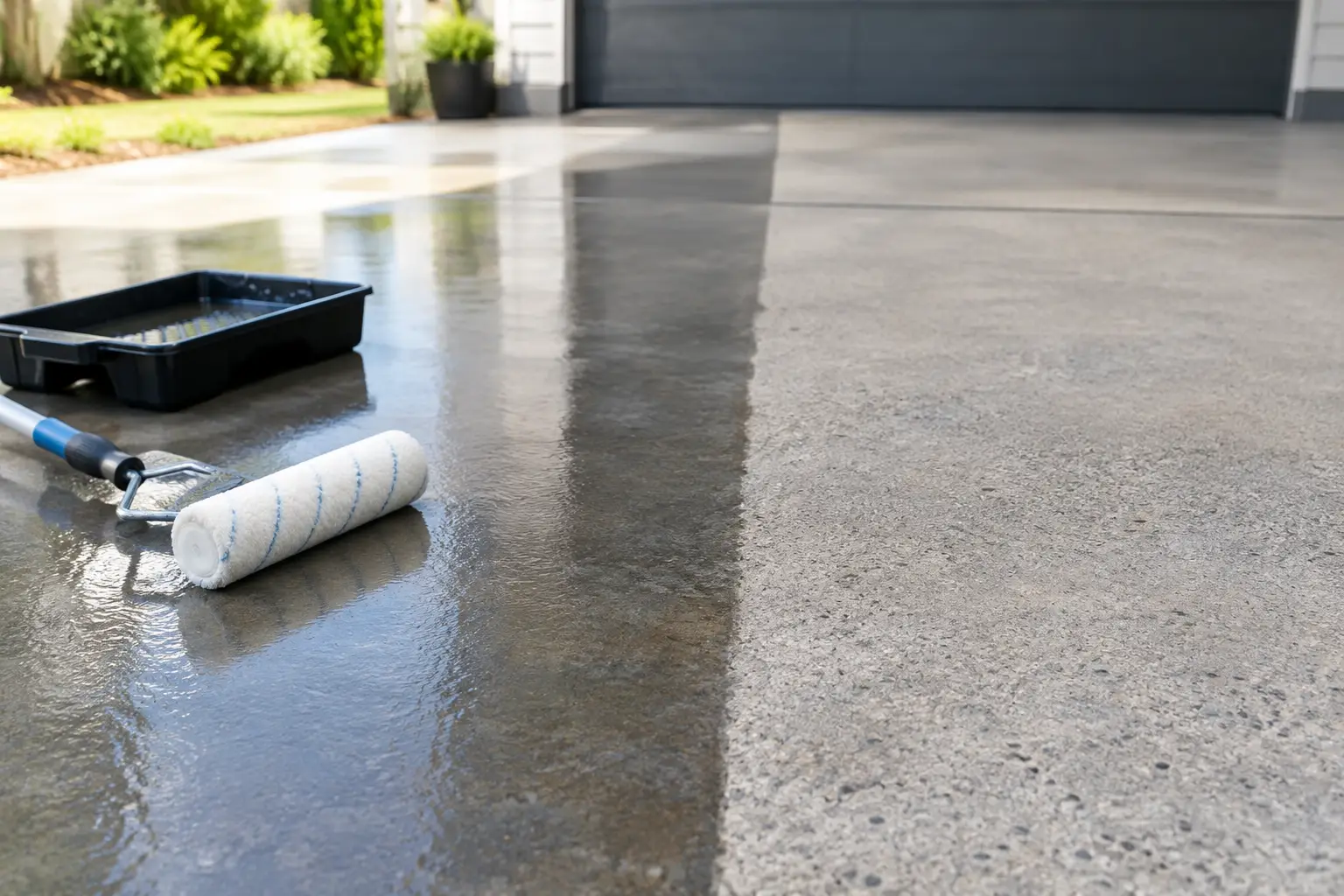
A freshly pressure-cleaned driveway can look like new for a day, then Queensland rain, tyre marks, leaf tannins and foot traffic begin their work again. That is why concrete sealing versus leaving bare is more than a cosmetic decision. It affects how easily the surface cleans, how it handles stains and moisture, and how often you will need professional maintenance.
For many homes, schools, retail sites and body corporate properties, sealing is a sensible way to protect a cleaned surface and keep it presentable for longer. But it is not automatically the right choice for every slab. The condition of the concrete, where it is located and how it is used all matter.
What Bare Concrete Is Really Like
Bare concrete is porous. Although it looks solid, it contains tiny openings that allow water, oil, dirt and organic material to enter the surface. On a driveway, this can mean stubborn oil spots, tyre marks and rust staining. Around a pool, on paths or in shaded courtyards, moisture held in the surface can encourage mould and algae growth.
Leaving concrete bare has one obvious advantage: there is no upfront sealing cost and no coating to maintain. This can suit newer, sound concrete in a low-traffic area, particularly where appearance is not a major concern. A utility area behind a commercial building may only need routine cleaning rather than a protective treatment.
The trade-off is that bare concrete usually absorbs stains faster and becomes harder to restore over time. Once contaminants penetrate deeply, even a thorough pressure clean may improve the appearance without removing every trace. Regular cleaning remains essential, especially in humid, shaded or high-traffic areas.
Concrete Sealing Versus Leaving Bare: The Key Differences
The practical difference comes down to protection and maintenance. A suitable concrete sealer helps reduce absorption at the surface. Water, spills and grime are more likely to remain on top of the concrete, where they can be cleaned away before causing a permanent mark.
Sealed concrete is generally easier to maintain after professional cleaning. It can help reduce the impact of oil drips, food spills, leaf tannins and everyday grime, making it a strong option for driveways, entertaining areas, walkways, commercial entrances and parking zones.
It also improves presentation. Depending on the sealer selected, concrete can retain a natural matte look, develop a slightly enhanced colour, or have a more noticeable sheen. The right finish should match the property and its use. A glossy finish may look sharp on a decorative entertaining area, but it is not always suitable for a busy ramp, pool surround or exposed walkway.
Bare concrete, by comparison, has a natural and understated appearance. There is nothing to peel or recoat, but there is also less resistance to staining and moisture. It may need more frequent deep cleaning to maintain a consistent colour and tidy finish.
When Sealing Is Worth It
Sealing often makes the most sense where concrete is exposed to regular staining, moisture or public use. A driveway beneath trees, for example, may collect tannins, bird droppings and organic debris. A sealed surface gives those contaminants less opportunity to soak in.
For property managers and commercial operators, sealing can also support a more predictable maintenance programme. Entrances, common paths and parking areas receive constant wear. Keeping these spaces clean and presentable is not just about appearance. It helps create a better first impression for tenants, customers, visitors and staff.
Consider sealing if your concrete is:
- regularly exposed to vehicle traffic, oils or tyre marks
- located in a damp, shaded or leafy part of the property
- part of a pool area, entertaining space or front entry
- cleaned frequently to remove mould, algae or grime
- being prepared for sale, lease, handover or a major presentation upgrade
A quality seal can also help protect the value of a recent professional clean. Rather than restoring the surface and watching it deteriorate quickly, you are adding a protective layer that supports ongoing upkeep.
When Leaving Concrete Bare Can Be the Better Choice
Sealing is not a shortcut for damaged concrete. If a slab is crumbling, heavily cracked, spalling or holding moisture from below, the underlying issue should be assessed before any sealer is applied. Applying a coating over an unstable surface can lead to patchy results or premature failure.
Very rough, aged or uneven concrete can also require careful product selection. Some finishes may not absorb evenly, while others can alter the look more than expected. In these situations, professional cleaning alone may be the more practical first step, followed by a review once the true condition of the concrete is visible.
Leaving a surface bare can also be appropriate where slip resistance is the highest priority and the area sees limited staining. Schools, commercial walkways and pool surrounds need particular care. The aim is never to create a finish that looks good but becomes unsafe when wet. If sealing is suitable, the product and application method must be chosen with the location in mind.
Cleaning Comes Before Sealing
The result of a concrete seal is only as good as the preparation underneath it. Sealing over mould, algae, oil residue, dirt or old patchy coatings can trap problems in place and leave the surface looking uneven.
A proper process starts with identifying the surface and contaminants. Concrete may need pressure cleaning, targeted treatment for mould and algae, degreasing for oil marks, or stain treatment before sealing. The pressure needs to suit the condition of the surface. Too much pressure can damage weak concrete or leave visible cleaning lines, while too little may not remove embedded grime effectively.
The concrete must then be allowed to dry properly. Moisture trapped beneath a sealer can affect adhesion and appearance. This is particularly relevant in Southeast Queensland, where humidity, afternoon storms and shaded areas can slow drying times.
At Boost Exterior Cleaning, the focus is on matching the cleaning method and seal to the surface, rather than applying a one-size-fits-all approach. That helps produce a finish that looks right, performs well and is suited to how the area is actually used.
Choosing the Right Finish for Your Property
Not every sealer performs the same way. Penetrating sealers are designed to soak into the concrete and provide protection while keeping a more natural appearance. Topical sealers sit closer to the surface and can offer colour enhancement or sheen, depending on the product.
The best option depends on your priorities. If you want a natural-looking driveway that is easier to clean, a low-sheen protective finish may be appropriate. If you are refreshing decorative concrete around an entertaining area, an enhancing finish may better suit the result you have in mind. For commercial sites, durability, safe access and ease of maintenance should lead the decision.
Ask about slip resistance before choosing a finish for any area that gets wet. Pool surrounds, paths, ramps and high-use entries need a practical surface, not just an attractive one. Also consider sun exposure. Strong Queensland UV can affect some products over time, so selecting a suitable sealer and planning for future maintenance matters.
What Maintenance Looks Like After Sealing
Sealed concrete is easier to look after, not maintenance-free. Sweep away leaves and debris, clean spills promptly and arrange periodic exterior cleaning before mould or grime becomes established. Avoid harsh products or abrasive cleaning methods that could wear the sealer prematurely.
How long a sealer lasts varies with traffic, weather, surface preparation and the product used. A quiet covered path will not wear at the same rate as a sun-exposed driveway used every day. Watch for fading, uneven water absorption, persistent staining or areas that no longer clean evenly. These are signs the surface may be ready for inspection and possible resealing.
Make the Decision Based on Use, Not Just Appearance
If your concrete is clean, low-traffic and unlikely to face regular staining, leaving it bare may be perfectly reasonable with a consistent cleaning plan. If it is a visible driveway, busy common area, poolside path or commercial entry that needs to stay cleaner for longer, sealing is often a worthwhile investment after proper preparation.
The best time to decide is after the concrete has been professionally cleaned. You can see the true condition of the surface, identify stains or damage that need attention, and choose a finish that protects the area without compromising safety. A well-maintained concrete surface does more than lift kerb appeal – it makes everyday property care simpler.


