

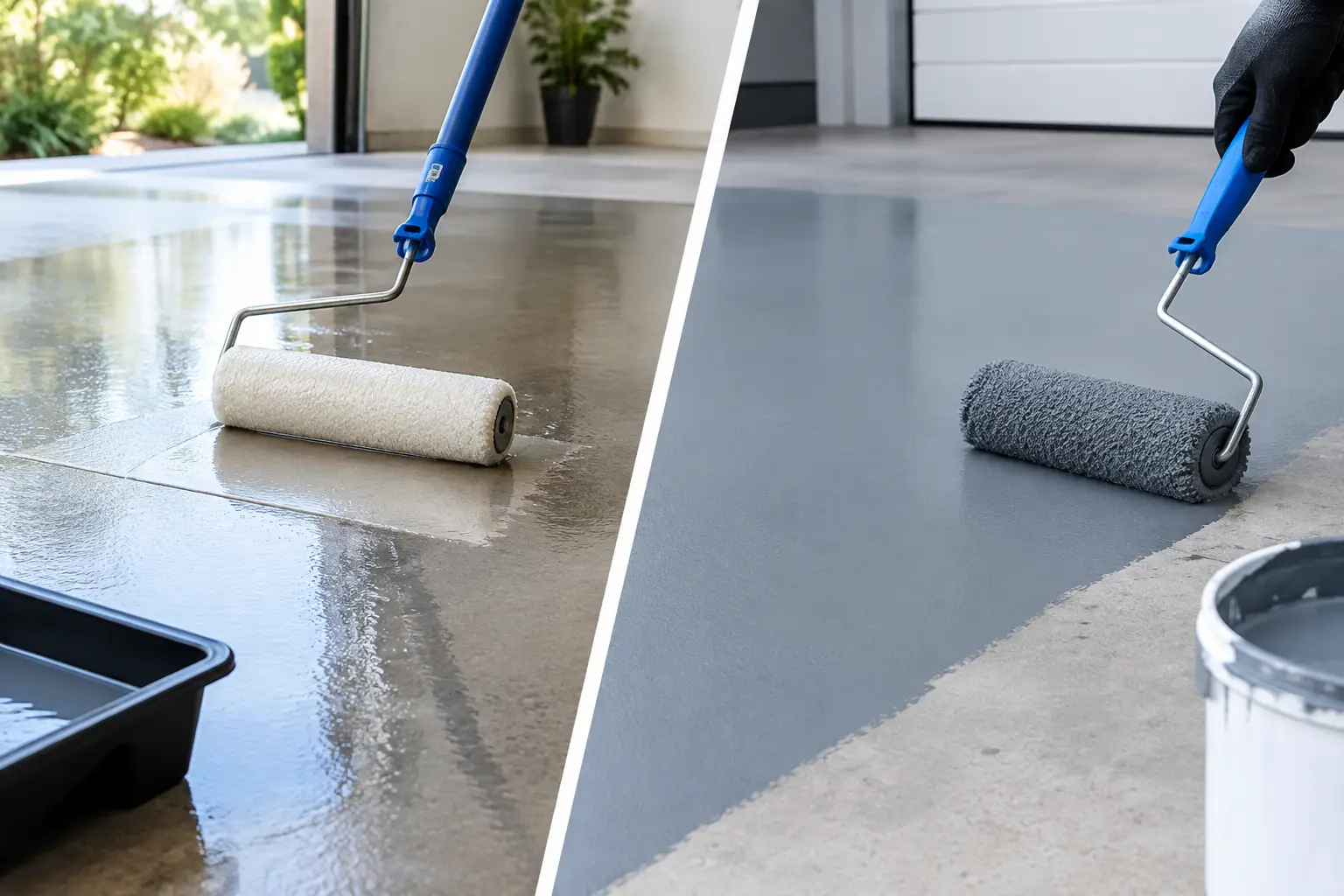
A faded driveway or stained concrete patio can make an otherwise well-kept property look tired. When comparing concrete sealing vs concrete painting, the right choice comes down to more than colour. You need to consider the surface condition, how the area is used, exposure to Queensland weather, and the level of maintenance you are prepared to take on.
For most exterior concrete, preparation is where the result is won or lost. Dirt, mould, algae, old coatings and moisture can all prevent a sealer or paint from performing properly. A professional clean before treatment gives the new finish the best chance of lasting.
Concrete sealing vs concrete painting: the key difference
Concrete sealer penetrates into the slab or forms a protective layer over it, depending on the product selected. Its main job is to reduce water absorption, limit staining, make cleaning easier and help protect concrete from weathering. Clear sealers generally preserve the natural look of concrete, while some products can deepen the colour or create a subtle wet-look finish.
Concrete paint is a coloured coating that sits on top of the surface. It changes the appearance of the concrete more dramatically and can cover minor discolouration, patchiness and previous marks. It is often chosen for patios, garage floors, verandahs and commercial areas where a uniform finish is the priority.
Neither option is automatically better. Sealing is usually the practical choice when you like the existing concrete and want to protect it. Painting suits surfaces where colour and a more complete visual refresh are needed.
When concrete sealing is the better option
Concrete sealing works particularly well on driveways, paths, pool surrounds, exposed aggregate and newer concrete in good condition. The surface still looks like concrete, but it is better defended against everyday wear.
In Southeast Queensland, unprotected concrete is exposed to heavy rain, UV, leaf tannins, vehicle fluids, humidity and organic growth. Moisture entering the surface can encourage staining and make cleaning more difficult over time. A quality sealer helps reduce that absorption, which is valuable in shaded areas where mould and algae return quickly.
For driveways, sealing can also help make tyre marks, oil drips and general grime easier to remove. It will not make concrete completely stain-proof, and spills should still be attended to promptly, but it adds a useful layer of protection for a high-use surface.
Sealing is often the lower-maintenance option visually because it does not create an opaque film that can peel in the same way paint can. That said, sealers do wear away gradually, especially in sunny or high-traffic areas. Resealing is part of long-term concrete care, not a once-only job.
The appearance of sealed concrete
A clear sealer will not hide cracks, rust marks, old paint shadows or uneven colour. In fact, some enhancing sealers can make existing variation more noticeable by deepening the colour. This is not a drawback if you appreciate the natural character of concrete or exposed aggregate, but it matters if the slab already looks heavily patchy.
The finish also needs to suit the location. A high-gloss coating may look striking initially, but it is not always appropriate around pools, entry paths or sloped driveways. Slip resistance, water drainage and how the surface feels underfoot should always be considered before choosing a finish.
When painting concrete makes more sense
Painting is usually selected when appearance is the main problem. If a concrete area has widespread stains, inconsistent repairs, faded colour or an outdated look, paint can create a cleaner and more uniform result than a clear sealer.
It can also help define different areas of a property. For example, a painted patio may better complement the home’s exterior colours, while a garage floor coating can give a more finished presentation for sale, tenancy turnover or everyday use.
However, concrete painting demands more from the surface preparation and the ongoing maintenance plan. The concrete must be thoroughly cleaned, dry, sound and suitable for coating. If paint is applied over residual mould, chalky old coatings, moisture issues or weak concrete, the new layer can blister, flake or peel.
Painted surfaces also show wear differently. A driveway or busy walkway may develop tyre tracking, scuffs and worn patches over time. Local touch-ups can be difficult if the original colour has faded in the sun. For these areas, a purpose-made coating system and realistic expectations are essential.
Painting is not a shortcut for damaged concrete
Paint can improve the look of superficial marks, but it does not repair structural cracking, spalling or movement in the slab. Cracks may reappear through a painted surface if the underlying issue is not addressed first. Concrete with major damage may need repair work before any finish is applied.
This is why an inspection matters. A coating that looks good for a few months but fails early is rarely good value. The right approach is to identify whether the concrete is sound, dry and stable enough for paint before committing to the job.
Cost, maintenance and lifespan
The upfront cost of sealing versus painting varies with the size of the area, concrete condition, access, preparation needed and product specification. It is tempting to compare only the initial price, but the more useful question is what the finish will cost to maintain over several years.
Sealing is often more economical where the concrete is already attractive and sound. The preparation is still important, particularly removing mould, dirt, old residues and stains, but the finish generally works with the existing surface rather than trying to conceal it. Periodic cleaning and resealing can keep it looking presentable and protected.
Painting can involve more intensive preparation, especially if there is existing paint to remove or repair. It may also require recoating sooner in exposed or high-traffic areas. In return, it can deliver a more noticeable visual transformation where bare concrete is beyond a simple clean and seal.
For commercial sites, schools, strata properties and body corporate areas, maintenance planning is especially important. A finish should suit how people move through the space, how often it is cleaned, whether vehicles use the area, and whether the surface needs to maintain safe traction in wet weather.
Preparation matters more than the product label
Whether you choose a sealer or paint, never apply it over a dirty slab and expect a lasting result. Mould, algae and ingrained grime need to be properly treated and removed. The cleaning method should match the surface, rather than relying on excessive pressure that can damage weak concrete or leave visible etching.
The concrete then needs adequate time to dry. Trapped moisture is one of the common causes of coating failure, particularly after rain or on shaded surfaces. Old sealers, paint residues and contaminants may also need specialist treatment before a new product can bond properly.
At Boost Exterior Cleaning, surface preparation starts with assessing the concrete and using the appropriate cleaning method for the job. The goal is not just a brighter surface on the day. It is a clean, sound base that is ready for the next stage of restoration or protection.
How to choose for your property
Choose concrete sealing if the slab is in good condition, you want to retain its natural finish, and protection from moisture and staining is the priority. It is a strong fit for exposed aggregate, driveways, paths and outdoor areas where a natural appearance makes sense.
Choose concrete painting if you need a major change in colour, want to disguise widespread visual imperfections, or are updating an outdoor living area or garage to match the rest of the property. Just allow for proper preparation and future recoating as part of the decision.
If you are uncertain, start with a professional clean and surface assessment. Once the mould, grime and built-up staining have been removed, it becomes much easier to see whether your concrete deserves a protective sealer or a full painted refresh.


